
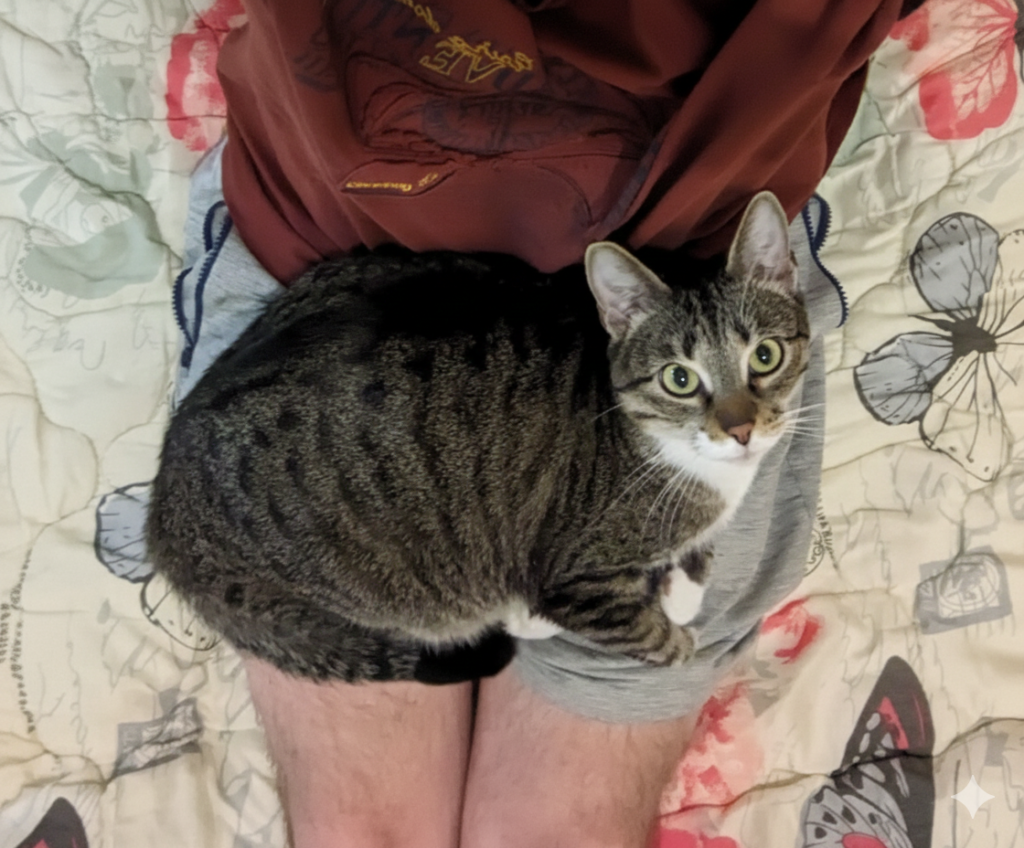
That purring loaf on your legs? It’s not just being cute — it’s making a deliberate choice. If your cat keeps climbing into your lap like it pays rent there, you’re not imagining things.
Lap-sitting isn’t just a quirk. It’s a fascinating mix of primal instinct, deep emotional trust, and — let’s be honest — a dash of calculated cuteness to get what they want. From warmth and security to scent-marking and attention-seeking, this behavior is packed with meaning.
In this post, we’ll dig into the why behind the whiskers: how your lap became the ultimate feline hotspot, what it says about your bond, and how your cat’s body language is quietly telling you everything you need to know.
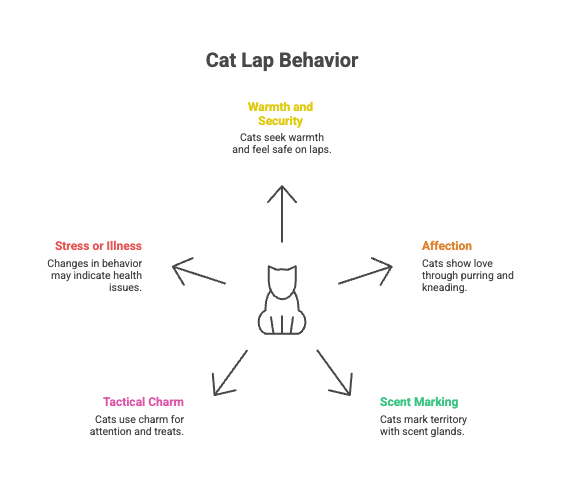
Why Cats Sit on Your Lap: Warmth and Security
Cats are biologically hardwired to seek warmth. With body temperatures that run higher than ours, they’re constantly on the lookout for cozy, energy-saving spots — and your lap? It’s basically a heated pillow with a heartbeat. Add in a fleece throw or a soft sweater, and you’ve just upgraded to five-star feline luxury.
But it’s not just about the heat. A cat sleeping on your lap is a cat that feels safe. In the wild, resting leaves them vulnerable, so choosing to curl up on you means they trust you — completely. You’re not just a warm spot… you’re home base.
Lap-sitting, in this light, becomes less of a cute moment and more of an emotional milestone. You’ve earned your cat’s trust — and the right to carry a fur coat on your jeans.
Do Cats Sit on You Because They Love You?
Yes, cats can love you — just don’t expect a dramatic rom-com confession. Unlike dogs, who wear their hearts on their wagging tails, cats play it cooler. But that doesn’t mean the feelings aren’t real.
Lap time is when many cats let their walls down. If your cat curls up, starts kneading like a tiny baker, purrs like a motor, or head-butts you gently, that’s feline affection at full volume. These aren’t random behaviors — they’re part of a social script that signals bonding, comfort, and trust.
While some of this comes from instinct (like kneading, a holdover from kittenhood), there’s a deeper social layer too. Sitting on your lap isn’t just about staying warm — it’s about being with you. It’s quality time, cat-style: quiet, close, and completely chosen.
In fact, a 2019 Oregon State University study found that about 65% of cats form the same kind of secure attachment to their humans that babies form with their parents — so that lap-sitting really is a sign of a genuine bond.
Why Does My Cat Sit on Me and Not Anyone Else?
If your cat treats your lap like a reserved seat but ignores everyone else on the couch, congratulations — you’ve been chosen. And it’s rarely random.
Cats tend to pick the person who feels safest and most predictable to them. Funnily enough, that’s often not the one trying hardest to win them over — cats love a hard-to-get dynamic. A few things quietly make you “the one”:
- Your scent and routine — you’re familiar territory, already marked as theirs.
- Your calm energy — cats gravitate to low-drama humans who won’t suddenly scoop them up.
- Warmth and stillness — if you’re the one who sits still the longest, you’re the comfiest bet.
- Your history together — whoever feeds, plays with, or gently handles them early on often becomes the lap of choice.
So being the chosen lap isn’t favoritism you imagined — it’s a quiet vote of trust. (And yes, it can shift over time as bonds change.)
How Cats Mark You with Scent (and Why They Sit on You)
If your cat sits on you, kneads you, or casually rubs its face against your arm, congratulations — you’ve been marked. Cats have scent glands in their cheeks, paws, and flanks, and they use them like signature stamps. When your cat lounges on your lap, it’s not just chilling — it’s saying, “This human? Mine.”
To your cat, your lap isn’t neutral ground. It’s familiar territory, soaked in shared scent and mutual comfort. You’re more than a place to sit — you’re part of their chosen circle.
Of course, cats aren’t above using their charm tactically. Many quickly learn that sitting on your lap equals petting, cooing, treats, or — let’s be real — stealing your attention from that laptop. It’s not manipulation in a villainous way; it’s just smart social strategy. You reward the behavior, and they keep doing it. Everyone wins.
Changes in Cat Lap Behavior: What It Could Mean
Cats might not talk, but their behavior speaks volumes — especially when it shifts. If your cat suddenly becomes a full-time lap ornament, it could be more than extra affection. Increased clinginess might signal stress, aging, or even underlying illness. Cats often seek comfort when they’re not feeling 100%, and your lap is their safe zone.
On the flip side, if a usually affectionate cat starts avoiding your lap, that’s a red flag too. Pain, injury, or general discomfort can make physical closeness less appealing. Don’t write it off as moodiness — sudden changes are worth a closer look, and often, a vet visit.
Bottom line? Your cat’s lap habits are their way of checking in — emotionally, physically, and socially. Learn to read the signals, and you’ll know when it’s time to simply enjoy the snuggle… or when it’s time to ask, “Are you okay?”
What Is a Lap Cat? (And Which Cats Love Laps Most)
A “lap cat” is exactly what it sounds like — a cat that actively seeks out laps for warmth, cuddles, and closeness, instead of keeping to itself. Some cats are lap cats for life; others wouldn’t be caught dead sitting still on you. So what makes the difference?
Part of it is personality — easy-going, people-oriented cats are far more likely to become lap fixtures. Part of it is early socialization — kittens gently handled by humans young usually grow into cuddlier adults. And part of it is just the individual cat; even in the snuggliest breed, you’ll get the occasional independent soul.
That said, some breeds are famous for their lap-loving ways:
- Ragdoll — goes limp with affection, practically built for laps.
- British Shorthair — calm, mellow, and happy to be your warm loaf.
- Persian — laid-back royalty that lives for a cozy lap.
- Maine Coon — big, gentle, and surprisingly cuddly.
- Exotic Shorthair — the “lazy man’s Persian,” a champion napper.
Not a lap cat? That’s okay too. Plenty of loving cats show affection in other ways — slow blinks, following you room to room, or sleeping just out of reach. Lap-sitting is only one dialect of cat love.
Conclusion: Your Lap, Their Language
When your cat curls up on your lap, it’s not just about warmth. It’s a layered, meaningful behavior — equal parts biology, trust, affection, territory, and a sprinkle of clever charm.
From marking you as their own to quietly asking for connection, lap-sitting is your cat’s way of saying you matter to me.
So next time that soft little loaf settles in, take it as the highest compliment in the feline world — and maybe postpone standing up for just a few more minutes.
Keep reading:
- Why Do Cats Knead? (a.k.a. Making Biscuits)
- What Does Your Cat’s Tail Position Really Mean?
- Why Do Cats Eat Grass?
Frequently Asked Questions (FAQ)
Yes — many cats are naturally drawn to laps for warmth, safety, and affection. It’s a sign of trust and bonding. Some breeds and personalities are more “lap cat” than others, but regular lap time usually means your cat feels secure and connected to you.
Cats are clever — they often learn that sitting on your lap when you’re working (on a laptop, reading, etc.) is the best way to get your attention. It’s part affection, part strategic interruption.
Sudden changes in lap behavior can be a sign of pain, stress, or illness. If your cat used to be cuddly but now avoids close contact, it’s a good idea to monitor for other symptoms and consider a vet check-up.
Warmth is definitely part of it, but not the whole story. Cats also seek security, scent familiarity, and emotional bonding. Lap-sitting is often a mix of instinct and social behavior — and yes, they do care about you, not just your body heat.
Offer a cozy lap space (blanket = bonus), stay calm, and build trust through gentle interaction. If your cat had positive early experiences with humans, it may be more inclined to seek lap time naturally.
You’re likely the calmer, more predictable presence — or the one whose scent and routine feel safest. It’s about comfort and trust, not favoritism, and it can shift over time.
Ragdolls, British Shorthairs, Persians, Maine Coons, and Exotic Shorthairs are famous lap cats. But personality and early handling matter just as much as breed — plenty of mixed-breed cats are total lap lovers.
Was this article helpful?