
If your cat suddenly starts guzzling water like it’s summer in the Sahara, it’s time to pay attention.
Cats aren’t known for their love of water – so when your once-casual sipper becomes a bowl-side regular, it’s not just quirky behavior. It might be polydipsia, a clinical term for excessive thirst. But here’s the thing: polydipsia isn’t a condition in itself. It’s a symptom – a red flag waving quietly behind the scenes of your cat’s health.
And while it’s tempting to shrug it off as “just a hot day” or “probably nothing,” that sudden uptick in drinking could be your first clue that something’s wrong – ranging from a dietary shift to serious medical issues like diabetes, kidney disease, or hyperthyroidism.
This blog will cut through the confusion. You’ll learn how much water is too much, what changes to look out for, and most importantly – when it’s time to book that vet visit. Because with cats, subtle signs are rarely accidental.
How Much Is Too Much Water?
Cats are sleek, efficient creatures—and that includes how they hydrate. A healthy adult cat typically needs 30 to 60 milliliters of water per kilogram of body weight per day. For an average 4.5 kg cat, that’s roughly 120 to 270 ml daily.
But here’s the twist: most cat parents won’t catch their feline with a measuring cup. And many cats, especially those on wet food, get a good chunk of their hydration straight from their meals—meaning you might rarely see them drink at all.
So rather than fixating on exact numbers, pay attention to shifts in behavior:
- Are you refilling the bowl far more often than usual?
- Is your cat hanging around the water dish like it’s their new favorite hangout?
- Is the litter tray unusually soaked or clump-heavy?
These are the subtle, yet crucial signs that your cat’s water intake has jumped—and they’re often the first signals that something’s off. Don’t ignore them. In the world of feline health, “more water” is a message—and it’s one you’ll want to decode quickly.
Drinking a Lot but Acting Normal?
This is one of the most common — and most important — situations to understand. Cats are experts at hiding illness, so a cat can be in the early stages of a serious condition while still eating, playing, and seeming completely fine. Increased thirst is often the very first sign, appearing long before your cat looks or acts sick.
There’s also a useful clinical benchmark. Vets generally consider drinking above 100 ml per kg of body weight per day to be definite polydipsia, with anything over about 60 ml/kg worth watching. But you don’t need exact numbers to act — a clear, lasting jump in how much your cat drinks is reason enough for a check-up, even if they seem perfectly healthy otherwise. With cats, “acting normal” and “being healthy” are not always the same thing.
When It’s Not Medical (Yet)
Not every thirsty cat is a medical emergency waiting to happen. Sometimes, the reason your feline friend is lapping up more water is perfectly natural — even predictable. But here’s the kicker: just because it might be harmless doesn’t mean you should let your guard down.
Let’s break down a few normal (but temporary) reasons your cat might suddenly be drinking more:
Hot Weather or Extra Activity
Just like us, cats need to stay hydrated in warmer temperatures. If the summer sun is blazing or your usually chill kitty is suddenly zooming around the house like it’s training for a feline marathon, they may need extra fluids to cool down and compensate.
A Switch from Wet to Dry Food
Wet food is around 70–80% moisture, while dry kibble is only about 10%. That’s a massive difference. If you’ve recently swapped their diet, your cat’s drinking more water to make up for the lack of moisture in their meals. It’s normal — but it’s also one of those changes you should log mentally, because increased thirst is still a symptom worth tracking.
Stress, a New Environment, or That Shiny New Fountain
Cats are sensitive little drama queens. A move to a new home, a shift in routine, or even something as minor as adding a water fountain can cause them to visit the bowl more often. Some cats find moving water novel (or even fun), while others stress-drink like humans reaching for a midnight snack.
Even when the reason seems obvious, don’t get too comfortable.
Changes in thirst may start from a simple cause — but if the behavior sticks around longer than a few days, or if other symptoms sneak in (like weight loss or appetite shifts), it’s time to get a professional opinion.
Because in feline health, “probably nothing” can quietly turn into “wish we’d caught it sooner.”
The Big Four Medical Reasons for Increased Thirst
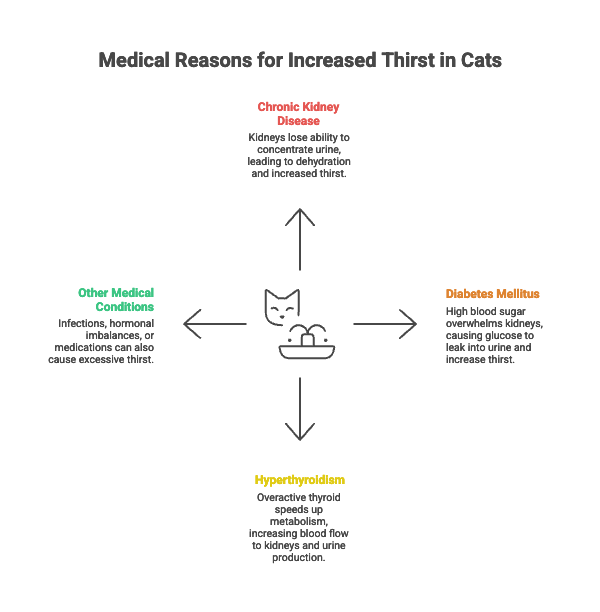
If your cat’s thirst has gone from casual sipping to full-on water obsession, and it isn’t hot outside or the food bowl hasn’t changed — it’s time to consider the medical heavy-hitters. Vets call this pattern polyuria–polydipsia — more peeing, more drinking — and it’s often tied to one of four major conditions.
Here’s the lineup:
Chronic Kidney Disease (CKD)
CKD is the most common cause of excessive thirst in older cats — and also one of the most quietly progressive. As the kidneys start to fail, they lose their ability to concentrate urine. That means your cat produces larger volumes of dilute urine, gets mildly dehydrated, and starts drinking more to keep up. It’s a vicious loop.
Watch for these signs:
- Drinking and peeing more
- Weight loss, reduced appetite
- Lethargy, vomiting, poor coat condition
- A distinct “urine-like” smell on the breath in advanced stages
Why it matters: CKD is chronic and can’t be cured, but early diagnosis and treatment can slow it down — giving your cat more good years ahead.
Diabetes Mellitus
Another frequent flyer in the polydipsia world. In diabetic cats, high blood sugar overwhelms the kidneys, and glucose starts leaking into the urine. That sugar drags water with it — a process called osmotic diuresis — meaning your cat pees more and drinks more to stay balanced.
Classic signs include:
- Increased thirst and urination
- Increased appetite, especially early on (see also why your cat always seems hungry)
- Gradual weight loss, even if eating more
- Lethargy or weakness as the disease progresses
Why it matters: Untreated diabetes can become life-threatening. But many diabetic cats live well-managed lives with the right diet, insulin, and care.
Hyperthyroidism
Hyperthyroidism speeds everything up — heart rate, metabolism, energy levels, even thirst. It’s caused by an overactive thyroid gland and is especially common in senior cats. That internal overdrive increases blood flow to the kidneys and ramps up urine production.
Look for signs like:
- Drinking and urinating more often
- Weight loss despite a huge appetite
- Restlessness, acting “wired,” increased vocalization
- Occasional vomiting, diarrhea, or a messy coat
Why it matters: Hyperthyroidism affects multiple organs — especially the heart and kidneys — and needs prompt treatment to avoid serious complications.
Other Medical Conditions to Rule Out
While the big three get most of the spotlight, several other health issues can cause a cat to drink excessively:
- Urinary tract infections or kidney infections (pyelonephritis)
- Cushing’s disease or Addison’s disease — rare hormonal imbalances that affect fluid regulation
- Certain medications, toxins, or liver conditions
Why it matters: Even if it’s not CKD, diabetes, or hyperthyroidism, any ongoing increase in thirst deserves vet attention. Your cat’s body is trying to tell you something — don’t miss the message.
When to Call the Vet (and What to Expect)
Don’t wait it out.
If your cat’s thirst spike lasts more than a few days — or is joined by other symptoms — it’s time to call the vet. Excessive drinking might seem harmless at first, but it’s often just the tip of the iceberg.
Red-flag symptoms to act on:
- Unexplained weight loss
- Vomiting or nausea
- Accidents outside the litter box
- Bad breath, especially with a sour or urine-like odor
- Changes in behavior — increased vocalization, restlessness, or unusual withdrawal
If any of these show up alongside increased thirst or urination, don’t delay — early intervention makes all the difference.
What the Vet Will Do:
Expect a few key steps to narrow down what’s really going on:
- Physical exam — Checking hydration, weight, heart rate, and any visible signs of illness.
- Blood tests — To evaluate kidney function, blood sugar (diabetes), and thyroid hormone levels.
- Urinalysis — To assess concentration, sugar levels, protein, and signs of infection.
From these results, your vet can build a differential diagnosis — ruling out possibilities to get to the true cause. Whether it’s chronic kidney disease, diabetes, hyperthyroidism, or something less common, the treatment plan starts here.
What You Can Do at Home
While the vet handles the diagnosis, you’re the frontline observer. The better your notes, the better the care.
Simple ways to track your cat’s thirst:
- Measure water intake:
Use a measuring jug to refill the water bowl each morning, and record how much your cat drinks over a few days. - Monitor the litter tray:
Bigger clumps or more frequent visits are your clue that urine output is up. If your cat shares a box with others, consider isolating them briefly for observation. - Watch their “whole cat” health:
Is their weight stable? Eating habits the same? Do they seem more tired, more anxious, or just not quite themselves?
Every note you take can help your vet catch patterns early — and that can be the difference between managing a condition or missing a crucial window.
Never restrict your cat’s access to water.
Even if they’re drinking more than usual, cutting back their water can lead to dangerous dehydration, especially in cats with kidney disease or diabetes. Let them drink — and get the answers from a pro.
Conclusion
Sudden thirst isn’t just a quirk — it’s often the body’s SOS call, especially in cats who are masters at hiding discomfort. Whether the cause is heat, stress, or something more serious like kidney disease or diabetes, a noticeable change in drinking habits deserves attention.
The good news? When caught early, many of the underlying conditions can be managed effectively, giving your cat more comfort, more time, and more of their nine lives back.
So don’t brush it off.
- Trust your instincts.
- Trust your vet.
- And most importantly — trust your cat’s behavior when it starts whispering that something’s off.
Your vigilance could be the reason they get the care they need — right when they need it most.
Frequently Asked Questions
A healthy adult cat typically drinks 30–60 ml of water per kilogram of body weight per day. Cats on wet food often drink less because they get most of their hydration from meals.
Yes. Hot weather, increased activity, or warmer indoor temperatures can temporarily increase a cat’s thirst. If the behavior persists beyond a few days or comes with other symptoms, it should be checked.
Absolutely. Dry food contains far less moisture than wet food, so cats often compensate by drinking more. This is normal — but sudden or extreme changes should still be monitored.
The most common causes are chronic kidney disease, diabetes mellitus, and hyperthyroidism. Other possibilities include urinary infections, hormonal disorders, or medication side effects.
No — never restrict water access. Doing so can be dangerous, especially for cats with kidney disease or diabetes. Increased thirst should be investigated by a vet, not controlled at home.
In older cats, increased thirst most often points to chronic kidney disease, diabetes, or hyperthyroidism — all of which become more common with age. Because these conditions are manageable when caught early, any noticeable rise in a senior cat’s drinking should be checked by a vet promptly, even if the cat seems otherwise well.
Drinking more and urinating more together is a pattern vets call polyuria–polydipsia, and it’s a classic sign of kidney disease, diabetes, or hyperthyroidism. It’s one of the more important symptom combinations to act on. Book a vet visit for blood and urine tests rather than waiting to see if it passes.
Yes, it’s still worth a vet check. Cats hide illness extremely well, and increased thirst is frequently the earliest warning sign of a developing condition — appearing before any obvious change in behavior. Acting normal is reassuring, but it doesn’t rule out an early-stage problem that’s easier to treat now than later.
Keep reading:
Was this article helpful?