
Bengal
The Bengal is a stunning breed with a wild appearance and a domestic temperament. Known for their leopard-like spotted or marbled coats, these energetic, intelligent cats bring exotic beauty to any home.
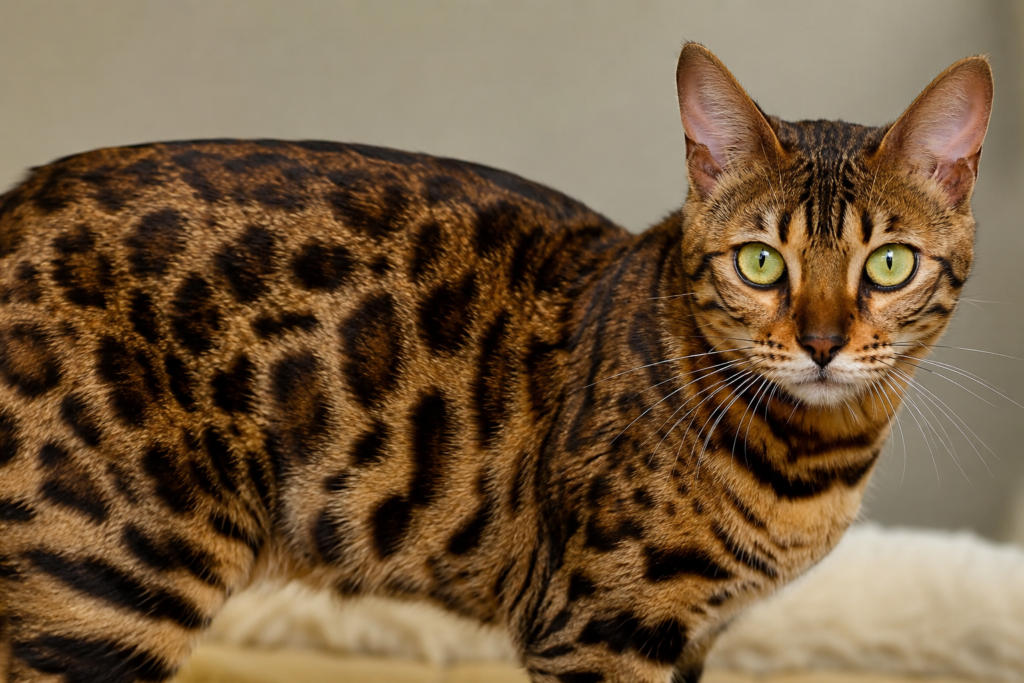
About the Bengal
History and Origins
The Bengal is one of the few domestic breeds developed from a wild ancestor. It began in the 1960s and 70s when California breeder Jean Mill crossed domestic cats with the Asian leopard cat, a small wild feline native to Asia. Her goal was to capture the beauty of a wild cat in a safe, affectionate companion — and, in the early days, to show that a wild-looking cat could reduce demand for leopard-skin fur.
Through careful breeding, the wild temperament was bred out over successive generations while the striking coat was preserved. Today’s pet Bengals are at least four generations (F4 and beyond) removed from their wild ancestors and are fully domesticated. The breed was recognized by The International Cat Association (TICA) in 1986 and has since become one of the most sought-after cats in the world.
Personality and Temperament
Bengals are active, athletic, and extraordinarily intelligent — often compared to a cross between a cat and a monkey. They climb, leap, and explore relentlessly, seeking the highest shelf and the most interesting hiding spot in any room. They are not couch potatoes; a bored Bengal will invent its own entertainment, sometimes destructively.
They bond strongly with their families and are playful and interactive, many learning to play fetch, walk on a harness, and even turn on faucets. Bengals are also famously chatty and will “talk” to their owners. Their intelligence and energy make them deeply rewarding for engaged owners but a poor match for anyone wanting a placid lap cat. They generally do best in active homes and appreciate a feline or canine playmate.
Care and Grooming
Grooming a Bengal is easy. Their short, dense, luxuriously soft coat — often with a distinctive “glitter” sheen — needs only a weekly brush or a rub with a grooming glove, and they shed very little.
The real commitment is enrichment. Bengals need substantial daily exercise and mental stimulation to stay happy and well-behaved. Provide tall cat trees, climbing shelves, puzzle feeders, and plenty of interactive play with wand toys. Many Bengals love water, so a cat fountain or even a shallow water-play station can be a hit. Without enough outlets for their energy, Bengals can become destructive or anxious. Round out care with routine nail trims, ear checks, and dental hygiene.
Health and Lifespan
Bengals typically live 12–16 years and are generally healthy, but the breed has several inherited conditions worth screening for. Hypertrophic cardiomyopathy (HCM), the most common feline heart disease, occurs in Bengals; there is no Bengal-specific DNA test yet, so responsible breeders screen breeding cats with annual echocardiograms. Two other conditions have clean DNA tests: progressive retinal atrophy (PRA-b), which causes blindness, and pyruvate kinase deficiency (PK-Def), an inherited anemia. Patellar luxation can also occur.
Always buy from a breeder who echocardiogram-screens for HCM and DNA-tests for PRA-b and PK-Def. Keep your Bengal active and at a healthy weight, and schedule regular veterinary checkups.
Cost and Is the Bengal Right for You?
A Bengal kitten from a reputable breeder typically costs $1,500 to $3,000 in the United States, with rare colors, rosetted patterns, and show lines running higher. Health-tested lines are worth the premium given the breed’s heart and eye risks. Note that some U.S. states and cities restrict or ban Bengals, especially early-generation (F1–F4) cats, so check local laws before buying.
The Bengal suits active, engaged owners who can provide plenty of exercise, climbing space, and interaction. They are ideal for people who want a playful, dog-like, adventurous cat and who are home enough to keep them stimulated. They are a poor fit for anyone seeking a calm lap cat, for very quiet households, or for owners unable to commit the time and enrichment this high-energy breed demands.
Explore More
Curious about the Bengal’s love of water? Read why most cats hate water to see why this breed is a notable exception. For more on feline behavior, see why cats knock things off tables, or compare other active, athletic breeds like the Devon Rex and browse all cat breeds.
Frequently Asked Questions
Bengals can be wonderful pets for the right owner. They need lots of space, vertical climbing options, and interactive play, and they thrive with active families who can provide stimulation and attention. They are not ideal for those wanting a calm lap cat. Given the right environment, Bengals are engaging, entertaining, and deeply affectionate companions.
Bengals are not inherently badly behaved, but their intelligence and high energy mean a bored or under-stimulated Bengal can become destructive, vocal, or anxious. Most "behavior problems" trace back to insufficient exercise and enrichment. With plenty of climbing space, daily play, puzzle feeders, and attention, Bengals are well-mannered and delightful. Meeting their needs is the key to preventing trouble.
No, Bengals are not naturally aggressive. Modern pet Bengals are several generations removed from their wild ancestors and have a friendly, domestic temperament. What can look like aggression is usually intense play energy or frustration from boredom. Proper socialization, enough physical and mental stimulation, and gentle handling produce a confident, affectionate cat rather than an aggressive one.
Many Bengals are fascinated by water, a trait often linked to their Asian leopard cat ancestry, whose wild relatives are comfortable around streams. Bengals may paw at running taps, splash in their water bowls, or even join you in the shower. Providing a cat fountain or safe water play can be a great source of enrichment for this playful breed.
A lot — Bengals are among the most active breeds and need substantial daily exercise. Aim for multiple interactive play sessions each day, plus constant access to climbing structures, shelves, and toys for independent play. Without enough physical and mental outlets, Bengals become restless and destructive. Many owners find a second active pet helps burn off their considerable energy.