
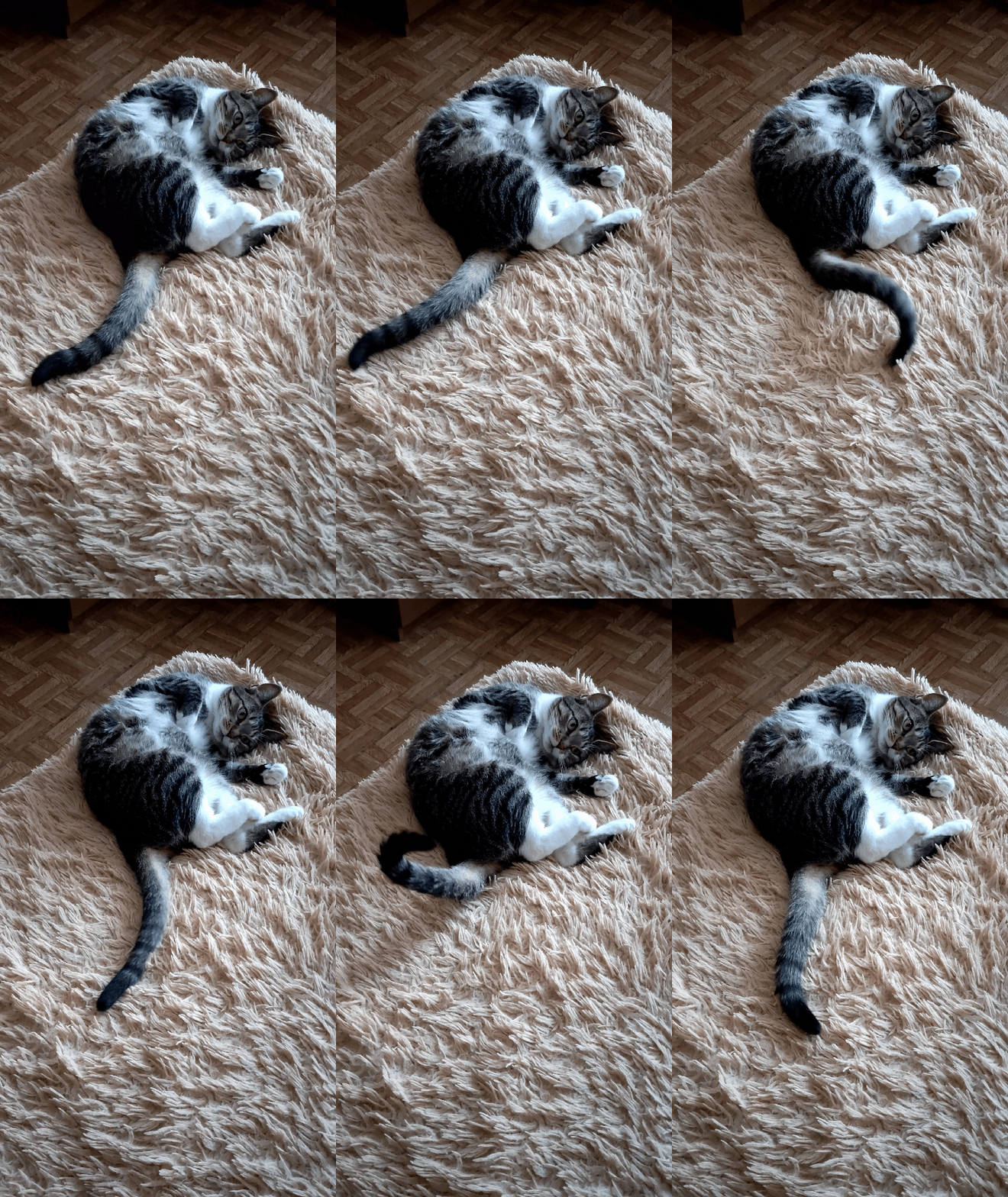
Cats may not speak our language, but their tails do — loud and clear.
In the feline world, tails aren’t just fluffy accessories — they’re emotional megaphones. With a single flick, curl, or puff, your cat is broadcasting how they feel, what they want, and whether you’re invited into their space… or not.
This blog decodes 10 key tail positions, helping you crack the code of cat communication. Whether you’ve got a curious kitten or a regal senior, understanding tail language can transform the way you connect with your pet — deepening trust, avoiding misunderstandings, and maybe dodging the occasional scratch.
But here’s the catch: tails don’t speak in isolation. To truly understand what your cat is saying, you need to read their whole body — ears, eyes, posture — and place those signs in context. A high tail can mean confidence… or conflict. It all depends on what else is happening.
What you’re about to read is a tail-by-tail breakdown, backed by trusted veterinary sources and feline behavior experts. From the playful “question mark” to the fear-driven puffball, each signal tells a story — and by the end of this guide, you’ll be fluent in tail.
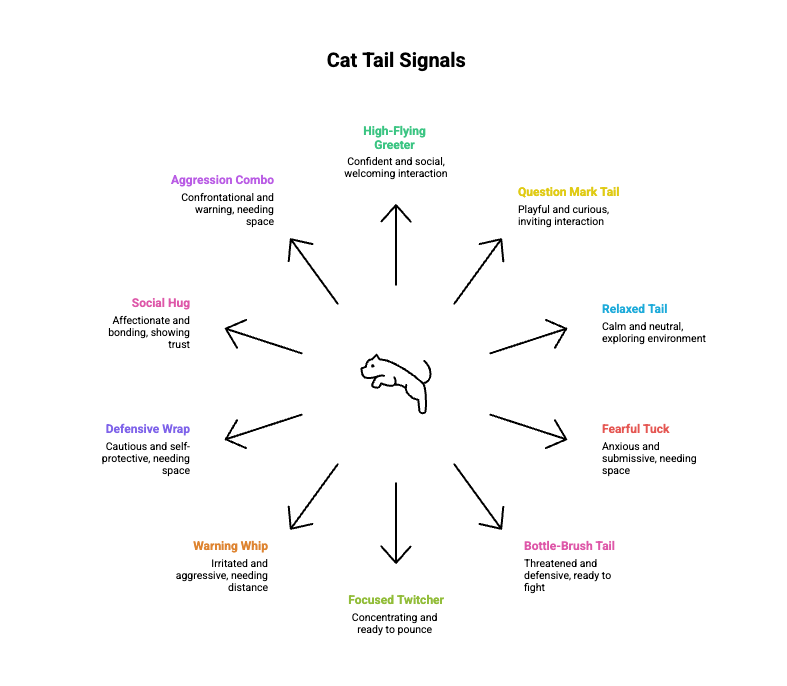
1. The High-Flying Greeter. Tail Held High
When your cat struts toward you with their tail standing tall like a fuzzy exclamation point, it’s not just cute — it’s a message. This upright tail posture is the feline equivalent of a warm “Hey, friend!” It’s confidence wrapped in fur.
Cats use this high-held tail when they feel safe, social, and open to connection. You’ll often see it during greetings — whether with their favorite human, another cat, or even during kitten play. It’s one of the clearest signs your cat genuinely likes you.
“Hi, I like you” in tail-speak.
2. High Tail with Curved Tip (“Question Mark”)
That upright tail with a slight hook at the end? It’s not broken — it’s brimming with curiosity.
This “question mark” shape often signals a cat that’s feeling playful, sociable, and possibly in the mood for a quick game or gentle interaction. You’ll spot this tail when a cat approaches with an upbeat attitude and just a touch of sass. The bounce in their step isn’t an accident — it’s part of the vibe.
Think of it as a friendly invitation: “Wanna hang out?”
3. The Chill Commuter. Relaxed “Half‑Mast” Tail
Not too high, not too low — this tail hangs somewhere around the spine level, usually with a soft curve. It’s the tail of a cat that’s just vibing.
This posture means your cat is in neutral mode. They’re not anxious, not overexcited — just casually exploring their environment, maybe heading toward the sunniest spot in the house.
The key here is context. A relaxed body, soft eyes, and neutral ears confirm that all systems are calm.
4. The Fearful Tuck. Low Tail or Tucked Between Legs
When a cat’s tail disappears between their legs or curls tightly around the body, you’re looking at a clear red flag. This is fear, submission, or discomfort writ large in tail language.
You’ll often see this when a cat is overwhelmed, anxious, or even in pain. Paired with crouching, wide pupils, and flat ears, it’s your signal to give them space — not affection.
Pro tip: Never force interaction with a cat showing this posture. Respect the tail, avoid the scratch.
5. The Bottle-Brush Alarm. Puffed-Up Tail (Straight or Inverted U)
The fluff explosion — aka the bottle-brush tail — is not for show. This is your cat’s primal defense system kicking in.
Whether straight up or in a dramatic inverted “U,” a puffed tail screams “I feel threatened!” It’s often paired with an arched back, sideways stance, and bristling fur along the spine — the infamous Halloween-cat silhouette.
This isn’t just fear. It’s fear backed with readiness to defend.
6. The Focused Twitcher. Tail Gently Swaying or Twitching Tip
You’re watching a statue — except for the tail. That tiny twitch at the end? It’s the signal of a cat deep in concentration.
This subtle tail movement often precedes the pounce, especially when your cat is laser-locked on a toy, bird, or your unsuspecting toes. It can also show relaxed curiosity — when they’re intrigued but not ready to move.
Still body, twitching tail, wide pupils? Something’s about to go down.
7. The Warning Whip. Tail Swishing, Whipping, or Lashing
Don’t be fooled by that dramatic tail movement — this isn’t a happy wag. A lashing tail in a cat is the equivalent of furrowed brows and gritted teeth.
Fast swishing or thumping often means your cat is irritated, overstimulated, or on the edge of aggression. This is the moment just before the hiss, the swat, or the bolt out of the room.
If you’re petting them and that tail starts going? Time to stop.
8. The Defensive Wrap. Tail Wrapped Around Body (Self-Wrap)
When your cat curls their tail around themselves like a scarf, they’re either being cozy… or cautious.
In a relaxed cat, it’s simply a comfy resting pose. But if their posture is tense, upright, or guarded, that tail wrap becomes a signal of self-protection — a desire for space, not affection.
Again, context is everything. Is their body soft and sleepy, or stiff and alert?
9. The Social Hug. Tail Wrapped Around Another Cat or Human
This one’s pure affection. When your cat wraps their tail around your leg — or another cat — they’re showing a form of feline bonding.
It’s the kitty version of a side-hug or arm around the shoulder. Whether during a greeting or a snuggle session, it’s a sign of love, comfort, and social trust.
Translation: “You’re in my circle.”
10. The Aggression Combo. Noisy Tail + Stiff Body
This is when tail signals get complicated. A high or mid-level tail might look fine — but pair it with a rigid body, flattened ears, and a hard stare, and suddenly it’s not so friendly.
Add in sharp tail movements or piloerection (raised fur), and you’ve got a cat gearing up for confrontation. This isn’t curiosity — it’s a warning.
If you see this combo: step back and give them space.
Your cat’s tail is more than just a fluffy appendage — it’s a real-time mood ring, broadcasting everything from curiosity to caution, affection to “back off.” But remember: no tail signal exists in a vacuum. Always read the full picture — posture, eyes, ears, and environment — before making the call.
Now it’s your turn. Watch your cat this week. Pay attention to how their tail moves when they greet you, explore, or get overstimulated. How many of these 10 signals can you spot? You might be surprised at how much they’ve been “saying” all along.
Frequently Asked Questions (FAQ)
1. What does it mean when my cat holds their tail straight up?
A tail held high usually means your cat is confident, happy, and open to social interaction. It’s often their way of saying “Hi, I like you!”
2. Why does my cat’s tail puff up suddenly?
A puffed-up or “bottle-brush” tail is a sign of fear or defensive aggression. Your cat is trying to look bigger because they feel threatened or startled.
3. Should I worry if my cat’s tail is low or tucked?
Yes — a low or tucked tail can indicate fear, stress, submission, or even pain. Give your cat space and check for other signs of distress.
4. Is tail wagging in cats the same as in dogs?
Nope! In cats, fast tail swishing or lashing is usually a warning, not a happy sign. It can mean irritation or overstimulation — time to back off.
5. What does it mean when my cat wraps their tail around me?
This is a sweet one! A tail wrap around your leg is a sign of affection and trust. It’s like a gentle feline hug — consider yourself part of the pride.
Was this article helpful?