
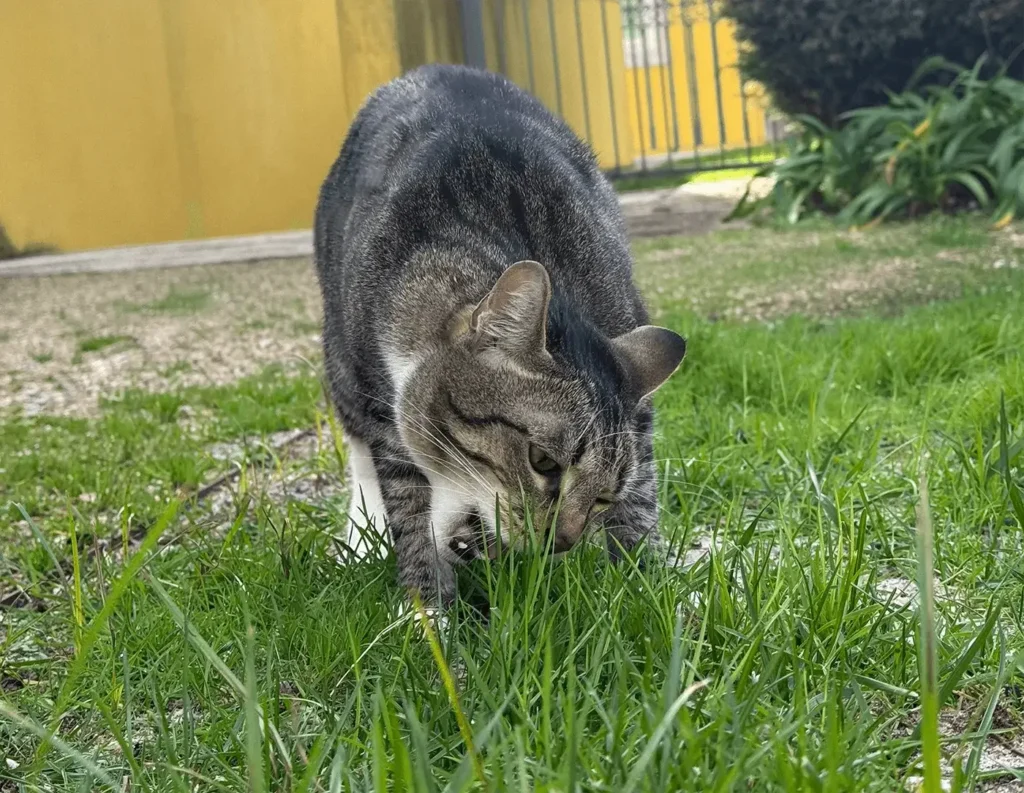
Most cat owners have probably encountered this little oddity: whether you take your cat outside on a leash or buy cat grass at the supermarket, they start eating it as if they haven’t been fed in weeks!
It’s a familiar scene for countless cat owners, and yet the behavior itself remains one of the great feline mysteries.
Grass-eating is incredibly common among domestic cats, but the why behind it isn’t nearly as straightforward as many people think. It’s not just a “my cat must be sick” moment, nor is it some quirky, one-off habit. In fact, research suggests that this leafy nibbling may be tied to instinct, digestion, nutrients, or simply the sensory joy of chewing something crisp and green.
In this blog, we’ll break down the leading theories, each backed by veterinarians, behavior studies, and observations of cats both wild and domestic, to help you understand what’s really going on when your furry companion becomes a part-time herbivore. Let’s dig into the science behind the grass buffet.
Myth-Busting: It’s Not Just About Vomiting
One of the most persistent myths in the cat world goes like this:
“Cats only eat grass when they’re sick.”
It’s an easy assumption to make, after all, many cat parents have seen their feline chow down on some grass, only to vomit it back up minutes later. But here’s the twist: science doesn’t back this up as the main reason behind the habit.
Surveys and veterinary observations reveal that most cats who eat grass show no signs of illness beforehand. In fact, they’re usually acting completely normal — playful, alert, and healthy. Even more telling? Vomiting doesn’t always follow. Many cats eat grass and carry on with their day just fine.
So, what does this mean? Grass-eating isn’t necessarily a red flag or a sign your cat is unwell.It’s regular, instinctive behavior, not a cry for help. Time to stop blaming the grass buffet for every hairball incident and start seeing it for what it is: a curious and complex part of feline nature.
Main Theories Explained
We may never know exactly why they eat grass, but the theories below are the most compelling explanations based on research, observation, and some evolutionary biology.
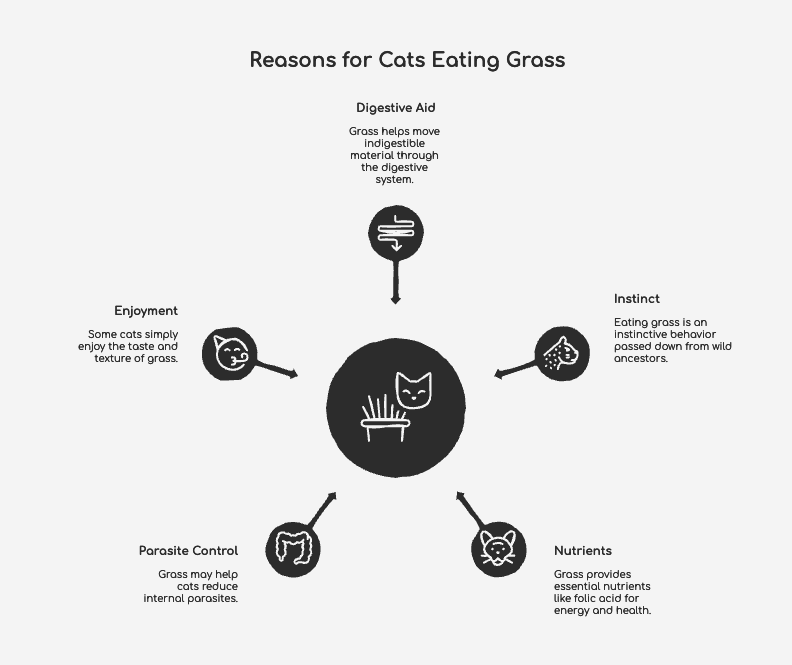
Nature’s Roughage: Grass as a Digestive Aid
Let’s start with the most widely accepted idea: grass helps cats manage their digestion.
How it works:
- Grass acts like a natural fiber, helping to push indigestible materials, like fur from grooming, bones from prey, or feathers, through the digestive system.
- In some cases, eating enough grass triggers vomiting, which can expel hairballs or other materials that don’t pass easily.
Why it makes sense:
- Cats lack the enzymes to break down grass, so while they can’t digest it, they can use it like a scrub brush for their insides.
- This is particularly helpful for indoor or outdoor cats with thick coats, or those who hunt or eat raw diets. It’s their way of keeping the plumbing flowing smoothly.
Parasite Defense: A Wild Instinct
This one taps into your cat’s wild side, yes, even if they’ve never left the sofa.
The theory:
Grass-eating may be an evolved behavior designed to flush out parasites from the digestive system.
Wild cat behavior:
- Studies show that wild carnivores also eat plants, and not randomly; it’s regular and deliberate.
- The fiber in grass stimulates the gut, possibly helping to push out internal parasites or discourage their growth.
Modern twist:
Even though your house cat likely isn’t riddled with parasites, the instinct may still be hardwired. It’s a behavior inherited from their “little panther” ancestors — ancient tools in a modern feline.
A 2019 UC Davis study of over 1,000 cat owners found that most cats (91%) were acting completely normal before grazing — supporting the idea that grass-eating is instinctive, not a sign of sickness.
A Bite of Green for Bonus Nutrients
Turns out, grass isn’t just for maintenance — it may also offer a little nutrient boost.
Grass nutrients:
Grass contains small amounts of folic acid, a B vitamin that plays a role in healthy blood cell production and oxygen transport.
Benefits of folic acid:
It helps the body produce hemoglobin, which carries oxygen through the bloodstream — pretty important for overall health.
Commercial “cat grass”:
You’ll often see cat grass kits (usually wheat, oat, or barley) advertised as safe and nutrient-rich. While it’s unlikely cats eat grass only for nutrients, it may be a helpful bonus, especially for indoor cats without access to natural greenery.
Sensory Enjoyment: Maybe It Just Feels Good
Not every behavior needs a deep biological purpose. Sometimes, it’s just fun.
Taste, texture, sensation:
Some cats may simply enjoy the crunch of fresh blades between their teeth, the smell of grass, or the feeling it gives them.
Hard to study, easy to believe:
Unlike vomiting or nutrient levels, sensory pleasure is tough to quantify in research, but many owners report regular grass-grazing in otherwise healthy, happy cats.Think of it as feline snacking with a satisfying crunch.
The Easy Fix for Indoor Cats: Grow Their Own Grass
If your cat loves a good graze but you’d rather they skip the pesticide-sprayed lawn (or your houseplants), the simplest solution is to give them a pot of their own.
Cat grass — usually wheat, oat, or barley grass — is safe, cheap, and easy to grow on a windowsill from a small kit. It gives indoor cats the fibre and crunchy satisfaction they’re after, without the risks of treated grass or toxic plants. Bonus: a dedicated grass pot often saves your ferns and orchids from becoming the snack instead.
Is It Safe When Cats Eat Grass Outdoors?
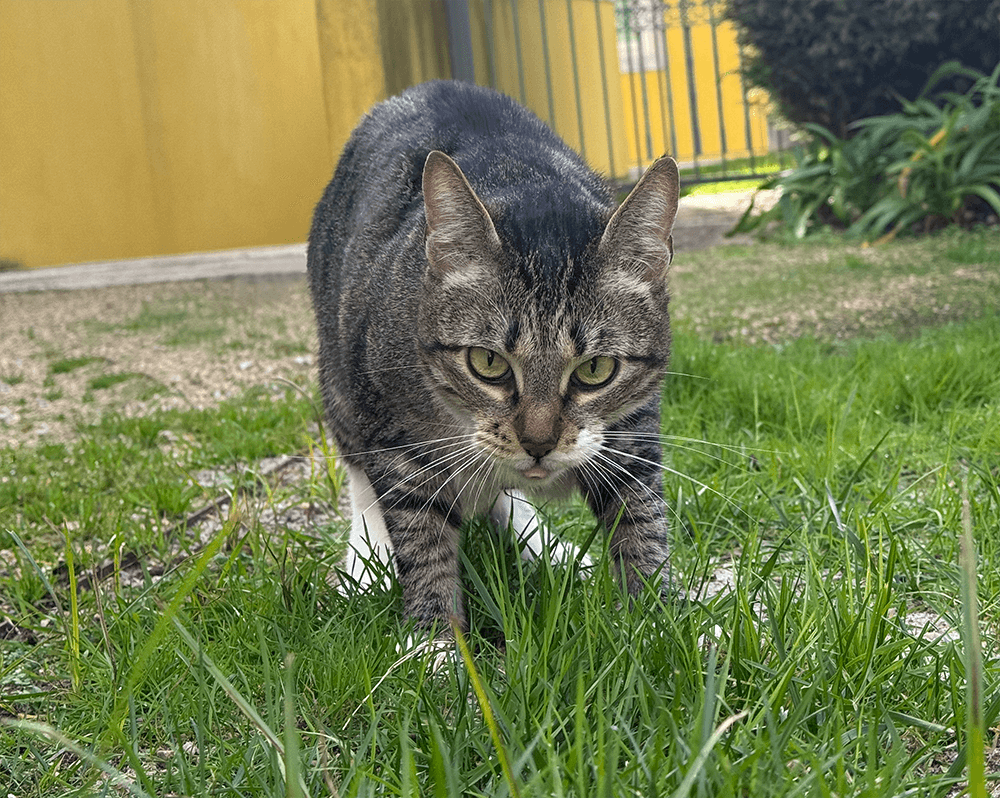
Good news: in most cases, yes, grass-eating is safe. But it’s not completely risk-free.
Generally safe if:
- Your cat only nibbles grass occasionally.
- They’re acting normally, otherwise eating, playing, and grooming like usual.
Watch out for:
- Pesticides, herbicides, and lawn fertilizers — these can cling to grass and be dangerous if ingested.
- Toxic garden plants — some ornamental species look harmless but can be fatal to cats.
Recommendation:
To keep your green-loving feline safe:
- Offer a pot of pesticide-free cat grass indoors or on a balcony.
- Keep an eye on vomiting — if it becomes frequent, or your cat shows other warning signs like lethargy, weight loss, or diarrhea, it’s time to call the vet.
Grass might be on the menu — but safety should always come first.
Why Does My Cat Eat Grass and Then Throw Up?
This is the part that worries owners most: your cat munches a few blades, then brings it right back up minutes later. Here’s the reassuring truth — it’s usually nothing to panic about.
Cats can’t actually digest grass. They don’t have the enzymes to break down the plant fibre, so sometimes the grass tickles the stomach on the way down and comes back up — often carrying swallowed fur and other indigestible bits with it. In other words, the occasional post-grass vomit can be the whole point: a natural reset button for the digestive system.
What matters is the pattern, not the one-off:
- Occasional grass-then-vomit, cat acting normal → totally normal, no action needed.
- Frequent vomiting, with or without grass → time to call your vet. Persistent vomiting can point to hairball problems, food sensitivities, or something that needs checking.
So one grassy hairball on the carpet? Annoying, but normal. A cat vomiting several times a week? That’s a vet conversation — grass or no grass.
Quick Recap: Why Cats Eat Grass
Here’s a handy snapshot of the main theories, what they mean, and how well they’re supported. Whether you skim or study, this table gives you the green-light info at a glance:
| Theory | What It Means for Cats | Evidence/Support |
| Digestive Aid | Grass acts like fiber to move hairballs, bones, and fur through the digestive system. | Strong support from vets and behavior studies; commonly observed in healthy cats. |
| Parasite Control | Grass may help flush out internal parasites by stimulating gut movement. | Supported by wild carnivore behavior; still theoretical but widely discussed. |
| Nutrient Supplement | Grass contains folic acid and trace vitamins that may benefit overall health. | Considered a bonus effect, not the main driver, but plausible for some cats. |
| Sensory Enjoyment | Some cats may simply enjoy the taste, texture, or smell of grass. | Anecdotally common; difficult to study, but likely plays a role for many cats. |
Conclusion
Grass-eating might seem weird at first, but it’s actually one of the most normal things your cat can do outside. Whether they’re managing their digestion, mimicking wild instincts, or just enjoying the crunch, it’s all part of being a cat — one of many quirky feline behaviors worth decoding.
Your role?
Let them nibble, but keep it safe. Avoid chemical-treated lawns, steer clear of toxic plants, and consider growing some clean cat grass at home.
Stay observant, trust your instincts, and let your feline enjoy their leafy habit guilt-free. Because sometimes, a little green goes a long way
Keep reading:
- What Does Your Cat’s Tail Position Really Mean?
- Why Do Cats Knead? (a.k.a. Making Biscuits)
- Why Does My Cat Sit on My Lap?
FAQ
Yes, it’s totally normal! Most cats eat grass occasionally, and it’s considered typical feline behavior. It’s not always linked to illness and can actually serve several purposes, like aiding digestion or providing fiber.
Not necessarily. Occasional vomiting after grass consumption isn’t uncommon and can help cats expel hairballs or indigestible material. However, if vomiting becomes frequent or your cat shows signs of illness (like lethargy or weight loss), consult your vet.
Even without hunting prey, indoor cats still groom themselves and swallow hair, which can build up in the digestive system. Grass helps move it through or trigger vomiting. It may also satisfy nutritional or sensory needs.
Generally, yes, but be cautious. Avoid grass treated with pesticides, herbicides, or fertilizers, and keep an eye out for toxic plants in the garden. Safer option? Offer indoor pots of pesticide-free “cat grass.”
Look for commercial cat grass blends — usually wheatgrass, oat grass, or barley. These are safe, easy to grow, and packed with fiber and trace nutrients. Avoid random lawn grass unless you know it’s untreated and free of harmful plants.
Was this article helpful?