
Aphrodite Giant
The Aphrodite Giant is a natural large breed from Cyprus and one of the world's oldest cat lineages. These gentle giants are affectionate, adaptable family companions.
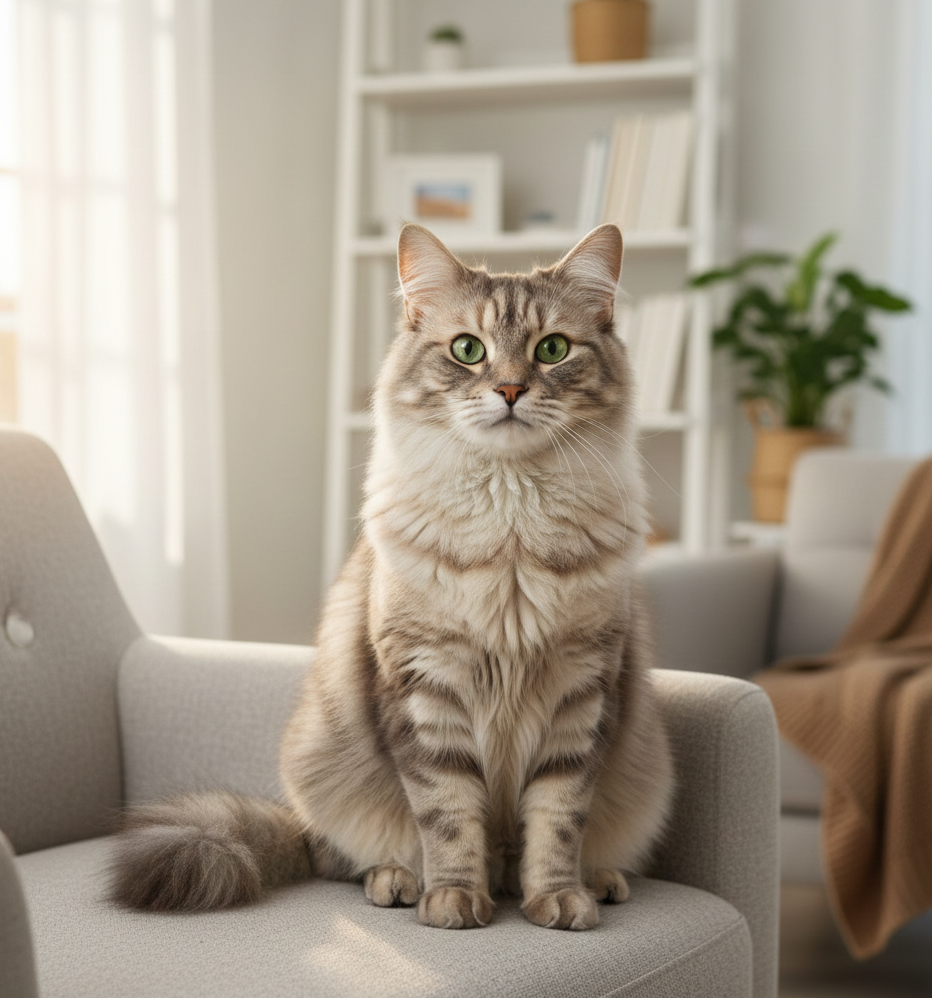
About the Aphrodite Giant
History and Origins
The Aphrodite Giant — also called the Cyprus cat or Aphrodite’s Giant — descends from the ancient cats that have lived on the island of Cyprus for thousands of years. Cyprus holds a special place in feline history: one of the earliest known examples of a human buried with a cat, dating back roughly 9,500 years, was discovered there. Some Cypriot breeders trace the Aphrodite directly to these ancient cats, while cat organizations more cautiously describe it as a natural breed that evolved from the feral cats of the island’s mountain regions.
Unlike most modern breeds, the Aphrodite Giant developed with little human intervention, which gives it a hardy, natural constitution. The World Cat Federation (WCF) officially began recognizing the breed around 2012, and The International Cat Association (TICA) followed in 2017. It remains rare outside Cyprus.
Personality and Temperament
Aphrodite Giants are gentle, affectionate, and highly adaptable — true “gentle giant” companions. They bond closely with their families and enjoy being involved in household life, yet they carry themselves with an independent, confident air rooted in their free-living ancestry. They are not typically clingy, striking a comfortable balance between affection and self-reliance.
Intelligent and even-tempered, they generally do well with children, other cats, and dogs, making them a fine choice for active family homes. Their natural background also means they tend to be curious, capable climbers who appreciate space to explore. One notable quirk of the breed is how slowly it matures — Aphrodite Giants can take up to three years to reach their full adult size and temperament, remaining playful and youthful well into adulthood.
Care and Grooming
The Aphrodite Giant’s semi-long coat is surprisingly low-maintenance for its length. It lacks a heavy undercoat, so it is less prone to matting than many longhaired breeds. Brushing once or twice a week is usually enough to remove loose hair and keep the coat healthy, increasing slightly during seasonal shedding.
As a large, athletic, naturally active breed, the Aphrodite benefits from space and enrichment. Provide a sturdy, large cat tree, room to climb, and interactive play to satisfy its energetic, curious side. Because these cats mature slowly, they keep their playful nature for years, so ongoing engagement matters. Round out care with routine nail trims, weekly ear checks, dental hygiene, and a quality diet suited to a large-framed cat.
Health and Lifespan
The Aphrodite Giant is considered one of the healthier breeds precisely because it developed naturally, without the intensive inbreeding behind some pedigreed cats. It has no widely documented breed-specific genetic diseases, and a typical lifespan is 12–15 years, with some sources citing a broader 9–15 year range depending on care and genetics.
That said, “generally healthy” does not mean risk-free. As with any cat, responsible breeders screen for conditions such as hypertrophic cardiomyopathy, and all cats benefit from routine veterinary care, dental attention, and a healthy weight. The breed’s slow maturation is normal and not a health concern.
Cost and Is the Aphrodite Giant Right for You?
Because the Aphrodite Giant is rare and concentrated in Cyprus and parts of Europe, pricing and availability vary widely, and prospective owners outside those regions may need to import a kitten or join a lengthy waitlist. Where available, kittens generally fall within the typical pedigreed-cat range, but import and travel costs can add significantly to the total.
The Aphrodite Giant suits families and individuals who want a large, gentle, adaptable companion with a natural, hardy constitution and fewer inherited health worries. They fit active homes with space to climb and explore and do well with children and other pets. They are less ideal for those seeking a small lap cat, or anyone unable to source such a rare breed.
Frequently Asked Questions
Aphrodite Giants live up to their name. Males can reach 15–24 pounds, making them one of the larger domestic breeds, while females are somewhat smaller. They are solidly built and muscular rather than merely tall. Notably, they mature slowly and do not reach their full adult size until around three years of age.
In a sense, yes. The breed descends from cats that have lived on Cyprus for thousands of years — the island is home to some of the earliest evidence of cats living alongside humans. However, as a formally recognized breed it is quite modern, gaining World Cat Federation recognition around 2012 and TICA recognition in 2017.
They are gentle, affectionate, and adaptable, yet more independent than clingy. Aphrodite Giants bond with their families and enjoy being part of daily life while retaining a confident, self-reliant streak from their natural, free-living ancestry. They are intelligent, curious, and generally good with children and other pets, and they stay playful well into adulthood.
Yes. The World Cat Federation (WCF) officially began recognizing the Aphrodite Giant around 2012, and The International Cat Association (TICA) recognized it in 2017. Despite this formal recognition, the breed remains rare, with most breeding still centered in Cyprus and a limited presence elsewhere.
Yes, very. The Aphrodite Giant is uncommon outside its native Cyprus and parts of Europe, with relatively few breeders worldwide. Prospective owners in other regions often face long waitlists or the need to import a kitten. This scarcity, combined with the breed's recent formal recognition, keeps it one of the lesser-known large cat breeds.