
Manx
The Manx is a tailless breed from the Isle of Man with a round appearance and a rabbit-like hop. These loyal, playful cats are famous for their hunting skills, dog-like devotion, and gentle nature.
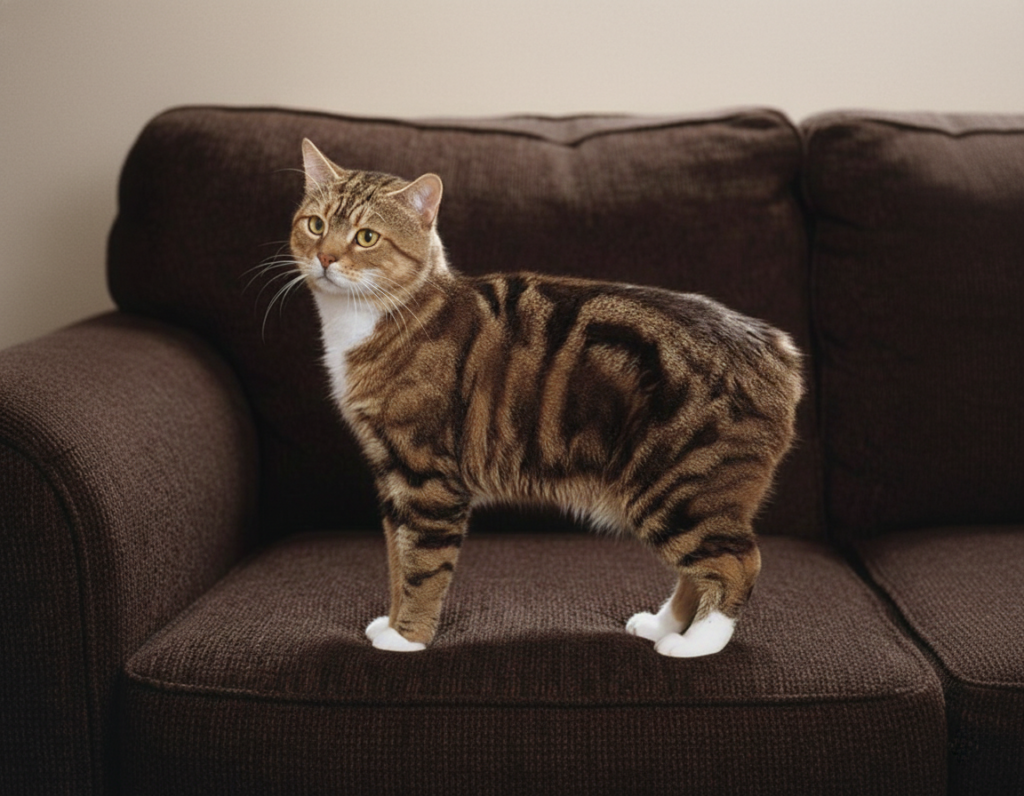
About the Manx
History and Origins
The Manx is an ancient natural breed that developed on the Isle of Man, a small island between England and Ireland. With no tail of its own to explain, the island bred plenty of folklore — from tales that the Manx was late boarding Noah’s Ark and had its tail caught in the door, to stories of cats swimming ashore from shipwrecks. The real explanation is far simpler: a natural genetic mutation arose in the island’s isolated cat population and, because the gene is dominant, spread quickly through generations of island cats.
The Manx is one of the oldest recognized breeds and was among the founding breeds of the Cat Fanciers’ Association in the late 1800s. Its taillessness, round body, and hopping gait have made it instantly recognizable for well over a century.
Personality and Temperament
Manx cats are often described as the most dog-like of the traditional breeds. They are intensely loyal, bond closely with their families, and frequently follow their favorite person around the house. Many enjoy playing fetch, can be taught tricks, and will even “guard” the home, growling at unfamiliar sounds.
They are playful, intelligent, and highly skilled hunters — a legacy of generations of working farm and ship cats. Despite that active streak, Manx are gentle and even-tempered, making them excellent with children and other pets. They are people-oriented and sociable without being overly demanding, and some are known to enjoy water. Their loyal, affectionate, and playful nature makes them wonderfully engaging companions for families who want an interactive cat.
Care and Grooming
Grooming depends on coat length — the Manx comes in both shorthair and longhair (sometimes called the Cymric). The short, dense double coat needs a weekly brush, while longhaired Manx need brushing two to three times a week to prevent tangles. They shed a moderate amount, more during seasonal changes.
Pay attention to the rear end: because many Manx have little or no tail, the area around the rump can need occasional gentle cleaning. Any tail stump present should be handled carefully, as it can be sensitive or prone to arthritis with age. Beyond that, keep up with routine nail trims, ear checks, and dental care. Manx are active and playful, so provide toys, climbing spots, and interactive play to satisfy their strong hunting instincts.
Health and Lifespan
Manx cats typically live 12–14 years, but prospective owners must understand the breed’s central health issue. The same dominant gene that shortens or removes the tail can affect spinal development, causing a group of problems known collectively as Manx Syndrome. In affected cats, the shortened spine and spinal cord can lead to issues with the bowel, bladder, and hind legs. It usually becomes apparent by four to six months of age, so reputable breeders keep kittens until they’re confirmed healthy.
Crucially, inheriting two copies of the Manx gene is fatal in the womb, which is why breeders never mate two fully tailless (“rumpy”) cats — they pair a tailless Manx with a tailed cat to keep kittens healthy. Choose a responsible breeder who does this and screens their lines. With good care, most Manx are healthy, sturdy cats.
Cost and Is the Manx Right for You?
A Manx kitten from a reputable breeder generally costs $400 to $1,500 in the United States, with rumpies (fully tailless) and show lines at the higher end. Because responsible breeding requires pairing tailless with tailed cats, healthy kittens are worth seeking out from ethical breeders rather than bargain sources.
The Manx suits families and individuals who want a loyal, playful, dog-like companion that’s good with children and other pets. Their sociable, adaptable nature fits most homes. They are less ideal only for those unwilling to choose an ethical breeder who screens for Manx Syndrome — since the breed’s defining trait carries real health responsibility, sourcing matters more than usual.
Explore More
Fascinated by the Manx’s missing tail? Don’t miss our full guide to Manx cat tail types — rumpies, risers, stumpies and more. For more on feline body language, read what your cat’s tail position really means, or browse all cat breeds.
Frequently Asked Questions
No. Manx cats show a range of tail lengths because of how the Manx gene expresses. "Rumpies" are completely tailless, "rumpy risers" have a small rise of bone, "stumpies" have a short partial tail, and "longies" have a nearly normal tail. This variation can even appear within a single litter. Learn more in our guide to Manx cat tail types.
The main concern is Manx Syndrome, caused by the same gene that affects the tail. It can lead to spinal, bowel, bladder, and hind-leg problems, and usually shows up by four to six months of age. Because two copies of the gene are fatal before birth, ethical breeders always pair a tailless Manx with a tailed cat. Choosing a responsible breeder greatly reduces the risk.
Manx cats have longer hind legs than front legs, combined with a rounded body and (often) no tail for counterbalance. This gives them their characteristic bouncy, rabbit-like gait, sometimes called the "Manx hop." It's a normal breed trait tied to their build. However, an unusual or worsening gait can also be a sign of Manx Syndrome, so it's worth mentioning any changes to your vet.
Excellent ones. The Manx earned its keep for centuries as a working farm and ship cat, prized for controlling rodents. That strong hunting instinct remains today — Manx are agile, quick, and highly motivated hunters. Even as pampered house pets, they love to chase, pounce, and "hunt" toys, so interactive play is a great way to satisfy this natural drive.
No — this should never be done. Inheriting two copies of the Manx gene is fatal to kittens before birth, so mating two fully tailless (rumpy) cats results in lost litters and health risks. Responsible breeders always pair a tailless Manx with a tailed cat, which produces healthy kittens with the range of tail types the breed is known for.