
Cymric
The Cymric is the long-haired version of the Manx, sharing its distinctive tailless trait. These loyal, playful cats combine a round, plush appearance with an affectionate, dog-like personality.
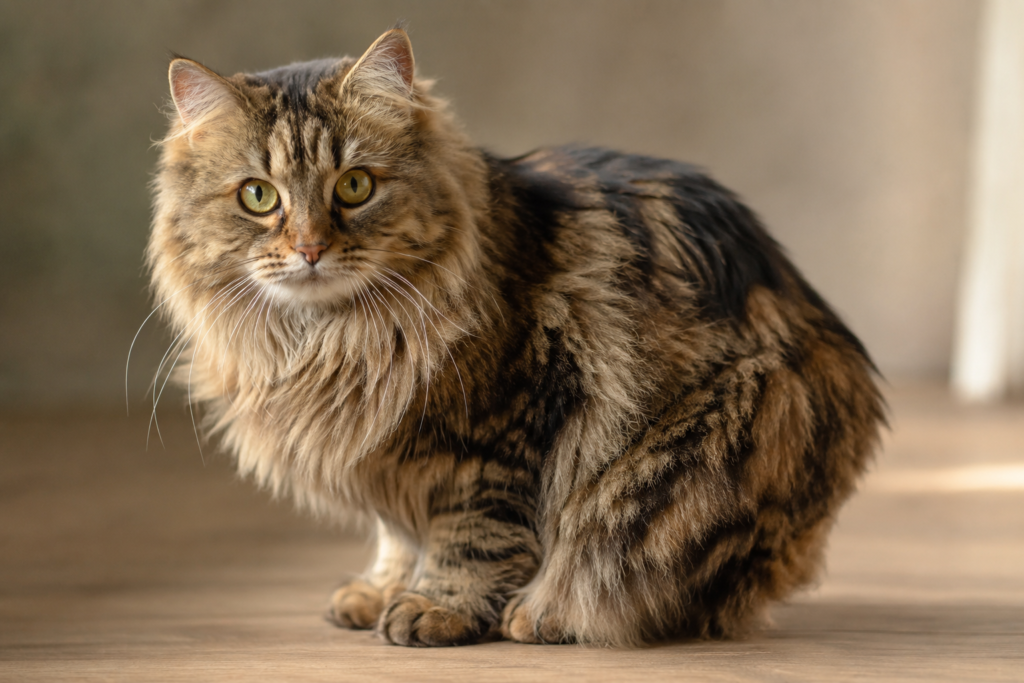
About the Cymric
History and Origins
The Cymric (pronounced “KIM-rick”) is essentially a long-haired Manx — genetically the same breed, with the same tailless mutation, simply carrying a long coat. Long-haired kittens appeared naturally in Manx litters (the Manx originated on the Isle of Man), and breeders in Canada in the 1960s developed them into a recognized variety. The name comes from Cymru, the Welsh word for Wales, chosen to give the cat a Celtic-sounding name in keeping with its British-Isles heritage.
Because the Cymric and Manx are the same breed in different coat lengths, some registries classify the Cymric as simply the “longhair Manx.” It shares the Manx’s round body, hopping gait, and — importantly — the same genetics behind its tail, which brings both its charm and its health considerations.
Personality and Temperament
Cymrics have the same wonderful temperament as the Manx and are often described as the most dog-like of cats. They are intensely loyal, bond closely with their families, and love to follow their favorite person around the house. Many enjoy playing fetch, learn tricks readily, and will even “guard” the home, alerting you to unfamiliar sounds.
Despite their stocky, rounded build, they are surprisingly athletic — powerful jumpers with strong hunting instincts inherited from generations of working farm and ship cats. At the same time, they are gentle, patient, and even-tempered, which makes them excellent with children and other pets. Sociable and affectionate without being overly demanding, the Cymric is an engaging, devoted companion for families who want an interactive, playful cat.
Care and Grooming
Unlike the short-coated Manx, the Cymric’s long, silky double coat needs regular grooming. Brushing two to three times a week keeps it free of tangles and mats, increasing during the heavier seasonal sheds. Pay particular attention to the ruff, belly, and hindquarters, where mats tend to form.
Because many Cymrics have little or no tail, the rear area may need occasional gentle cleaning, and any tail stump should be handled carefully, as it can be sensitive or prone to arthritis with age. Beyond that, keep up with routine nail trims, ear checks, and dental care. Cymrics are active and playful, so provide toys, climbing spaces, and interactive play to satisfy their strong hunting drive.
Health and Lifespan
Cymrics typically live 12–14 years, but because they carry the same gene as the Manx, they share the breed’s central health concern: Manx Syndrome. The dominant tailless gene can affect spinal development, potentially causing problems with the spine, bowel, bladder, and hind legs. It usually becomes apparent by four to six months of age, so responsible breeders keep kittens until they’re confirmed healthy.
Crucially, inheriting two copies of the gene is fatal before birth, so ethical breeders never mate two fully tailless cats — they pair a tailless Cymric or Manx with a tailed cat to keep kittens healthy. Choose a responsible breeder who does this and screens their lines. With good care, most Cymrics are healthy, sturdy cats.
Cost and Is the Cymric Right for You?
A Cymric kitten from a reputable breeder generally costs $400 to $1,500 in the United States, with fully tailless “rumpies” and show lines at the higher end. Because responsible breeding requires pairing tailless with tailed cats, healthy kittens are worth seeking from ethical breeders rather than bargain sources.
The Cymric suits families and individuals who want a loyal, playful, dog-like companion that’s good with children and other pets, and who don’t mind grooming a long coat. Their sociable, adaptable nature fits most homes. They are less ideal for those unwilling to choose an ethical breeder who screens for Manx Syndrome, since — as with the Manx — the breed’s defining trait carries real health responsibility.
Explore More
The Cymric is the long-haired Manx — so don’t miss the Manx breed guide and our full guide to Manx cat tail types. For more on feline body language, read what your cat’s tail position really means, or browse all cat breeds.
Frequently Asked Questions
The only difference is coat length. The Cymric has a long, silky double coat, while the Manx has a short coat. Otherwise they are the same breed, sharing the same tailless mutation, round body, hopping gait, dog-like personality, and health considerations. In fact, some registries classify the Cymric simply as the long-haired variety of the Manx rather than a separate breed.
No. Like the Manx, Cymrics show a range of tail lengths: completely tailless ("rumpies"), a small rise of bone ("rumpy risers"), a short partial tail ("stumpies"), or a nearly full tail ("longies"). This variation can appear even within a single litter, because of how the Manx gene expresses. The fully tailless rumpies are the most prized for showing.
The main concern is Manx Syndrome, caused by the same gene that affects the tail. It can lead to spinal, bowel, bladder, and hind-leg problems and usually shows up by four to six months of age. Because two copies of the gene are fatal before birth, ethical breeders always pair a tailless cat with a tailed one. Buying from a responsible, screening breeder greatly reduces the risk.
Cymrics need brushing two to three times a week to keep their long, silky double coat free of tangles and mats, with more frequent grooming during seasonal shedding. Focus on the ruff, belly, and back legs where mats form. Unlike the low-maintenance short-haired Manx, the Cymric's coat will mat if neglected, so consistent grooming is important to keep it healthy and comfortable.
Yes, fairly rare. As the long-haired variety of an already uncommon breed, the Cymric can be hard to find, and — because ethical breeding requires pairing tailless cats with tailed ones — healthy tailless kittens are limited. Expect to seek out a specialist breeder and possibly a waitlist. Always choose a reputable breeder who screens for Manx Syndrome rather than an unverified source.