
Japanese Bobtail
The Japanese Bobtail is an ancient breed with a distinctive pom-pom tail and deep cultural significance in Japan. These friendly, active cats are known for their "singing" voices and endlessly playful personalities.
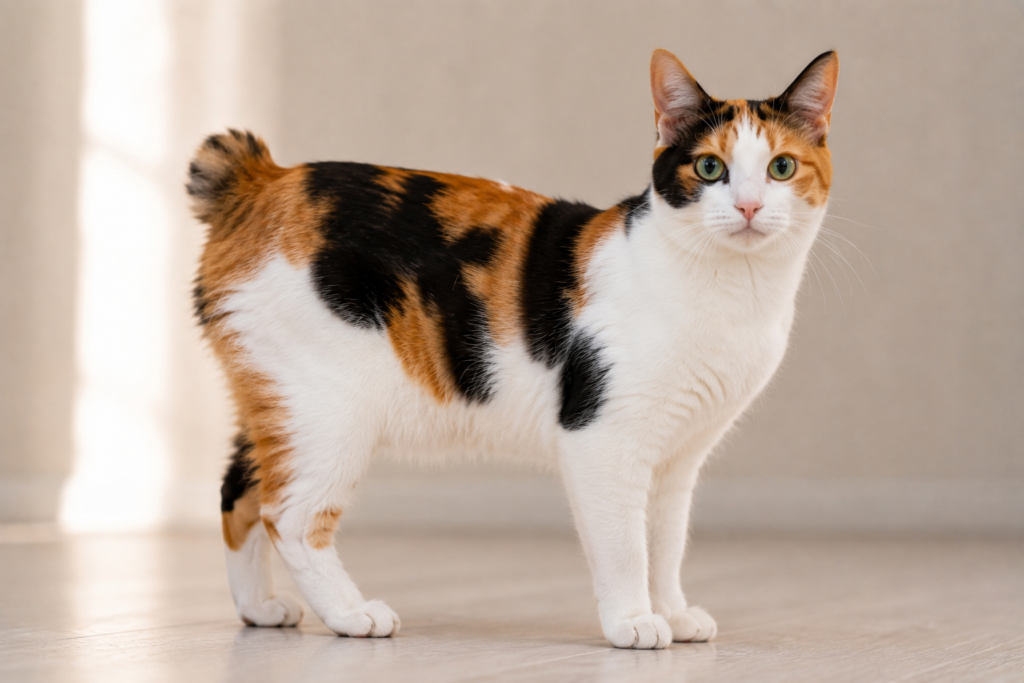
About the Japanese Bobtail
History and Origins
The Japanese Bobtail is one of the world’s oldest natural breeds, with a documented presence in Japan stretching back more than a thousand years. Brought to Japan from China and Korea centuries ago, these cats became woven into Japanese culture — appearing in temple art, silk paintings, and folklore as symbols of good fortune.
Most famously, the Japanese Bobtail is the inspiration for the “Maneki-neko,” the beckoning cat figurine — paw raised in invitation — that stands in shops and homes across the world as a good-luck charm. The breed was brought to the United States in the 1960s and formally recognized in the 1970s. Its short tail comes from a recessive gene that affects only the tail vertebrae — importantly, a completely different mutation from the Manx, and one that is not linked to spinal or health problems.
Personality and Temperament
Japanese Bobtails are lively, intelligent, and wonderfully social. They are active and playful, staying kitten-like for years and loving interactive games — many learn to play fetch, carry toys in their mouths, and perform tricks. They are agile athletes and enthusiastic climbers who like to be up high and in the middle of the action.
One of their most charming traits is their voice: rather than a typical meow, Japanese Bobtails “sing,” producing a range of soft, musical chirps and trills to chat with their humans. They are people-oriented, confident, and adaptable, forming strong bonds with their families and generally getting along beautifully with children, dogs, and other cats. Friendly and outgoing, a Japanese Bobtail is an engaging, good-natured companion that loves company.
Care and Grooming
Grooming is easy and depends on coat length, as the breed comes in both short- and long-haired varieties. The silky coat has little undercoat, so it resists matting: a weekly brush suffices for shorthairs, while longhairs benefit from brushing two to three times a week. They shed a moderate amount.
The pom-pom tail needs no special care but is worth admiring — each one is unique, like a fingerprint, formed of curves and kinks in the shortened vertebrae. Beyond coat care, Japanese Bobtails need plenty of enrichment to match their active minds and bodies: provide climbing spaces, interactive toys, and daily play. Many enjoy water, too. Round out care with routine nail trims, ear checks, and dental hygiene.
Health and Lifespan
The Japanese Bobtail is one of the healthiest, hardiest cat breeds, frequently living 15–18 years or more. Crucially, the gene responsible for its short tail is not associated with the health problems seen in some other tailless or short-tailed breeds — unlike the Manx gene, it affects only the tail and has no known link to spinal or neurological issues. This makes the Japanese Bobtail a naturally robust breed with no significant breed-specific genetic diseases.
As with any cat, good care matters: buy from a reputable breeder, keep your cat at a healthy weight, feed a quality diet, and maintain regular veterinary and dental checkups. Barring the usual feline health considerations, Japanese Bobtails tend to be sturdy, long-lived companions.
Cost and Is the Japanese Bobtail Right for You?
A Japanese Bobtail kitten from a reputable breeder generally costs $600 to $1,600 in the United States, with the prized tri-color “Mi-ke” (calico) pattern and show-quality lines running higher. The breed is relatively uncommon outside Japan, so expect to seek out a specialist breeder.
The Japanese Bobtail is a great fit for active families and individuals who want a friendly, playful, intelligent companion that’s sociable with children and other pets. Their adaptable, outgoing nature suits busy, lively households, and they thrive on interaction and play. They are less ideal for those wanting a calm, quiet lap cat, or for homes unable to provide the stimulation and companionship this energetic, people-loving breed needs.
Explore More
Fascinated by short-tailed cats? Compare the healthy bobtail gene with the very different genetics of the tailless Manx, and read our guide to Manx cat tail types. For more feline body language, see what your cat’s tail position really means, or browse all cat breeds.
Frequently Asked Questions
Their signature pom-pom tail is caused by a recessive gene that affects the tail vertebrae, curling and shortening them into a unique bobbed shape. Importantly, this is a completely different mutation from the Manx gene — it affects only the tail and is not linked to spinal or health problems. Every Japanese Bobtail's tail is one of a kind, like a fingerprint.
Yes — they are considered one of the healthiest cat breeds. Because their tail gene affects only the tail (unlike the Manx), it carries no associated health problems, and the breed has no significant breed-specific genetic diseases. Japanese Bobtails are naturally hardy and long-lived, often reaching 15–18 years or more with good care, a healthy weight, and regular veterinary checkups.
Many do. Japanese Bobtails are curious, confident cats, and quite a few enjoy playing with water — pawing at running taps, splashing in bowls, or investigating the bathtub. It's not universal, but the breed's playful, inquisitive nature means water often becomes just another fun thing to explore. A dripping faucet or a cat fountain can be great entertainment for them.
Yes, but in a delightful way. Rather than a standard meow, Japanese Bobtails are famous for "singing" — producing a range of soft, musical chirps, trills, and coos to communicate with their people. They're chatty and expressive without being loud or demanding, and owners often describe holding little "conversations" with them throughout the day.
In Japan, the Japanese Bobtail is a symbol of good luck and prosperity. It inspired the world-famous "Maneki-neko," the beckoning cat figurine with a raised paw seen in shops and homes as a charm to attract fortune and welcome visitors. The tri-color "Mi-ke" pattern is considered especially lucky, deepening the breed's long association with good fortune.