
Kurilian Bobtail
The Kurilian Bobtail is a natural breed from Russia's Kuril Islands with a distinctive pom-pom tail. These intelligent hunters are gentle with their families.
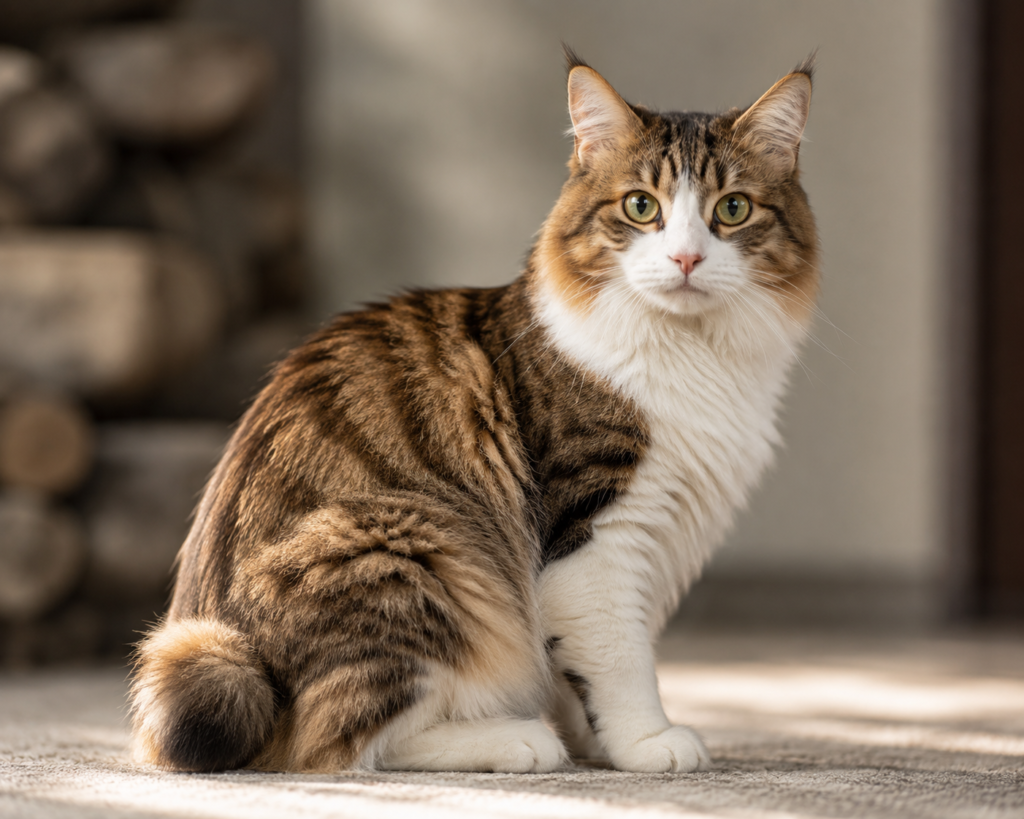
About the Kurilian Bobtail
History and Origins
The Kurilian Bobtail is an ancient natural breed from the Kuril Islands, a remote volcanic archipelago stretching between Russia and Japan. For centuries these cats lived semi-wild on the islands, prized by locals as superb hunters — including, famously, as skilled fishers. Shaped entirely by nature rather than by breeders, they developed a hardy, muscular build and a weatherproof coat suited to a harsh island climate.
The cats were brought to the Russian mainland in the mid-20th century, and formal breeding began in the 1990s. The breed is now recognized by several international registries, though it remains rare outside Russia and Eastern Europe. Its signature short “pom-pom” tail arises from a natural genetic mutation — distinct from both the Manx and the Japanese Bobtail — and, importantly, one that is not linked to spinal or health problems.
Personality and Temperament
Kurilian Bobtails combine a wild, rugged look with a wonderfully gentle, affectionate temperament. They are intelligent, curious, and often described as dog-like: loyal, trainable, and eager to be involved in family life. Many learn to play fetch, walk on a harness, and follow their people from room to room.
Despite their strong hunting heritage, they are calm, even-tempered, and sociable, getting along well with children, dogs, and other cats. They are playful and active without being hyperactive, and they tend to bond deeply with their whole family rather than a single person. A notable quirk inherited from their island past: many Kurilian Bobtails genuinely love water and enjoy splashing and “fishing.” Confident, adaptable, and good-natured, they make engaging, devoted companions.
Care and Grooming
Grooming is straightforward and depends on coat length, as the breed comes in both short- and long-haired varieties. The water-resistant double coat resists matting reasonably well: shorthairs need a weekly brush, while longhairs benefit from brushing two to three times a week, with extra attention during seasonal shedding. They shed a moderate amount.
The unique pom-pom tail needs no special care — each one is different, made up of curves and kinks in the shortened vertebrae. Beyond coat care, Kurilian Bobtails are active, intelligent cats that need enrichment: climbing spaces, interactive toys, and daily play keep them satisfied. Many enjoy water play, too. Round out care with routine nail trims, ear checks, and dental hygiene.
Health and Lifespan
The Kurilian Bobtail is one of the healthiest, hardiest breeds, frequently living 15–20 years. As a natural breed shaped by survival on remote islands — and, crucially, because its tail mutation affects only the tail and is not associated with the spinal problems seen in the Manx — it has a robust constitution and no significant breed-specific genetic diseases.
This natural hardiness is one of the breed’s biggest attractions. As with any cat, good care still matters: buy from a reputable breeder, keep your cat at a healthy weight, feed a quality diet, and maintain regular veterinary and dental checkups. Barring the usual feline health considerations, Kurilian Bobtails tend to be sturdy, long-lived companions.
Cost and Is the Kurilian Bobtail Right for You?
A Kurilian Bobtail kitten from a reputable breeder generally costs $600 to $1,500 in the United States, sometimes more given the breed’s rarity outside Russia. Expect to seek out a specialist breeder and possibly a waitlist.
The Kurilian Bobtail suits families and individuals who want a loyal, gentle, intelligent companion with a striking natural appearance and excellent health. Their calm, sociable, dog-like nature makes them great with children and other pets, and their hardiness makes them easy keepers. They are less ideal only for those wanting a small, delicate lap cat, or anyone unable to provide the enrichment this active, clever breed appreciates.
Frequently Asked Questions
They look similar and both have pom-pom tails, but they're distinct breeds with different genetics and origins. The Kurilian Bobtail comes from Russia's Kuril Islands and is larger, more muscular, and semi-cobby, while the Japanese Bobtail is finer-boned and from Japan. Their tail mutations arose independently. Both are healthy breeds whose tails, unlike the Manx, aren't linked to spinal problems.
Very few — they're considered one of the healthiest breeds. As a natural, un-manipulated breed, the Kurilian Bobtail has a robust constitution and no significant breed-specific genetic diseases. Importantly, its short-tail gene affects only the tail and isn't associated with the spinal or neurological problems seen in some other tailless breeds. With good care, they're hardy and often live 15–20 years.
Yes. Every Kurilian Bobtail's pom-pom tail is one of a kind, formed from a unique combination of curves, kinks, and angles in the shortened tail vertebrae — much like a fingerprint. Tails vary in length and shape between individuals, and breeders describe them using terms like "whisk," "spiral," and "pom-pom." This individuality is part of the breed's distinctive charm.
Excellent ones. The breed developed on remote islands where hunting was essential for survival, and Kurilian Bobtails retain powerful hunting instincts and athleticism. They're famous for being skilled fishers, too, thanks to their comfort around water. Even as house pets, they love to chase, pounce, and "hunt" toys, so interactive play is a great way to satisfy this natural drive.
Yes, quite rare — especially outside Russia and Eastern Europe, where the breed is most established. There are relatively few breeders elsewhere, so kittens can be hard to find and often come with a waitlist. This rarity, combined with the breed's striking looks, unique tail, and excellent health, makes a genuine Kurilian Bobtail a special find from a reputable source.