
Peterbald
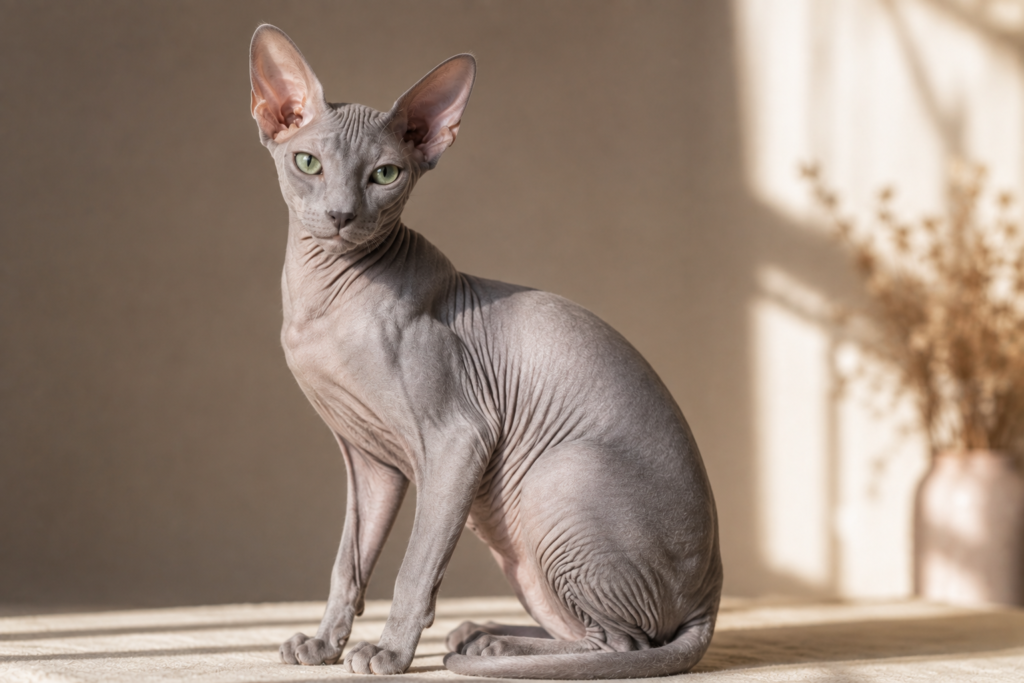
The Peterbald is an elegant Russian hairless breed with a graceful, Oriental-type build. Affectionate, social, and devoted, these people-loving cats form intense bonds and love to be at the center of family life.
About the Peterbald
History and Origins
The Peterbald is a young breed, developed in St. Petersburg, Russia, in 1994 — the name combines the city (“Peter”) with “bald.” Breeder Olga Mironova crossed a Donskoy (Don Sphynx), a Russian hairless cat, with an Oriental Shorthair, aiming to combine the Don Sphynx’s hairlessness with the Oriental’s sleek, elegant body and refined features.
The result was a graceful, slender cat carrying the Don Sphynx’s dominant hairlessness gene — notably a different gene from the Sphynx’s recessive one. The breed was recognized in Russia and later internationally. Because it descends from the Oriental and Siamese family, the Peterbald shares much of their body type, intelligence, and affectionate, people-oriented personality.
Personality and Temperament
Peterbalds are among the most affectionate and social of all cats. They bond intensely with their families and want to be involved in absolutely everything — following you room to room, riding on your shoulder, “helping” with chores, and curling up with you at night (partly for love, partly for warmth). They are true “velcro cats” that crave companionship and do not cope well with being left alone for long.
Thanks to their Oriental heritage, they are also intelligent, active, playful, and often talkative, “conversing” with their owners and learning tricks and games readily. They are curious, confident, and interactive, generally getting along well with children, dogs, and other cats. In an attentive home — ideally with a companion pet — the Peterbald is a devoted, engaging, almost dog-like companion.
Care and Grooming
Peterbalds come in a range of coat types, from completely bald to a fine “flock,” “velour,” or “brush” texture, up to a full straight coat — so grooming needs vary. The key point is that hairless and near-hairless cats need more skin care, not less. With little or no coat to absorb skin oils, they can develop a greasy or sticky feel, so they need regular gentle bathing (or wiping) to keep the skin clean and healthy, plus regular ear cleaning, since ears also produce more wax.
Their bare skin also means they get cold easily and seek warmth, so provide cozy beds, warm spots, and sweaters in winter. Because they have no protective fur, they can sunburn and shouldn’t have unlimited direct sun exposure. Round out care with routine nail trims and dental hygiene, and keep them as indoor cats to protect their delicate skin.
Health and Lifespan
Peterbalds are generally a healthy breed with a typical lifespan of 12–15 years. Their main care considerations come from the hairlessness itself — skin care, warmth, and sun protection — rather than a long list of genetic diseases. That said, because they descend from Oriental and Siamese lines, they can be prone to dental issues and can inherit some Oriental-related concerns, so good dental care matters.
One point specific to hairless breeds: kittens that inherit two copies of the strongest hairless gene can have coat or health complications, which is why responsible breeders manage matings carefully. Choose a reputable breeder, keep your Peterbald warm, clean, and at a healthy weight, and maintain regular veterinary and dental checkups.
Cost and Is the Peterbald Right for You?
A Peterbald kitten from a reputable breeder generally costs $1,200 to $2,500 in the United States, with fully hairless, show-quality kittens at the higher end. The breed is relatively uncommon, so expect to find a specialist breeder and possibly a waitlist.
The Peterbald suits people who want an intensely affectionate, interactive, and unusual-looking companion, and who are home often enough to give it constant attention. They’re ideal for warm homes, families, and multi-pet households — ideally with a feline friend. They are a poor fit for anyone wanting an independent cat, for cold homes, or for owners unwilling to commit to the skin care and warmth a hairless breed requires.
Frequently Asked Questions
No. Peterbalds come in several coat types, ranging from completely bald ("naked") through fine textures called "flock," "velour," and "brush," all the way to a full straight coat. Even coated Peterbalds carry the breed's genetics and elegant type. The degree of hairlessness can also change as a kitten matures. So while the bald look is iconic, not every Peterbald is fully hairless.
Yes. Hairless and near-hairless Peterbalds need regular gentle bathing or wiping, because without a coat to absorb them, skin oils build up and can make the skin feel greasy. Their ears also need frequent cleaning. They get cold easily, so they need warm spots and sometimes sweaters, and their bare skin can sunburn, so direct sun should be limited. They're best kept as indoor cats.
Not truly. No cat is fully hypoallergenic, and hairless breeds are no exception — the main allergen, Fel d 1, is produced in saliva and skin, not just fur. However, because hairless Peterbalds shed little to no hair, some allergy sufferers find them easier to tolerate, since less allergen is spread around the home on loose fur. Anyone with allergies should spend time with one first.
Both are hairless, but they're distinct breeds. The Peterbald has a slender, elegant Oriental-type body with a long wedge-shaped head and large ears, and its hairlessness comes from a dominant gene, with several coat variations possible. The Sphynx is stockier and more muscular with a rounder face, and its hairlessness comes from a different, recessive gene. Their body types and origins are quite different.
Extremely. Peterbalds are among the most affectionate and people-oriented of all breeds, bonding intensely with their families and wanting to be involved in everything. They're "velcro cats" that follow their owners around, cuddle for warmth and love, and dislike being left alone. Combined with their playful, talkative, intelligent nature, this makes them devoted, interactive companions for anyone who wants a truly close feline bond.