
Russian Blue
The Russian Blue is an elegant breed with a shimmering silver-blue coat and striking green eyes. These gentle, shy cats form deep bonds with their families while staying reserved with strangers.
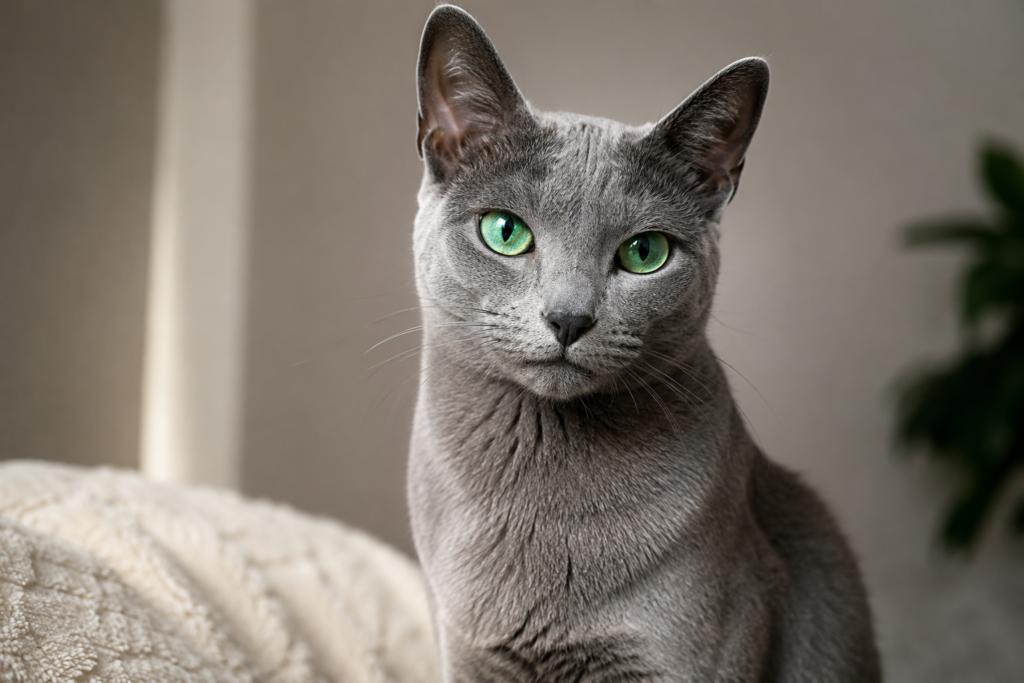
About the Russian Blue
History and Origins
The Russian Blue is a naturally occurring breed with an aristocratic past. It is believed to have originated in the northern port city of Arkhangelsk (Archangel) in Russia — which is why the breed was once nicknamed the “Archangel Cat.” Sailors are thought to have carried these striking silver-blue cats to Britain and Northern Europe in the 1860s, where they were prized by royalty; Queen Victoria and Russian tsars are among those historically associated with the breed.
The Russian Blue nearly disappeared during World War II, when cat populations across Europe collapsed. Dedicated breeders in Britain and Scandinavia revived it, sometimes outcrossing to Siamese to rebuild numbers, then carefully bred back toward the original elegant, plush-coated type. The result is the refined, dignified cat we know today, recognized by all major cat associations.
Personality and Temperament
Russian Blues are gentle, quiet, and deeply loyal — but on their own terms. With strangers they are famously reserved and may vanish when guests arrive, yet with their chosen family they are affectionate, devoted, and often described as “dog-like” in their attachment. Many pick a favorite person and follow them from room to room.
They are intelligent and playful, enjoying puzzle toys, games of fetch, and a good vantage point to observe the household. Above all, they are creatures of habit: Russian Blues love routine and can be genuinely sensitive to change, whether it’s a new schedule, rearranged furniture, or an unfamiliar face. They are also known for being fastidiously clean and quiet, making them calm, undemanding companions for people who appreciate a sensitive, thoughtful cat.
Care and Grooming
Grooming a Russian Blue is easy. Their dense, plush double coat — the source of that signature silver shimmer — is naturally clean and low-shedding, needing only a weekly brush to remove loose hair and keep it lustrous. They shed minimally compared with most breeds.
Because Russian Blues are so food-motivated, weight management is the main care priority. They will happily overeat, so measured meals and regular play are important to keep them trim. Provide climbing spaces and interactive toys to satisfy their intelligent, playful side, and respect their love of routine — consistent feeding times and a calm environment keep them happiest. Their sensitivity also means they appreciate a quiet retreat when the house gets busy. Round out care with routine nail trims, ear checks, and dental hygiene.
Health and Lifespan
The Russian Blue is one of the healthiest and longest-lived cat breeds, frequently reaching 15–20 years. As a natural breed with a sound genetic foundation, it has few inherited problems. The most common health issue is actually obesity, driven by their hearty appetite — and since excess weight can lead to diabetes and joint strain, keeping them lean matters. Bladder stones and urinary issues can occur occasionally, and polycystic kidney disease (PKD) is rare but worth a breeder’s screening.
Choose a reputable breeder, keep your Russian Blue at a healthy weight, encourage water intake, and maintain regular veterinary checkups to make the most of this breed’s excellent longevity.
Cost and Is the Russian Blue Right for You?
A Russian Blue kitten from a reputable breeder generally costs $500 to $1,500 in the United States, with show-quality lines running higher. Their popularity and modest litter sizes can mean a waitlist. Beware of “Russian Blue” kittens sold cheaply without papers — many are simply grey domestic cats.
The Russian Blue suits calm, routine-loving households and people who want an affectionate but undemanding companion. They are ideal for quieter homes, singles, and allergy-conscious owners, since they produce less of the Fel d 1 allergen than most cats. They are less ideal for chaotic, constantly changing environments, homes with very boisterous young children, or anyone wanting an outgoing cat that greets every visitor — the Russian Blue saves its warmth for the people it trusts.
Frequently Asked Questions
Russian Blues are often recommended for allergy sufferers because they produce less of the Fel d 1 allergen than most cats, and their dense double coat helps trap dander close to the skin. They are not truly hypoallergenic — no cat is — but many people with mild allergies report noticeably fewer reactions. Spend time with one before committing to be sure.
Yes, they tend to be reserved, especially with strangers. Russian Blues are naturally cautious and may hide when visitors arrive or in noisy, unfamiliar situations. However, with their trusted family they are affectionate, playful, and loyal. Their shyness is simply selectivity — once they bond with you, they are devoted, "dog-like" companions who often shadow their favorite person.
Russian Blues are more independent than many breeds and generally tolerate time alone well, making them suitable for owners who work during the day. They value routine and a calm environment. That said, they still form strong bonds and enjoy their family's company, so they shouldn't be left isolated for long stretches — a predictable routine and some daily interaction keep them content.
Well-bred Russian Blues command higher prices because reputable breeders carefully preserve the breed's specific coat, color, eye color, and gentle temperament, and litters are relatively small. You're paying for documented lineage, health screening, and proper socialization. Cheap "Russian Blue" kittens without papers are often just grey domestic shorthairs, which look similar but lack the breed's consistent traits.
Yes — vivid green eyes are a hallmark of the breed and a key feature in show standards. Kittens are typically born with yellow eyes that gradually change, developing their brilliant green color as they mature. The striking contrast between the emerald-green eyes and the shimmering silver-blue coat is one of the Russian Blue's most beautiful and recognizable traits.