
Abyssinian
The Abyssinian is an ancient breed known for its ticked coat and wild appearance. These highly active, intelligent cats are natural athletes who love to climb, explore, and be involved in everything.
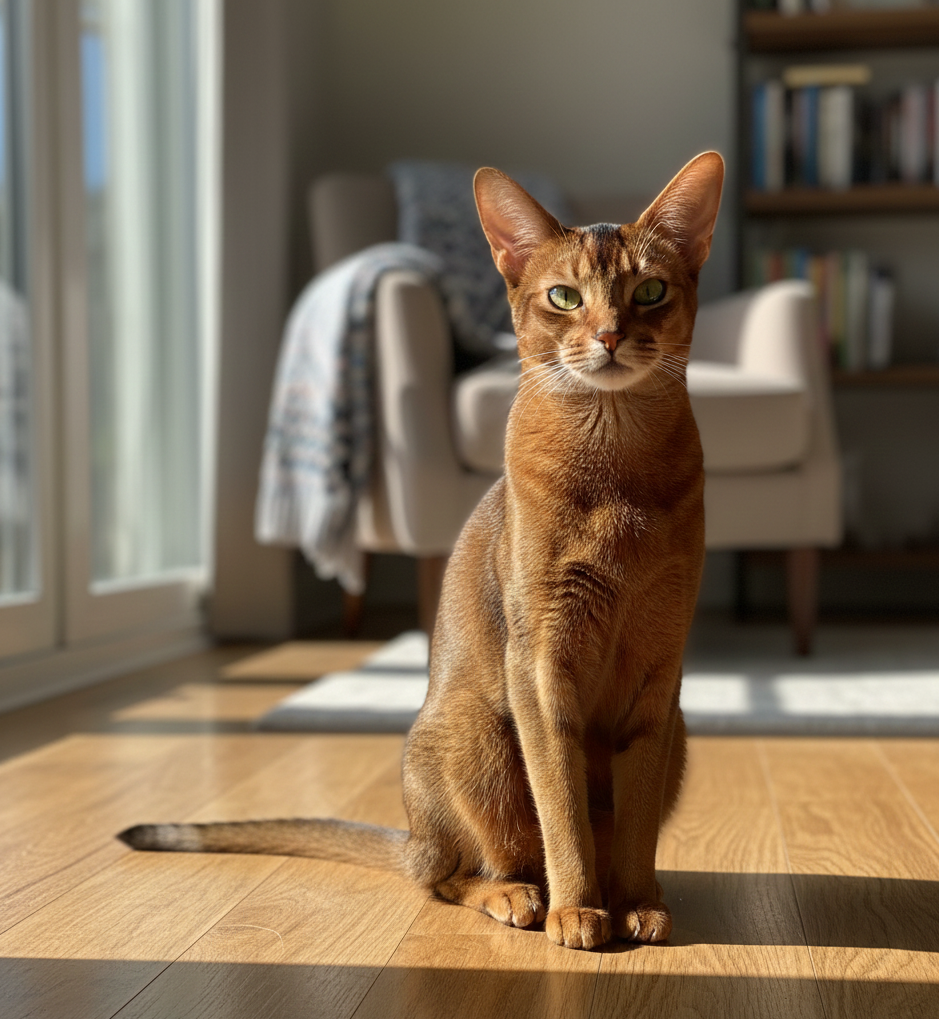
About the Abyssinian
History and Origins
The Abyssinian’s name is a historical accident. British breeders in the late 1800s claimed the cats came from Abyssinia — modern Ethiopia — and a cat named Zula, said to have been brought back from that region in 1868, became the breed’s founding legend. The name stuck.
The genetics tell a different story. Studies of feline DNA place the Abyssinian’s origins along the coast of the Indian Ocean and parts of Southeast Asia, not the Horn of Africa. The most likely account is that British sailors acquired ticked-coat cats at trading ports and brought them home, where the exotic-sounding Abyssinian label was applied after the fact.
What is certain is the breed’s age as a show cat. Abyssinians were exhibited in Britain by the 1870s and were among the earliest pedigree cats formally recorded, with a written standard by 1889. The breed nearly vanished in Britain during the two World Wars and a later outbreak of feline leukaemia, and was rebuilt largely from North American stock.
Personality and Temperament
Abyssinians are relentless. They are among the most active breeds in the cat world — perpetually in motion, investigating, climbing, and supervising. Owners frequently describe them as more like a small, clever dog than a conventional cat.
They are not lap cats, and buyers should be clear-eyed about this. An Abyssinian is deeply attached to its people and wants to be in the same room, involved in whatever you are doing — but on a shelf above you, or on your shoulder, rather than curled quietly in your lap. Affection is expressed through participation.
Intelligence is high and demands an outlet. They open cupboards, work out puzzle feeders, learn to fetch, and take readily to clicker training and harness walking. Deprived of stimulation, that cleverness turns into counter-surfing and dismantled houseplants.
They are quiet cats with soft, chirping voices — a striking contrast to the Siamese — and they are generally confident and friendly with children, dogs and other cats.
Care and Grooming
The coat is easy. The short, fine, close-lying ticked coat needs only a weekly rub-down with a rubber brush or grooming mitt, and shedding is minimal. Each hair carries several bands of colour, which is what produces the shimmering, wild-rabbit effect; no special product is needed to maintain it.
The demanding part is exercise. Abyssinians need serious vertical territory — tall cat trees, wall shelves, cleared window ledges — plus daily interactive play. Puzzle feeders and rotated toys help. A single under-stimulated Abyssinian in an empty house is a recipe for destruction, and many owners find a second active cat solves the problem better than any toy.
Add regular tooth brushing, since dental disease is common in the breed, along with routine nail trims and ear checks. Keep them lean; their metabolism is fast but indoor Abyssinians can still gain weight.
Health and Lifespan
Abyssinians typically live 12–15 years, often longer, but the breed carries three well-documented inherited conditions, two of which are entirely preventable through testing.
Progressive retinal atrophy (rdAc) degenerates the retina and blinds affected cats, usually by three to five years of age. A DNA test exists and is inexpensive. Pyruvate kinase deficiency (PK-Def) is an enzyme defect that destroys red blood cells and causes intermittent anaemia and lethargy; the Abyssinian has one of the highest carrier rates of any breed, and a DNA test also exists. Both conditions are recessive, so a responsible breeder simply never pairs two carriers — which prevents affected kittens outright. Ask to see both test results in writing; a breeder who cannot produce them is not one to buy from.
Renal amyloidosis is the harder problem. Amyloid protein deposits accumulate in the kidneys and can progress to kidney failure, often in young adults. There is no DNA test for it, so the only safeguards are choosing a breeder who tracks kidney health honestly across their lines and monitoring your cat’s thirst, urination and weight as it ages.
The breed also sees elevated rates of gingivitis and patellar luxation. Keep up annual examinations, dental care and a healthy weight.
Cost and Is the Abyssinian Right for You?
An Abyssinian kitten from a reputable US breeder generally runs $1,200 to $2,800, with health-tested lines at the upper end. That premium buys the PRA and PK-Def testing that protects your cat, so it is not a corner worth cutting.
The Abyssinian suits active people who want an engaged, athletic, endlessly curious companion and who will supply climbing space and daily play — households where someone is around, or where a second cat provides company. They reward training and thrive on involvement.
They are a poor match for anyone wanting a placid lap cat, for quiet households hoping for an ornamental pet, for homes with no vertical space, and for owners who would rather not think about DNA testing when choosing a breeder.
Explore More
The Abyssinian’s long-haired counterpart is the Somali, which shares its temperament and its health testing requirements. For other lean, ticked or spotted athletes, compare the Singapura and the Ocicat, or browse all cat breeds.
Frequently Asked Questions
Almost certainly not. The name came from a nineteenth-century British claim that the founding cats were brought from Abyssinia, but genetic studies place the breed's origins along the coast of the Indian Ocean and parts of Southeast Asia. The likeliest explanation is that sailors acquired ticked-coat cats at trading ports and the exotic name was attached afterwards.
Not usually, and this surprises many buyers. Abyssinians are intensely attached to their people but express it by participating rather than settling. Expect a cat that follows you room to room, perches on your shoulder or a high shelf, and supervises everything you do. If you specifically want a lap cat, choose a different breed.
Two are essential: progressive retinal atrophy (rdAc), which blinds affected cats by three to five years, and pyruvate kinase deficiency, where Abyssinians have one of the highest carrier rates of any breed. Both are recessive and both have inexpensive DNA tests, so affected kittens are entirely preventable. Ask for written results before buying.
Because that is the breed, not a behaviour problem. Abyssinians are among the most active cats and need genuine outlets: tall climbing furniture, cleared high perches, daily interactive play and puzzle feeders. Many settle noticeably when given a second active cat for company. Restricting the energy rarely works; redirecting it into climbing and training does.
Typically 12 to 15 years, and often longer with good care. Longevity depends heavily on buying from a breeder who DNA tests for PRA and pyruvate kinase deficiency, since both conditions are preventable. Renal amyloidosis has no test available, so monitor thirst, urination and weight as the cat ages and keep up annual veterinary examinations.