
Singapura
The Singapura is the smallest domestic cat breed, with enormous eyes and a warm sepia-ticked coat. Despite their tiny size, these cats have outsized personalities and endless curiosity.
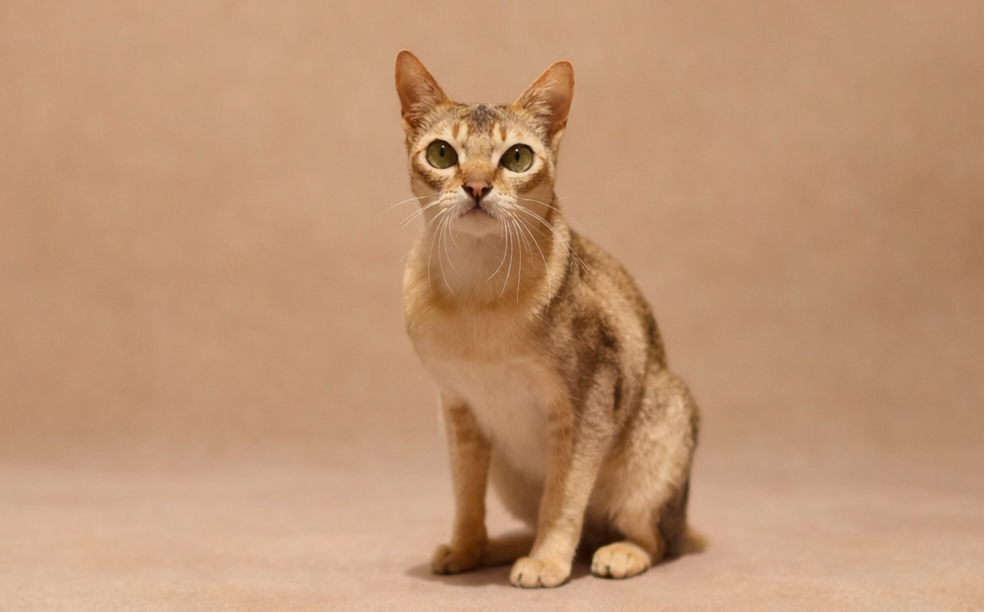
About the Singapura
History and Origins
The Singapura’s story is as debated as it is charming. The breed is said to descend from the street cats of Singapore — the “drain cats” that lived around the island’s storm drains. American breeders Hal and Tommy Meadow are credited with establishing the breed in the United States in the 1970s, using cats they connected to Singapore.
The origins later became controversial when records suggested some founding cats may have been imported to Singapore rather than native to it, sparking an investigation in the 1990s. Regardless of the exact lineage, the Singapura was recognized by The Cat Fanciers’ Association (CFA) in 1988 and remains a distinctive, much-loved breed. In 1991, Singapore even adopted the cat as a tourism mascot, nicknaming it the “Kucinta.”
Personality and Temperament
Do not let the small body fool you — the Singapura is bold, playful, and relentlessly curious. They are often called “pesky people cats” for their habit of involving themselves in everything their humans do. A Singapura will supervise your cooking, investigate every open drawer, and climb to the highest shelf just to watch the room.
They are affectionate and enjoy sitting with their families, but they are more of an active companion than a sedate lap cat. They stay kitten-like and energetic well into adulthood. Because they are so social and interactive, they thrive on attention and often do best with a companion pet if the household is away during the day.
Care and Grooming
The Singapura’s short, fine coat is one of the easiest to maintain of any breed. A weekly once-over with a soft brush or a grooming glove removes loose hair and keeps the coat glossy. They shed very little.
Where they need investment is stimulation. These are athletic, clever cats that love to climb and jump. Provide tall cat trees, window perches, and interactive toys. Puzzle feeders are excellent for channeling their curiosity. Being a warm-natured cat that dislikes the cold, the Singapura appreciates cozy beds and sunny spots. Routine care — nail trims, ear checks, and dental hygiene — rounds out their simple needs.
Health and Lifespan
Singapuras generally live 12–15 years or longer and are mostly healthy, but the breed’s small gene pool carries two conditions prospective owners should understand. Pyruvate kinase (PK) deficiency is an inherited disorder that can cause hemolytic anemia; a reliable DNA test exists, so responsible breeders screen for it and can breed it out entirely. Females are also prone to uterine inertia, a weakness in the uterine muscles during labor that often requires a cesarean section — a concern mainly for breeders rather than pet owners.
Always buy from a breeder who DNA-tests for PK deficiency. With good care, the Singapura is a hardy little cat.
Cost and Is the Singapura Right for You?
A Singapura kitten from a reputable breeder generally costs $1,000 to $2,500 in the United States. Because they produce small litters and the breed is uncommon, kittens can be hard to find and waitlists are typical.
The Singapura suits people who want a small, lively, affectionate cat with a big personality. They are ideal for apartments thanks to their size, but they need vertical space and daily play to stay happy. They fit families, couples, and active singles. They are less suited to homes seeking a calm, low-energy lap cat, or to households away for long hours without a feline companion for company.
Explore More
Love a curious, climbing cat? You may enjoy reading why cats knock things off tables and what your cat’s tail position really means. To compare small, affectionate breeds, see the Devon Rex or browse all cat breeds.
Frequently Asked Questions
The Singapura is widely regarded as the smallest domestic cat breed. Females often weigh just 4–6 pounds and males 6–8 pounds — about half the size of an average house cat. Despite this, they are muscular and athletic, not fragile, and their large eyes and ears keep them looking perpetually kitten-like.
Yes, excellent ones. Their tiny size means they need little floor space, and they are quiet compared to many active breeds. What they do need is vertical territory and mental stimulation — a cat tree, window perch, and daily interactive play will keep an apartment-dwelling Singapura content and well-exercised.
Very much. Singapuras are natural climbers who seek out the highest vantage point in any room, whether that is the top of a bookshelf or a tall cat tree. Providing plenty of vertical space is one of the best things you can do for the breed, as it satisfies their instinct to survey their surroundings from above.
Yes. The Singapura is one of the rarer pedigreed breeds, partly because of its small gene pool and small litter sizes. Reputable breeders are relatively few, and kittens often come with a waitlist. This rarity is one reason for their higher price compared with more common breeds.
The Singapura comes in just one recognized color: sepia agouti, often called "brown ticked." Each hair carries bands of dark brown ticking over a warm ivory base, giving the coat a soft, glowing appearance. This single distinctive color, combined with their large eyes, is a hallmark of the breed.