
Havana Brown
The Havana Brown is a rare, elegant breed with a distinctive chocolate-brown coat and striking green eyes. These intelligent, social cats form strong bonds with their families.
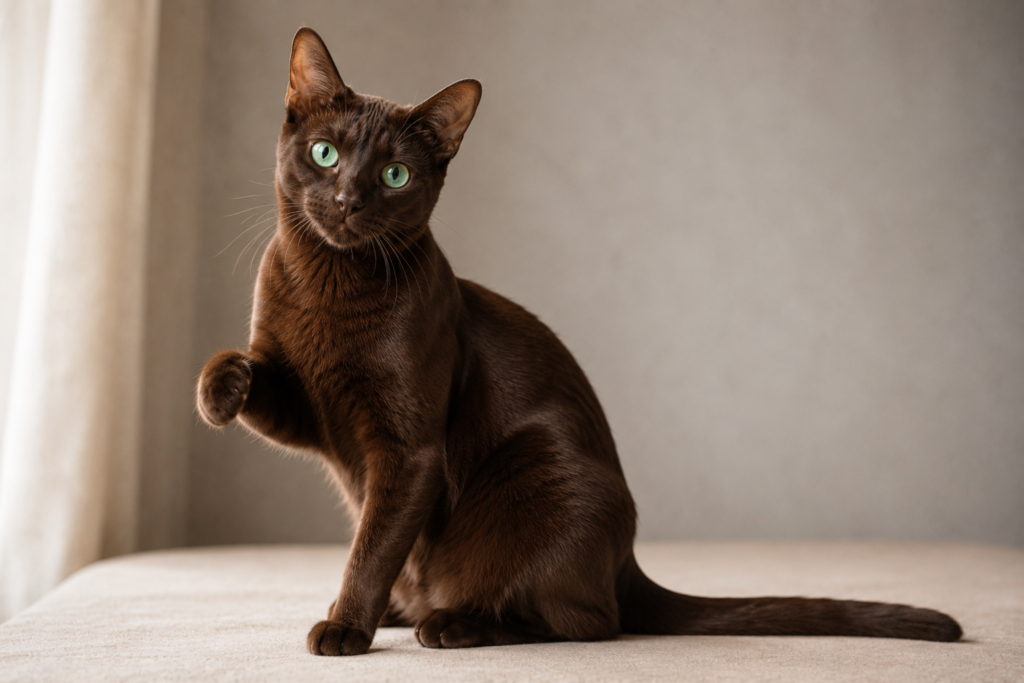
About the Havana Brown
History and Origins
The Havana Brown was created in 1950s England by a small group of dedicated breeders determined to produce a solid brown cat with an elegant build. By crossing Siamese cats carrying the chocolate gene with domestic black cats — and adding some Russian Blue — they achieved a warm, rich mahogany-brown cat with luminous green eyes.
The breed’s name is often attributed to the color of Havana cigars or Cuban tobacco, though some believe it references the Havana rabbit, which shares the same coat tone. The Havana Brown was recognized by The Cat Fanciers’ Association in the late 1950s. Because it descends from such a limited founding population, it remains one of the rarest breeds in the world, with careful outcrossing programs now used to preserve its genetic health.
Personality and Temperament
Havana Browns are intelligent, curious, and deeply people-oriented. They form intense bonds with their families and often choose one favorite person to shadow around the house. Unusually for cats, they frequently use their paws to explore — reaching out to touch objects, investigate faces, and gently paw at their owners for attention.
They are playful and interactive without being hyperactive, striking a happy middle ground between busy and mellow. Havana Browns dislike being left alone for long periods and thrive on companionship, whether human or another friendly pet. Their gentle, affectionate, and communicative nature — they will “talk” to you in a soft voice — makes them engaging, devoted companions for people who want a cat that is truly involved in daily life.
Care and Grooming
Grooming a Havana Brown is simple. Their short, smooth, glossy coat needs only a weekly once-over with a soft brush or a grooming glove to remove loose hair and maintain its rich shine. They shed modestly and rarely need bathing, though an occasional gentle wipe with a chamois brings out the coat’s luster.
Because they are so social and intelligent, their real needs are mental and emotional. Provide interactive toys, puzzle feeders, and daily play to keep their curious minds satisfied, and consider a companion pet if the household is away during the day. Routine care — nail trims, weekly ear checks, and regular dental hygiene — completes their easy maintenance. Like most short-coated cats, they appreciate warm, cozy resting spots.
Health and Lifespan
Havana Browns typically live 12–15 years and are generally healthy, with no long list of breed-specific diseases. The main concern is their extremely small gene pool, which raises the general risk that comes with limited genetic diversity. To counter this, breed authorities permit outcrossing to certain breeds to keep the population healthy.
Some individuals can be prone to upper respiratory sensitivity or dental issues, and as with any breed, hypertrophic cardiomyopathy can occur. Buying from a responsible breeder who prioritizes genetic diversity and health screening is the best way to ensure a robust kitten. Routine veterinary care and good dental hygiene support a long life.
Cost and Is the Havana Brown Right for You?
A Havana Brown kitten from a reputable breeder typically costs $800 to $1,500 in the United States, but the real challenge is availability — with so few breeders worldwide, prospective owners often join long waitlists and may need to travel.
The Havana Brown suits people who want a rare, affectionate, and interactive companion and who are home enough to give it the attention it craves. They are ideal for singles, couples, and families who want a cat deeply engaged in their lives. They are less suited to those seeking an independent, low-attention cat, or households away for long hours without another pet for company.
Explore More
Love an affectionate, communicative cat? Read why your cat always sits on your lap and what your cat’s tail position really means. To compare other people-oriented breeds, see the Devon Rex or browse all cat breeds.
Frequently Asked Questions
Yes, extremely. The Havana Brown is one of the rarest cat breeds in the world, with only a few hundred registered cats and very few active breeders. Its small founding population and limited numbers mean kittens are hard to find and usually come with a waitlist. This rarity is a defining feature of the breed.
The name most likely refers to the rich, warm brown color of Havana cigars and Cuban tobacco, which closely matches the breed's mahogany coat. Some believe it instead references the Havana rabbit, which shares the same distinctive brown shade. Either way, the name celebrates the deep, glossy chocolate color that defines the breed.
Yes, and it is one of their most charming traits. Havana Browns are known for using their paws far more than most cats — reaching out to touch and investigate objects, tap at their owners for attention, and even feel a person's face. This tactile, hands-on curiosity reflects the breed's intelligent, interactive nature.
Havana Browns have vivid green eyes, which are a required feature of the breed. The striking contrast between their warm chocolate-brown coat and their bright green, oval-shaped eyes is one of the breed's most beautiful and recognizable characteristics. Kittens may show a lighter or less saturated color that deepens as they mature.
Yes. The Havana Brown was developed in part by crossing Siamese cats that carried the chocolate-brown gene with domestic black cats. This Siamese ancestry contributes to the breed's elegant build, intelligence, communicative "talking" nature, and strong attachment to its people, though the Havana Brown has its own distinct solid-brown appearance.