
Norwegian Forest Cat
The Norwegian Forest Cat is a majestic breed from Scandinavia with a thick, waterproof coat built for harsh winters. These large, gentle cats are friendly, adaptable, and love to climb.
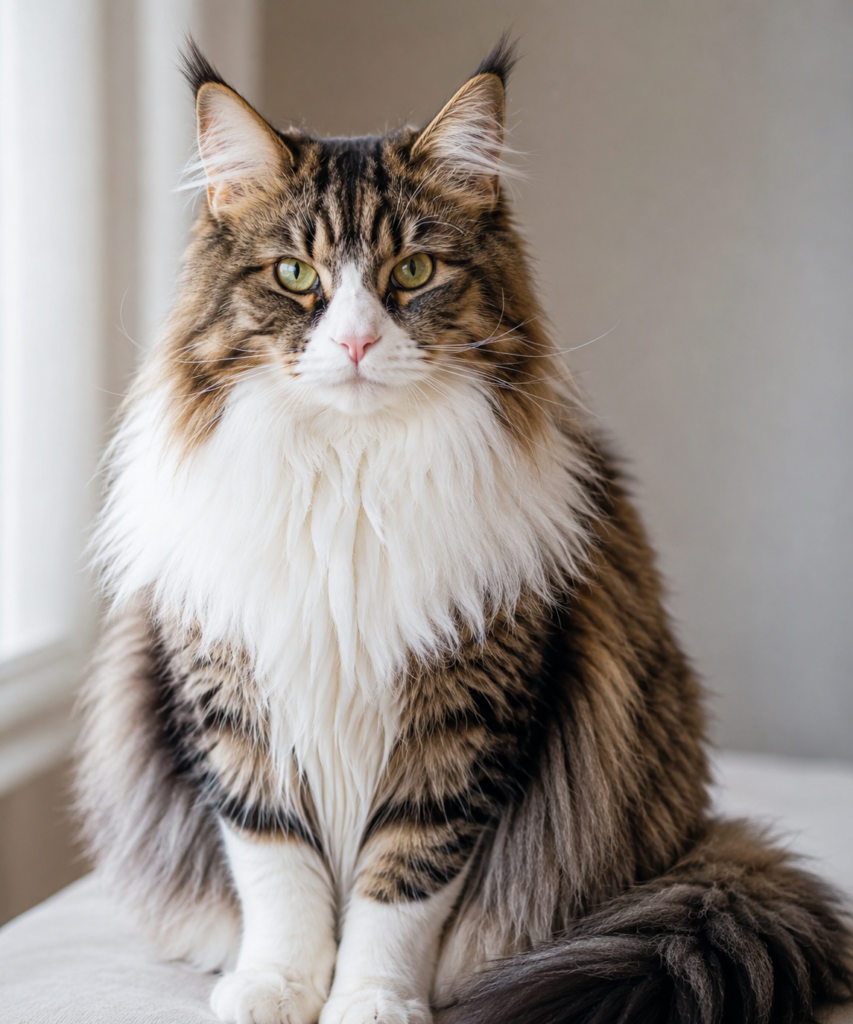
About the Norwegian Forest Cat
History and Origins
The Norwegian Forest Cat — “Skogkatt” (forest cat) in its homeland — is an ancient natural breed that developed over centuries in the forests of Scandinavia. Shaped by a brutal Nordic climate rather than by breeders, these cats evolved a dense, weatherproof coat, tufted ears, and powerful, climbing-ready bodies to survive freezing winters.
The breed is woven into Norse mythology: legend says cats resembling the Wegie pulled the chariot of the goddess Freya, and they appear in Viking-era tales as farm and ship cats prized for their hunting skill. The breed nearly disappeared during World War II through crossbreeding, but dedicated Norwegian breeders revived it, and King Olav V later declared it Norway’s official national cat. It gained international recognition in the late 1970s and 1980s.
Personality and Temperament
Despite their wild, rugged appearance, Norwegian Forest Cats are gentle, friendly, and wonderfully easygoing. They are affectionate with their families but not clingy — they enjoy being near you and will happily accept attention, yet they carry an independent, self-assured confidence from their free-roaming ancestry.
Wegies are intelligent, curious, and exceptional climbers who love to survey their world from the highest point in the room. They stay playful well into adulthood but are calm and patient overall, which makes them excellent with children, dogs, and other cats. They tend to bond closely with the whole household rather than a single person, and their laid-back, adaptable nature helps them settle into most homes — as long as there’s something tall to climb.
Care and Grooming
That glorious double coat needs regular care, though less than you might expect for its length. Brushing two to three times a week keeps the dense undercoat and glossy guard hairs free of tangles, with daily attention during the dramatic seasonal sheds in spring and fall, when they “blow” their winter coat. Their water-resistant fur resists matting better than some longhaired breeds, but the ruff, belly, and britches still need attention.
Norwegian Forest Cats are large, athletic, and slow to mature — they don’t reach full size until around four to five years of age. Provide sturdy, tall cat trees and climbing shelves to satisfy their strong urge to climb, plus big litter boxes and quality food to support their frame. Complete their care with routine nail trims, ear checks, and dental hygiene.
Health and Lifespan
Norwegian Forest Cats typically live 12–16 years and are a generally hardy, natural breed, but they carry a few inherited conditions. The most breed-specific is glycogen storage disease type IV (GSD IV), a serious inherited metabolic disorder — thankfully rare and screenable with a DNA test, which responsible breeders use to avoid producing affected kittens. Hypertrophic cardiomyopathy (HCM) occurs, as it does in most breeds, and hip dysplasia can appear given their size. Some lines also carry pyruvate kinase (PK) deficiency, for which a DNA test exists.
Buy from a breeder who DNA-tests for GSD IV and PK deficiency and screens for HCM. Keep your cat at a healthy weight and maintain regular veterinary checkups to support a long, robust life.
Cost and Is the Norwegian Forest Cat Right for You?
A Norwegian Forest Cat kitten from a reputable breeder generally costs $800 to $1,500 in the United States, with show lines and rare colors running higher. Health-tested lines are well worth it given the breed’s specific genetic risks.
The Norwegian Forest Cat suits families and individuals who want a large, gentle, adaptable companion with a striking appearance and an independent streak. Their patient, tolerant nature makes them great with children and other pets, and their love of climbing means they thrive with vertical space. They are less ideal for those wanting a small lap cat, anyone unable to provide climbing structures, or people unwilling to keep up with seasonal grooming.
Explore More
Did you know the Norwegian Forest Cat is one of the few breeds that tolerates water, thanks to its weatherproof coat? Read why most cats hate water to see why. Compare this gentle giant with the Maine Coon or the Aphrodite Giant, or browse all cat breeds.
Frequently Asked Questions
Both are large, longhaired natural breeds, but there are clear differences. Norwegian Forest Cats have a more triangular face with a straight nose profile, while Maine Coons have a squarer muzzle. Wegies have a more even coat length, whereas Maine Coons look "shaggier," with longer fur on the belly and britches. Their temperaments are similar — both gentle giants — though Wegies tend to be a bit more independent.
Very much — climbing is one of their defining traits. Bred by a wild, forested environment, Wegies are powerful, agile climbers who instinctively seek the highest vantage point in any space. Providing tall cat trees, sturdy shelves, and safe high perches is one of the best things you can do for the breed, as it satisfies a deep natural urge.
They are affectionate but on their own terms. Norwegian Forest Cats enjoy being near their families and will happily accept petting and attention, but they tend to be less of a demanding lap cat than some breeds and more of a confident, independent companion. Many prefer to sit beside you rather than on you, showing devotion through steady presence rather than constant cuddling.
Brush two to three times a week to keep the thick double coat tangle-free, increasing to daily during the heavy seasonal sheds in spring and fall when they shed their winter coat. Their water-resistant fur mats less than some longhaired breeds, but the ruff, belly, and back legs still need regular attention. Routine nail, ear, and dental care round out their grooming needs.
Although their ancestors were hardy outdoor survivors, today's Norwegian Forest Cats are best kept as indoor cats (or given secure outdoor access like a catio) for their safety from traffic, disease, and predators. They adapt well to indoor life as long as they have plenty of vertical space to climb, room to roam, and enrichment to satisfy their active, curious nature.