
The great feline water conspiracy
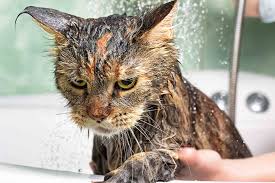
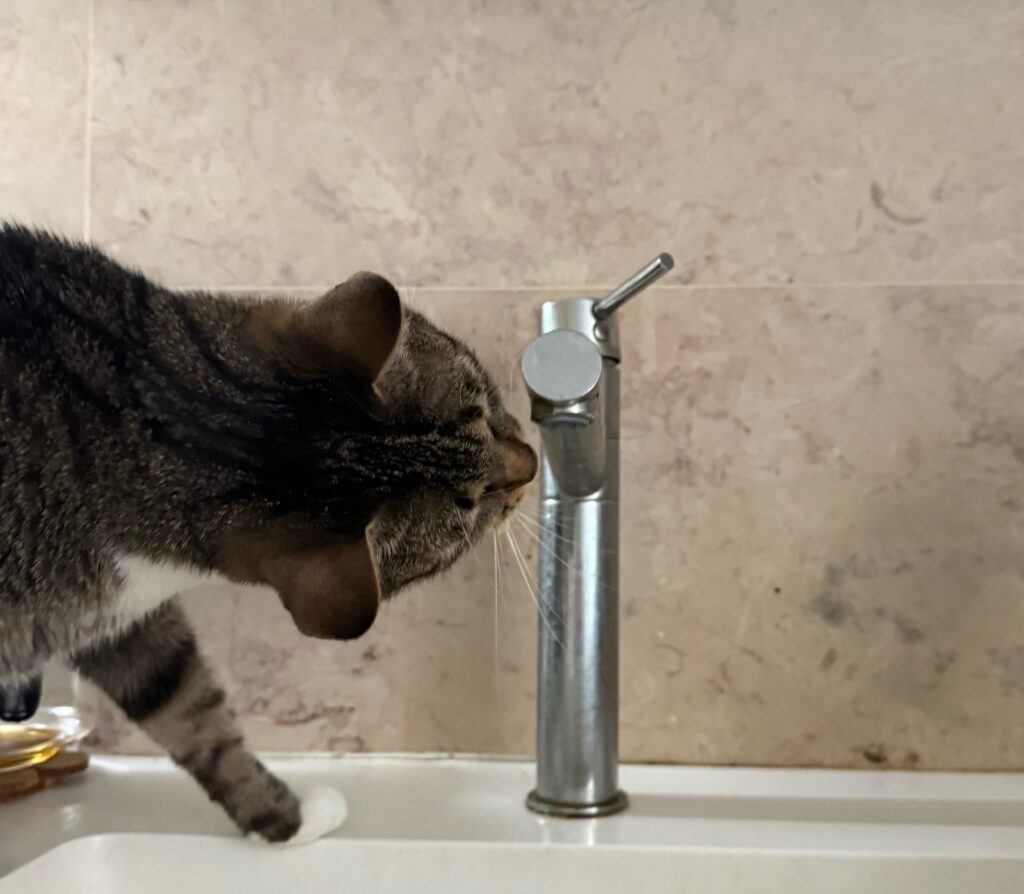
Turn on the shower and your cat vanishes. Try a bath and you’ll discover your sweet, purring companion has eight extra legs and the reflexes of a startled octopus. And yet — the same cat will sit on the edge of the sink for twenty minutes, batting at a dripping tap like it’s the most fascinating thing in the house.
So which is it? Do cats hate water or not?
The honest answer: most cats don’t hate water — they hate being wet. And once you understand why, a lot of odd cat behaviour suddenly makes sense.
It starts in the desert
Your cat’s ancestors weren’t lounging by rivers. Domestic cats descend from wildcats of the arid Middle East and North Africa, where lakes and streams were scarce and swimming was never a survival skill worth developing. They evolved as land hunters — stalking rodents and birds through dry scrub, not wading after fish. (Britannica)
Compare that to tigers or Labradors, who evolved around water and took to it naturally. Cats simply never needed it. So while a dog might see a lake and think “swim!”, your cat sees a lake and thinks “absolutely not.”
The real problem: wet fur is miserable
Here’s the biggest reason, and it has nothing to do with fear.
Most cats’ coats are not water-resistant. When that fur soaks through, three unpleasant things happen at once:
- It gets heavy. A waterlogged coat weighs a cat down, and cats depend on being light and quick. Feeling slow makes them feel vulnerable.
- It stops insulating. Wet fur loses its ability to trap warm air, so a soaked cat gets genuinely cold — and cats are heat-seekers by nature.
- It takes forever to dry. Long after the bath is over, your cat is still damp and unhappy about it.
Put simply: for a cat, being wet isn’t a quick inconvenience. It’s an hour of feeling heavy, cold, and slow. (Scientific American)
Water scrambles their senses
Cats read the world through touch and smell far more than we do — and water interferes with both.
Those fine, sensitive hairs across their body and face help them sense air currents, gaps, and movement. Soak them and it’s like putting fog on their radar.
Then there’s scent. Cats spend a huge portion of their day grooming themselves into a very specific, very personal smell. A bath wipes that out and replaces it with wet cat — plus whatever shampoo you used. To your cat, that’s not “fresh and clean.” That’s an identity crisis.
Cats really, really hate losing control
This one might be the most underrated reason.
Cats are control freaks in the most loving way possible. They choose where they sit, when they’re touched, and how quickly they can exit any situation. Drop one in a tub and every bit of that control disappears — no traction, no stable footing, no clean escape route.
It’s rarely the water itself causing the meltdown. It’s the helplessness.
Sometimes it’s just a bad memory
Cats have long memories for unpleasant experiences. One stressful bath, one accidental soaking, one traumatic trip to the groomer — and water gets filed permanently under “threat.” Kittens who never encountered water gently and early are especially likely to grow up convinced it’s the enemy.
So why does my cat love the dripping tap?
Because that’s a completely different situation. At the tap, your cat is in control — watching, batting, deciding how close to get, and staying dry the whole time. Moving water is also interesting: it catches light, it makes sound, it moves like prey.
There’s an instinct underneath it too. In the wild, running water is safer than standing water, so many cats naturally prefer to drink from a moving source. That’s exactly why so many cats ignore their bowl and demand the bathroom faucet — and why a cat water fountain often gets a fussy drinker to drink far more.
That’s not a small thing, by the way. Cats are prone to low water intake, and better hydration supports kidney and urinary health.
The cats that break the rule
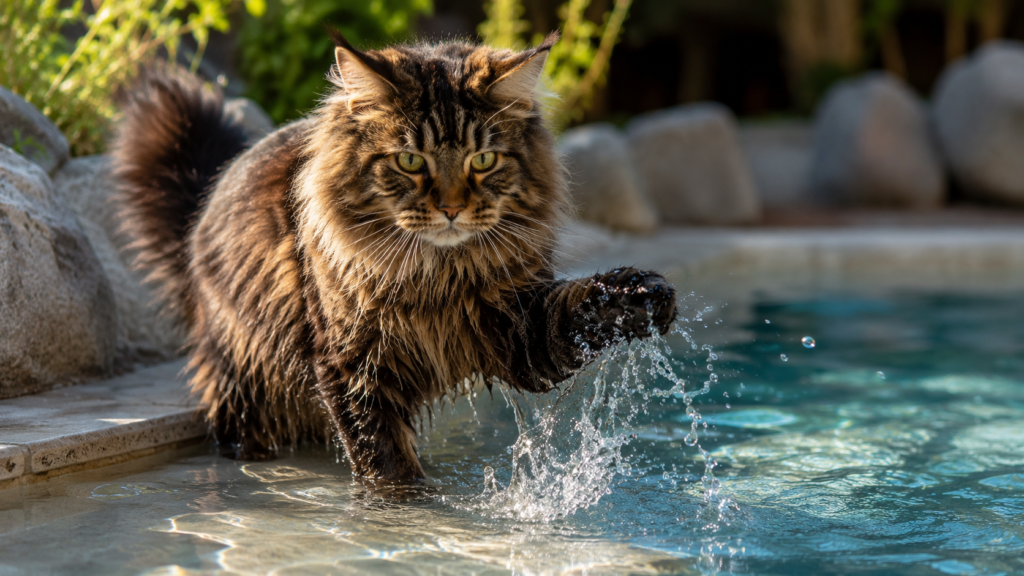
Not every cat runs from the bath. A few breeds are famously fond of water:
- Maine Coon — their thick, semi-water-resistant coat means getting wet bothers them far less, and many happily play in it.
- Bengal — active, curious, and often delighted to join you in the shower.
- Norwegian Forest Cat — bred by a harsh Scandinavian climate, with a dense water-shedding coat.
- Savannah — wild-descended and often enthusiastic about splashing.
The Turkish Van has an entire nickname built around it — “the swimming cat.” So if your cat likes water, they’re unusual, but they’re not broken.
Do cats even need baths?
Mostly, no. Cats are exceptional self-groomers, and a healthy indoor cat will keep themselves clean without your help for life. Bathing a cat that doesn’t need it just stresses you both out.
You might need to step in if your cat gets into something sticky or toxic, is elderly or overweight and can’t groom properly, or has a skin condition your vet is treating.
If you do have to clean them, make it gentler:
- Try a waterless option first. A dry shampoo or grooming wipe handles most minor messes with zero drama.
- Brush before, not after. Loose fur mats badly once wet.
- Use a few inches of lukewarm water, not a full tub — and put a towel on the bottom so they have grip.
- Keep it short and calm. Speed matters more than thoroughness.
- Never force it. If your cat is panicking, stop. It’s not worth the injury or the broken trust.
The bottom line
Your cat isn’t being dramatic. Wet fur genuinely makes them cold, heavy, slow, and stripped of their own scent — while a bath takes away the control they rely on to feel safe. Meanwhile the dripping tap is fun precisely because they’re calling the shots.
So let them keep their dignity. Skip the bath unless you truly need it, get them a fountain if they’re a faucet fanatic, and enjoy the fact that your cat has strong opinions. It’s part of the deal.
FAQ
No. Most dislike being submerged, but breeds like the Maine Coon, Bengal, Norwegian Forest Cat, and Turkish Van often enjoy it. Personality and early experience matter as much as breed.
At the tap your cat stays dry and in control, and moving water appeals to their instinct that running water is fresher. A bath removes that control entirely — completely different experience.
Usually not. Healthy cats groom themselves thoroughly. Bathe only if they’re contaminated with something harmful, can’t groom themselves properly, or your vet recommends it.
Go slowly and young if possible: shallow lukewarm water, a towel for grip, treats, and short sessions. Never force a frightened cat — it makes the fear worse.
It’s usually the noise, the steam, and the unpredictability rather than the water itself. Some cats do the opposite and sit on the edge to supervise — again, because they’re in control.
Sources
- Scientific American — Why Do Cats Hate Water? — https://www.scientificamerican.com/article/why-do-cats-hate-water/
- Britannica — Why Do Cats Hate Water? — https://www.britannica.com/story/why-do-cats-hate-water
- Live Science — Why do cats hate water? — https://www.livescience.com/animals/domestic-cats/why-do-cats-hate-water
- Boulder Veterinary Hospital — Why Do Cats Hate Water? — https://bouldervet.com/blog/why-do-cats-hate-water/
- Rutherford Veterinary Hospital — Why Do Cats Dislike Water? — https://rutherfordvet.com/cats-dislike-water/
Keep reading:
- Why Do Cats Knead? (a.k.a. Making Biscuits)
- What Does Your Cat’s Tail Position Really Mean?
- Why Does My Cat Sit on My Lap?
Was this article helpful?