
Exotic Shorthair
The Exotic Shorthair is essentially a short-haired Persian, offering the same sweet face and gentle temperament with far easier grooming. These calm, affectionate cats are perfect lap companions.
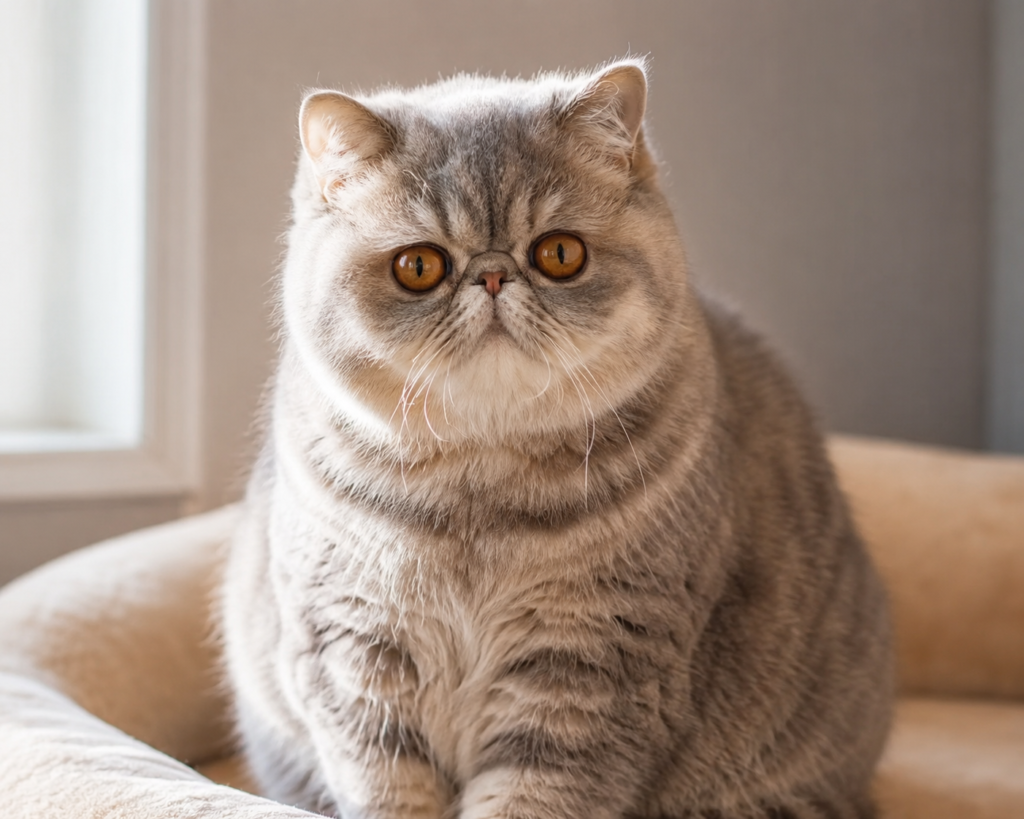
About the Exotic Shorthair
History and Origins
The Exotic Shorthair began in the United States in the 1950s and 60s, almost by accident. American Shorthair breeders crossed their cats with Persians — originally hoping to introduce the Persian’s silver color and improve body type — and discovered something unexpectedly charming: a cat with the Persian’s sweet, round face but a short, dense, plush coat.
The result was so appealing that it was developed into its own breed, recognized by The Cat Fanciers’ Association in 1967. Because Persians are still used in Exotic breeding programs, the two share almost everything except coat length — which is why the Exotic is affectionately nicknamed “the lazy man’s Persian.” Today it is one of the most popular breeds in the world, prized by people who love the Persian look but not the daily grooming.
Personality and Temperament
The Exotic Shorthair has the Persian’s gentle soul in a slightly more playful package. These are calm, sweet, affectionate cats that adore their people and make devoted lap companions. They enjoy a peaceful home and tend to be quiet, undemanding, and easygoing.
Thanks to their American Shorthair heritage, Exotics are a touch more curious and playful than Persians — they’ll happily chase a toy or bat a ball before settling back into a cozy nap. They form close bonds with their families and are known to be sensitive to their owners’ moods, often seeking out a lap when you’re relaxing. Their tolerant, mellow nature makes them good with children and other pets, provided the household isn’t too loud or chaotic.
Care and Grooming
This is where the Exotic really earns its popularity. Their short, dense, plush coat needs only brushing once or twice a week to remove loose hair and keep it healthy — a fraction of the daily effort a Persian demands. They shed moderately, especially seasonally, but mats are rarely a problem.
The flat face, however, still needs attention. Exotics are prone to tear staining and require gentle daily wiping around the eyes, plus regular cleaning of any facial skin folds to prevent irritation. Their low activity level means portion control matters to avoid weight gain, and gentle daily play keeps them fit. Round out care with routine nail trims, ear checks, and — importantly for a flat-faced breed — regular dental hygiene, since their compact jaws can lead to crowded teeth.
Health and Lifespan
Exotic Shorthairs typically live 12–15 years, but because they share Persian genetics they inherit the same health considerations. Their brachycephalic (flat) faces can cause breathing difficulty, tear overflow, and dental crowding. Polycystic kidney disease (PKD) has historically been common in the Persian line, though a DNA test now lets breeders screen it out. Hypertrophic cardiomyopathy (HCM) and progressive retinal atrophy (PRA) also occur.
Buy from a breeder who DNA-tests for PKD and screens for HCM, and favor more moderate faces over extremely flat ones, which tend to have fewer breathing and eye problems. Keep your Exotic at a healthy weight and maintain regular veterinary and dental checkups.
Cost and Is the Exotic Shorthair Right for You?
An Exotic Shorthair kitten from a reputable breeder generally costs $1,200 to $2,500 in the United States, with show-quality and rare colors running higher. Health-tested, moderate-faced lines are worth the premium for their better long-term health.
The Exotic Shorthair is ideal for people who love the Persian’s looks and gentle temperament but want a low-maintenance coat. They suit calm households, apartment living, retirees, and anyone who wants an affectionate, easygoing lap cat. They are less ideal for very busy, noisy homes, for those unwilling to do daily eye care and dental upkeep, or for people wanting a highly active, athletic cat.
Explore More
Love the Exotic’s flat-faced charm? Compare it with its longhaired twin, the Persian, or the plush, curly-coated Selkirk Rex. Curious about your cat’s affectionate side? Read why your cat always sits on your lap, or browse all cat breeds.
Frequently Asked Questions
Yes, significantly. Their short, plush coat needs brushing only once or twice a week, compared with daily brushing (and frequent baths) for a Persian. That said, they still share the Persian's flat face, so they need regular eye cleaning and dental care, and their health considerations are similar. The big difference is coat maintenance, which is far lighter.
They can. Exotics are brachycephalic, meaning their flat faces and shortened nasal passages can cause noisy breathing, reduced airflow, and sensitivity to heat — most pronounced in very flat-faced cats. Choosing an Exotic with a more moderate muzzle, keeping it at a healthy weight, and avoiding overheating all help reduce breathing difficulty.
Absolutely — they are among the best. Exotics are calm, gentle, and deeply affectionate, and they genuinely enjoy curling up in a warm lap for hours. They bond closely with their families and are sensitive to their owners' moods, often seeking closeness when you settle down to relax. Their mellow nature makes them wonderful, low-drama companions.
Generally, yes. Exotics have a tolerant, easygoing temperament and usually get along well with other cats and even cat-friendly dogs, especially when introduced gradually. They prefer a calm environment, so they do best with equally relaxed housemates rather than boisterous, high-energy pets that might overwhelm their gentle nature.
An Exotic Shorthair kitten from a reputable breeder typically costs $1,200 to $2,500 in the United States, with show-quality cats and rare colors priced higher. Given the breed's Persian-related health risks, it's worth paying for a breeder who DNA-tests for PKD and screens for HCM, and who breeds more moderate, healthier faces.