
Selkirk Rex
The Selkirk Rex is a curly-coated breed with a relaxed, patient personality. These teddy-bear-like cats come in both long- and short-haired varieties, with distinctive soft, woolly curls.
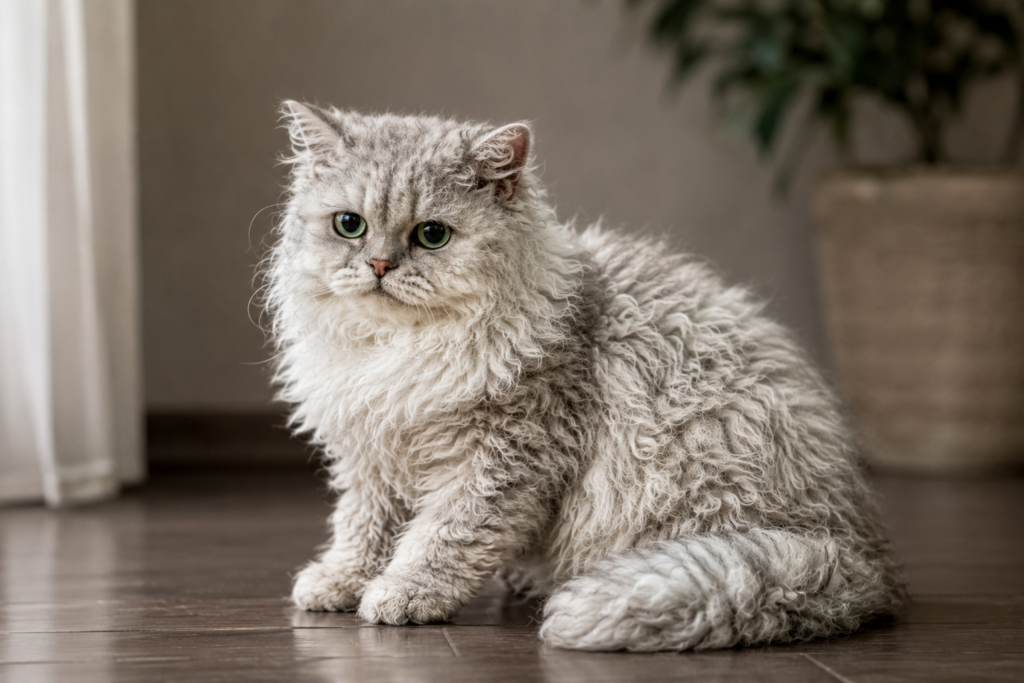
About the Selkirk Rex
History and Origins
The Selkirk Rex is one of the youngest natural-mutation breeds. It began in 1987 in Montana, when a curly-coated kitten named Miss DePesto was born in a shelter litter of otherwise straight-haired cats. She was adopted by Persian breeder Jeri Newman, who recognized the unusual coat and bred her to a black Persian. When some of the resulting kittens were also curly, it confirmed the curl was caused by a dominant gene — unlike the recessive curls of the Cornish and Devon Rex.
Newman named the breed after her stepfather’s family, making the Selkirk Rex the only cat breed named after a person. To build a healthy foundation, breeders outcrossed to Persians, Exotic Shorthairs, and British Shorthairs, which shaped the breed’s sturdy build and plush coat. It was recognized by major registries through the 1990s and 2000s.
Personality and Temperament
The Selkirk Rex is famous for its laid-back, patient, and tolerant nature — a temperament it inherits partly from its Persian and British Shorthair ancestry. These are affectionate, cuddly cats that enjoy being close to their people without being pushy or overly demanding. They are content to settle into a lap or a warm corner and take life at an easy pace.
At the same time, they retain a playful, good-humored streak, especially as kittens and young adults. They are patient enough to do well with children and sociable enough to get along with other cats and dogs. Their balanced, mellow disposition makes them one of the more adaptable breeds, suiting families, apartments, and multi-pet homes alike.
Care and Grooming
The Selkirk Rex’s soft, woolly curls need more attention than a typical short coat but are still manageable. Brush gently a couple of times a week with a comb that will not pull the curls straight — over-brushing can loosen the wave and cause frizz. Longhaired Selkirks need more frequent grooming to prevent tangles, while the shorthaired variety is a bit easier.
Because the coat can be slightly oily, occasional baths help keep it clean and the curls well-defined; let the coat air-dry to preserve the natural wave. Their curly whiskers are fragile and may break, which is normal. Beyond coat care, keep up with weekly ear checks, regular nail trims, and dental hygiene. Their easygoing nature means they do not require heavy exercise, but daily play keeps them fit and happy.
Health and Lifespan
Selkirk Rex typically live 12–15 years or more. Because the breed was developed using Persians, Exotic Shorthairs, and British Shorthairs, it can inherit some of those breeds’ conditions. Hypertrophic cardiomyopathy (HCM) and polycystic kidney disease (PKD) are the main concerns, both of which can be screened for — PKD has a reliable DNA test. Hip dysplasia is also possible given the sturdy, heavy build.
Choose a breeder who screens breeding cats for HCM and DNA-tests for PKD. Keeping your Selkirk at a healthy weight and maintaining routine veterinary care will help ensure a long, comfortable life.
Cost and Is the Selkirk Rex Right for You?
A Selkirk Rex kitten from a reputable breeder generally costs $600 to $1,200 in the United States, though health-tested lines and rarer colors or the longhaired variety can run higher. The breed is still relatively uncommon, so availability varies by region.
The Selkirk Rex is a great fit for people who want a distinctive-looking, affectionate, and easygoing companion without the intense grooming demands of a Persian. Their calm, tolerant nature suits families with children, multi-pet households, and apartment living. They are less ideal for anyone wanting a highly active, athletic cat, or someone unwilling to do the moderate coat care their curls require.
Explore More
Curious about cat behavior and affection? Read why cats knead and why your cat always sits on your lap. To compare other curly and plush breeds, see the Devon Rex and British Shorthair, or browse all cat breeds.
Frequently Asked Questions
No. Despite their unusual curly coat, Selkirk Rex are not hypoallergenic and are not considered a good choice for allergy sufferers. In fact, because they have a full, dense coat — unlike the sparse-coated Devon and Cornish Rex — they shed a normal amount and produce the usual allergenic proteins. Anyone with allergies should spend time with one first.
Brush gently two to three times a week with a comb, taking care not to pull the curls straight, as over-brushing causes frizz. Longhaired Selkirks need more frequent grooming to prevent mats. Occasional baths keep the slightly oily coat clean, and letting it air-dry preserves the natural wave. Weekly ear checks and routine nail and dental care complete the routine.
No. Because the curl gene is dominant but not universal, a single litter can contain both curly-coated and straight-coated kittens. Curly kittens are often born with a wavy coat that may relax and then re-curl as they mature, usually settling into their full curly coat by 8–10 months of age. Straight-coated Selkirks are valuable in breeding programs.
The key difference is the coat and the genetics behind it. The Selkirk Rex has a full, plush, woolly coat caused by a dominant gene, giving it a teddy-bear look. The Cornish and Devon Rex, by contrast, have sparse, close-lying coats caused by recessive genes. The Selkirk is also stockier and more heavily built, reflecting its Persian and British Shorthair ancestry.
Yes. The Selkirk Rex is affectionate and enjoys close contact, often happily settling into a lap for a cuddle. Their calm, patient temperament — inherited from Persian and British Shorthair lines — makes them one of the more relaxed, snuggly breeds, though they balance this with a playful streak, especially when young.