
Birman
The Birman is a striking breed with a silky coat, deep blue eyes, and distinctive white "gloved" paws. These gentle, loving cats balance playfulness with a calm, easygoing nature.
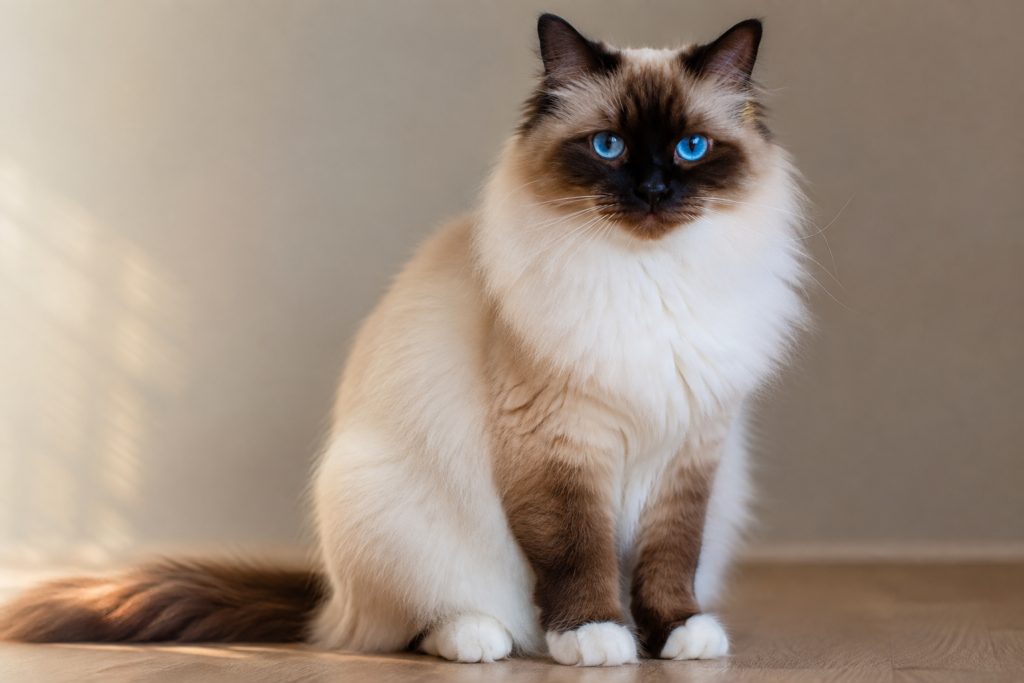
About the Birman
History and Origins
The Birman, known as the “Sacred Cat of Burma,” is a breed wrapped in legend. The most famous story tells of white temple cats in Burma who guarded a golden goddess; when a beloved priest died, his temple cat is said to have been transformed — its coat taking on golden tones, its eyes turning sapphire blue, and its paws remaining pure white where they touched the priest, symbolizing purity.
The romantic legend aside, the modern breed was established in France in the early 20th century, around the 1920s, from cats reportedly brought from Burma. The Birman was nearly lost during World War II — reduced to just a couple of surviving cats — and was rebuilt through careful outcrossing before regaining its purebred status. It has since become one of the most popular pointed breeds worldwide.
Personality and Temperament
Birmans are famous for their sweet, gentle, and beautifully balanced temperament. They are affectionate and social, enjoying the company of their families and often following you from room to room — but they are not clingy or overly demanding, striking a comfortable middle ground between devoted and independent.
They are quiet cats with soft, melodic voices, and playful without being hyperactive. This calm, tolerant nature makes them excellent with children, dogs, and other cats, and they adapt easily to different households. Birmans tend to be gentle “people cats” who love to be involved in family life at their own relaxed pace, curling up nearby and greeting you warmly. Their easygoing, good-mannered disposition is a big part of why they’re such beloved companions.
Care and Grooming
Despite their luxurious, semi-long coats, Birmans are refreshingly low-maintenance to groom. The key is that they lack a dense undercoat, so their silky fur resists matting far better than a Persian’s and sheds less than many longhaired breeds. Brushing two to three times a week keeps the coat smooth and tangle-free, with a little extra attention during seasonal shedding.
Beyond coat care, Birmans need only the usual routine: regular nail trims, weekly ear checks, and good dental hygiene. They are moderately active and enjoy interactive play and companionship, so provide toys, a scratching post, and daily attention. Because they are so people-oriented, they do best in homes where they aren’t left alone for very long stretches, and they appreciate a calm, loving environment.
Health and Lifespan
Birmans are generally a healthy, robust breed with a typical lifespan of 12–16 years. That said, no breed is entirely free of inherited risks. Hypertrophic cardiomyopathy (HCM) — the most common feline heart disease — can occur and is worth screening for. The breed can also carry a few rarer conditions, including congenital hypotrichosis (a rare coat/skin condition in kittens) and, in some lines, kidney issues, so reputable breeders health-test their cats.
Choose a responsible breeder who screens breeding cats for HCM, keep your Birman at a healthy weight, and maintain regular veterinary checkups. With good care, Birmans are typically long-lived, resilient companions.
Cost and Is the Birman Right for You?
A Birman kitten from a reputable breeder generally costs $800 to $2,000 in the United States, with show-quality lines and sought-after colors running higher. Health-tested lines are worth the premium.
The Birman is an excellent choice for families, first-time owners, and anyone wanting a gentle, affectionate, and adaptable companion with striking looks but a manageable coat. Their calm, tolerant nature suits homes with children and other pets, and their moderate needs make them easy to live with. They are less ideal for people who want a highly independent, low-attention cat, or for households where the cat would be left alone for very long hours, since Birmans thrive on companionship.
Explore More
Trying to choose between gentle, blue-eyed breeds? Compare the Birman with the Ragdoll and the Persian. Curious about your affectionate cat’s habits? Read why your cat always sits on your lap, or browse all cat breeds.
Frequently Asked Questions
No, Birmans are moderate maintenance. Their silky, semi-long coat lacks an undercoat, so it resists matting and needs brushing only two to three times a week, and they shed less than many longhaired breeds. They are social and enjoy companionship but aren't overly demanding. Overall they're one of the easier longhaired breeds to care for, both in grooming and temperament.
Most Birmans enjoy affection and closeness, happily curling up in a lap or beside you, though they're generally more "follow you around and sit near you" than insistent on being carried. They are gentle and tolerant, so many accept being held well, especially when introduced to it kindly from kittenhood. Their loving but undemanding nature makes them warm, easygoing companions.
Not very. Birmans are known for being quiet cats with soft, gentle, melodic voices. They will "talk" to their owners now and then, but they lack the loud, persistent vocal demands of breeds like the Siamese. This soft-spoken nature, combined with their calm temperament, makes them a peaceful, pleasant presence in the home.
Both are large-ish, pointed, blue-eyed, semi-longhaired breeds, but there are clear differences. Birmans are smaller, always have four pure-white "gloved" paws, and originate from the Sacred Cat of Burma legend refined in France. Ragdolls are larger, come in more pattern types (colorpoint, mitted, bicolor), and are famous for going limp when picked up. Temperamentally both are gentle, but Ragdolls are the more famously floppy of the two.
Birmans typically live 12–16 years, and many reach the upper end of that range with good care. As a generally healthy breed, their longevity is best supported by buying from a breeder who screens for hypertrophic cardiomyopathy (HCM), keeping them at a healthy weight, feeding a quality diet, and maintaining regular veterinary and dental checkups.