
Munchkin
The Munchkin is a distinctive breed defined by its short legs, the result of a natural genetic mutation. These playful, outgoing cats are surprisingly fast and agile despite their low-slung stature.
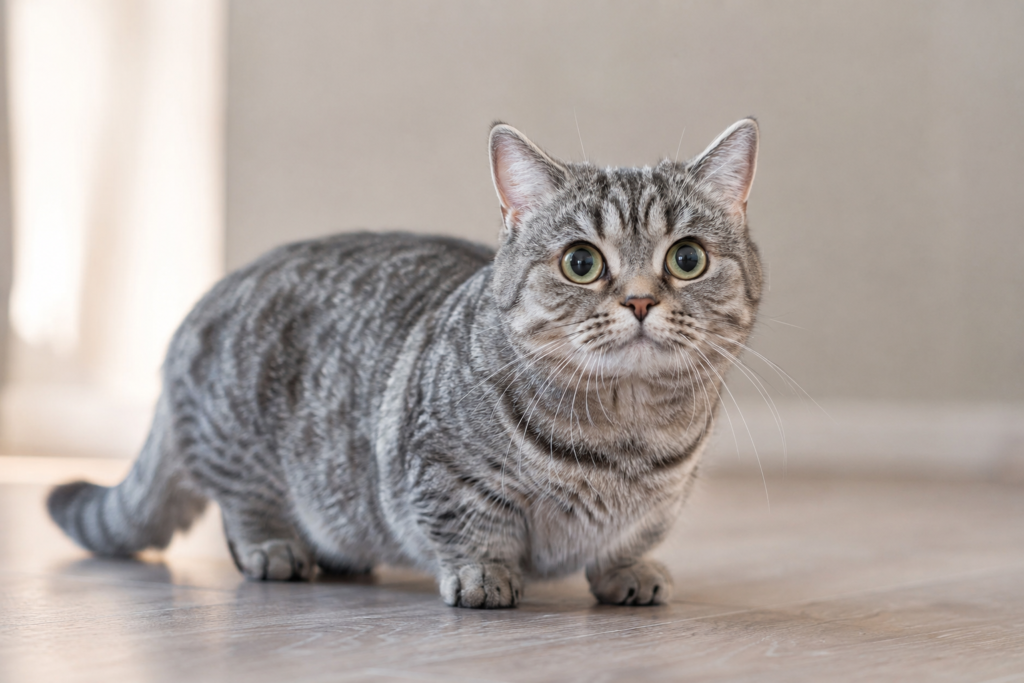
About the Munchkin
History and Origins
Short-legged cats have popped up naturally throughout history, but the modern Munchkin breed traces to 1983 in Louisiana, when a music teacher named Sandra Hochenedel rescued a pregnant short-legged cat named Blackberry. Blackberry passed her short legs to her kittens, and the trait was developed into a breed named after the little characters in The Wizard of Oz.
The short legs come from a dominant genetic mutation — a form of feline dwarfism called chondrodysplasia — that shortens the long bones of the legs while leaving the body a normal size. The Munchkin was accepted by The International Cat Association (TICA) in the 1990s, though it remains one of the most debated breeds, and several major registries decline to recognize it on welfare grounds (more on that below).
Personality and Temperament
Whatever one thinks of their build, Munchkins have delightful personalities. They are playful, outgoing, curious, and confident, staying kitten-like in energy and playfulness well into adulthood. Far from being held back by their short legs, they zip around corners at surprising speed and are often described as moving like little ferrets.
Munchkins are highly social and people-oriented, bonding closely with their families and getting along well with children and other pets. They love interactive play and are famously “magpie-like” — many enjoy collecting and hoarding small shiny objects to play with later. Confident and friendly, a Munchkin is an affectionate, entertaining companion that thrives on attention and interaction.
Care and Grooming
Grooming depends on coat length, as Munchkins come in both short- and long-haired varieties. Shorthaired Munchkins need only a weekly brush; longhaired ones need brushing two to three times a week to prevent tangles. They shed a moderate amount.
Their short legs create a couple of practical care considerations. Some Munchkins can’t groom every part of their body as easily, so they may need a little help keeping their coat and rear clean. They also can’t jump as high as other cats, so provide low, easy-access perches, ramps, or steps to their favorite spots, and place food, water, and litter within easy reach. Keep them at a healthy weight to reduce strain on their frame, and keep up with routine nail trims, ear checks, and dental care.
Health and Lifespan — what to know first
Munchkins typically live 12–15 years, and many are active, healthy cats — but the breed’s defining trait comes with genuine, honest considerations. The short-leg mutation is a form of dwarfism, and like the Manx gene, inheriting two copies is fatal before birth, so responsible breeders always pair a Munchkin with a normal-legged cat.
The breed can be predisposed to a few skeletal issues, most notably lordosis (an excessive inward curve of the spine) and pectus excavatum (a sunken chest), both of which can be serious. That said, research to date has not clearly shown that Munchkins suffer more joint or spinal disease than ordinary cats, and the evidence is still limited and debated. This uncertainty — along with the ethics of breeding for a dwarfism trait — is exactly why several registries, including the CFA, decline to recognize the breed.
If you’re considering a Munchkin, choose a genuinely ethical breeder who health-tests and pairs responsibly, keep your cat lean, and work with a vet who can monitor for spinal or chest issues. Going in fully informed is the kindest approach.
Cost and Is the Munchkin Right for You?
A Munchkin kitten from a reputable breeder generally costs $500 to $2,000 in the United States, with rarer colors, patterns, and “designer” Munchkin crosses running higher. Given the health considerations, ethical sourcing matters more than usual — avoid bargain kittens from unknown breeders.
The Munchkin suits people who want a playful, affectionate, sociable companion with an unmistakable look, and who are willing to accommodate its limitations — low perches, easy access, and attentive health care. Their friendly nature fits families and multi-pet homes. They are less ideal for anyone uncomfortable with the breed’s welfare debate, or who can’t provide a home adapted to a cat that can’t jump or climb like others.
Explore More
Curious about other cats with unusual genetics? Read about the tailless Manx and its own health story, or the folded-eared Scottish Fold. For playful, people-loving cats, see the Devon Rex, or browse all cat breeds.
Frequently Asked Questions
Many Munchkins live active, healthy lives, but the breed is genuinely controversial. Their short legs come from a dwarfism mutation, and they can be predisposed to conditions like lordosis (spine curvature) and pectus excavatum (sunken chest). Research hasn't clearly shown they get more joint disease than other cats, but the evidence is limited. Choosing an ethical, health-testing breeder is essential.
Yes, but not as high as other cats. Their short legs limit their vertical leap, so a Munchkin may struggle to reach high shelves or counters that an average cat clears easily. However, they are still fast, agile, and playful on the ground. Owners should provide low perches, ramps, or steps so their Munchkin can safely reach favorite spots.
The controversy centers on breeding for a dwarfism trait. Critics argue it prioritizes appearance over welfare and worry about potential skeletal problems, which is why registries like the CFA decline to recognize the breed. Supporters point out that many Munchkins are active and healthy and that clear evidence of widespread harm is limited. Both the genetics (two copies are lethal) and the ethics fuel the debate.
They can be predisposed to lordosis, an excessive inward curving of the spine that in severe cases affects the heart and lungs, as well as pectus excavatum (a sunken chest). However, current research hasn't conclusively shown that Munchkins overall suffer more back or joint disease than typical cats. Buying from an ethical breeder who screens breeding cats helps reduce the risk.
Munchkin legs are roughly two to three inches shorter than an average cat's, giving them their distinctive low, long-bodied "sausage" look. The mutation shortens the long bones of the legs while the body stays a normal size. Leg length varies between individuals — some are only slightly short ("standard"), while others are very low to the ground.