
Scottish Fold
The Scottish Fold is instantly recognized by its unique folded ears, which give it a sweet, owl-like look. These affectionate, easygoing cats are famous for their round faces and unusual human-like sitting poses.
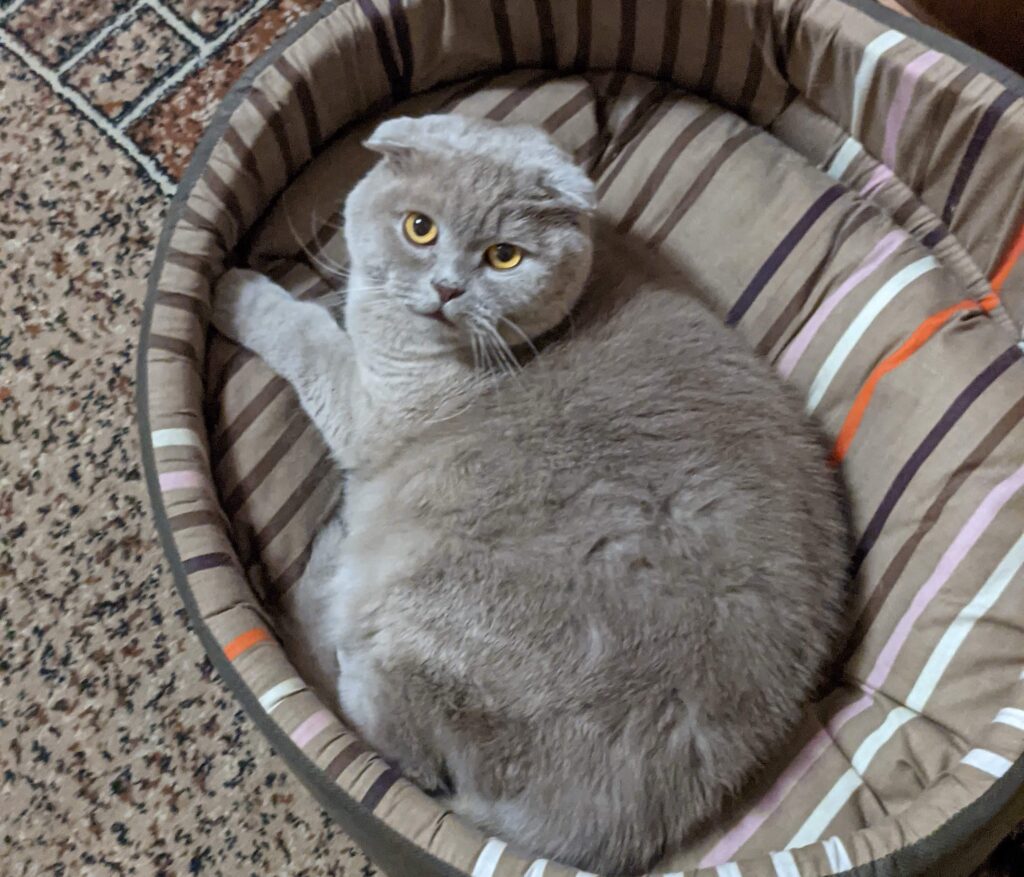
About the Scottish Fold
History and Origins
The Scottish Fold traces back to a single cat. In 1961, on a farm in Scotland, a shepherd named William Ross noticed a white barn cat named Susie with unusual ears that folded forward against her head. He took one of her kittens and, with breeders, began developing the distinctive look into a breed.
Every Scottish Fold today descends from Susie. The folded ears are caused by a natural dominant genetic mutation that affects cartilage — not just in the ears, but throughout the body, a detail that matters greatly for the breed’s health (more below). Interestingly, kittens are born with straight ears; the fold, if the kitten inherited the gene, develops at around three to four weeks of age. Roughly half of a litter are born straight-eared, and these are called Scottish Straights.
Personality and Temperament
Scottish Folds are prized for their sweet, mellow, and adaptable temperaments. They are affectionate and bond closely with their families, enjoying company and gentle attention without being overly demanding. Many are playful in a calm, good-natured way and get along well with children, dogs, and other cats.
The breed is also famous for its quirky habits — especially the “Buddha sit,” where a Fold sits upright on its hindquarters with its legs stretched out in front like a little person. They tend to be quiet, easygoing companions who adapt well to different households and routines. Folds often stay close to their people, following them around the house and settling nearby rather than demanding constant lap time.
Care and Grooming
Grooming needs are modest and depend on coat length (Folds come in both short- and long-haired varieties). Shorthaired Folds need a weekly brush; longhaired ones need brushing two to three times a week to prevent tangles. They shed a moderate amount.
One area that needs special attention is the ears. Because of the fold, wax and debris can build up more easily, so check and gently clean them regularly to prevent infection. Beyond that, keep up with routine nail trims and dental care, and — importantly for this breed — watch closely for any signs of stiffness or joint discomfort (see the health section). Provide soft bedding and easy access to favorite spots, since some Folds find jumping uncomfortable.
Health and Lifespan — please read this
The Scottish Fold’s defining trait comes with a serious, well-documented health concern that every prospective owner should understand. The same gene that folds the ears affects cartilage throughout the body, and it causes a condition called osteochondrodysplasia (SFOCD) — abnormal bone and cartilage development that can lead to painful, degenerative arthritis, especially in the tail, ankles, and knees. Signs include stiffness, a thick or inflexible tail, reluctance to jump or play, and an abnormal gait.
Crucially, all folded-eared cats carry this gene and can be affected to some degree. Responsible breeders never breed two folded cats together (which causes severe skeletal disease) and instead pair a Fold with a straight-eared cat to reduce — but not eliminate — the risk. Some veterinary and welfare organizations discourage breeding Folds at all for this reason. Beyond OCD, the breed can also be prone to polycystic kidney disease (PKD) and hypertrophic cardiomyopathy (HCM).
If you’re set on the breed, choose an ethical breeder who health-tests, be prepared for possible lifelong joint care, and consider that a Scottish Straight offers the same sweet personality without the cartilage risk. Typical lifespan is 12–15 years. This isn’t a reason to love the breed any less — just to go in fully informed and to prioritize the cat’s welfare. When in doubt, talk to a vet.
Cost and Is the Scottish Fold Right for You?
A Scottish Fold kitten from a reputable breeder generally costs $1,000 to $3,000 in the United States, with the folded-ear kittens priced higher than straight-eared littermates. Given the breed’s health risks, paying for an ethical, health-testing breeder is essential — avoid cheap kittens from unknown sources.
The Scottish Fold suits people who want a gentle, affectionate, easygoing companion and who are willing to commit to attentive health care and ethical sourcing. Their calm, adaptable nature fits families, apartments, and multi-pet homes. They are less ideal for anyone unable to budget for potential joint care, or for those uncomfortable with the breed’s welfare concerns — in which case a Scottish Straight or another sweet-natured breed like the British Shorthair is well worth considering.
Explore More
Curious about your affectionate cat’s habits? Read why cats knead and why your cat always sits on your lap. For another sweet, easygoing breed without the cartilage concern, see the British Shorthair, or browse all cat breeds.
Frequently Asked Questions
Yes — this is important. Scottish Folds are prone to osteochondrodysplasia (SFOCD), because the gene that folds their ears also affects cartilage throughout the body, which can cause painful degenerative arthritis. All folded cats carry this gene. Reputable breeders only pair folded cats with straight-eared cats to reduce the risk, and always choose a breeder who health-tests. Watch for stiffness or reluctance to jump.
Scottish Folds are famous for the "Buddha sit" — sitting upright on their hindquarters with their back legs stretched out in front, looking remarkably human. No one knows exactly why they favor this pose, though some believe it may be more comfortable for cats prone to joint stiffness. Whatever the reason, it's become one of the breed's most endearing and recognizable quirks.
Scottish Folds are moderately common and very popular worldwide, but folded-eared kittens are less numerous than you might expect. Since only about half of each litter inherits the fold — and responsible breeders must pair folds with straight-eared cats — genuine folded kittens from ethical breeders can be limited, which contributes to their higher price and occasional waitlists.
Scottish Fold kittens are all born with straight ears, and the fold develops at around three to four weeks of age in those that inherited the gene. Once set, the ears generally stay folded, though the degree of fold varies (single, double, or triple fold). Kittens that never develop the fold are straight-eared Scottish Straights and remain that way for life.
Yes. Scottish Folds are calm, adaptable, and people-oriented, which makes them well-suited to indoor life as long as they have companionship, toys, and comfortable resting spots. Indoor living also protects them from hazards and lets you monitor for any joint issues. Provide soft bedding and easy access to their favorite places, since some Folds find high jumps uncomfortable.