
Australian Mist
The Australian Mist is a spotted/marbled breed developed in Australia for indoor living. These gentle, tolerant cats are excellent family pets known for their patient personalities.
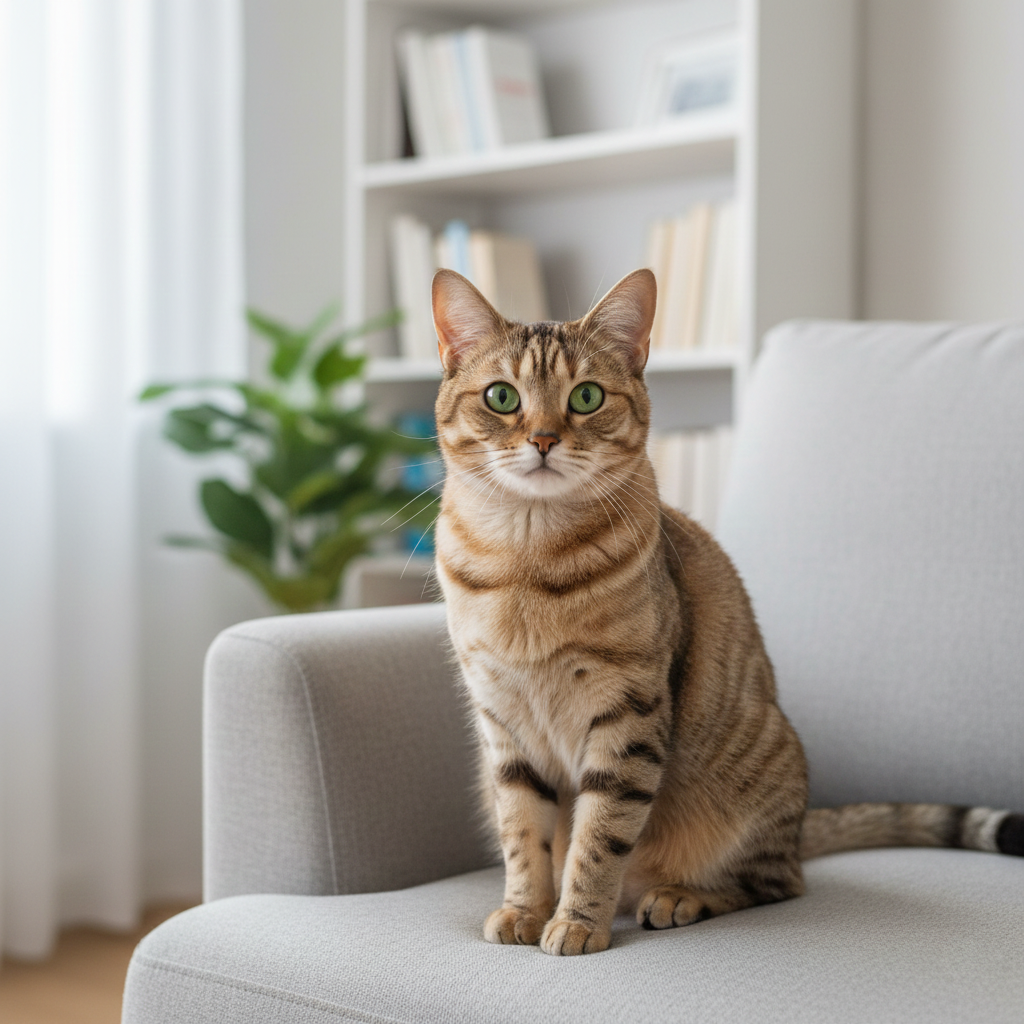
About the Australian Mist
History and Origins
The Australian Mist is one of the few breeds created to solve an environmental problem. In the mid-1970s there was growing alarm in Australia about the damage free-roaming domestic cats were doing to native birds and small mammals. Sydney geneticist Dr Truda Straede set out to breed a cat that would be genuinely content to live entirely indoors — affectionate enough, and calm enough, that owners would not feel they were depriving it.
Work began in 1977 using around thirty foundation cats: Burmese for their sociability and solid build, Abyssinians for the ticked coat that gives the breed its misted appearance, and Australian domestic shorthairs for spotting and hybrid vigour. It took nine years to move from the experimental register to full recognition.
The breed was first called the Spotted Mist. When marbled-coat cats were accepted alongside spotted ones in 1998, the name changed to Australian Mist. It remains Australia’s only internationally recognised home-grown cat breed, and the first Mists reached the UK in 2007.
Personality and Temperament
The Australian Mist was selected for temperament as deliberately as for coat, and it shows. These are notably tolerant, even-tempered cats — patient with handling, slow to scratch, and comfortable with the noise and unpredictability of family life.
They are affectionate and people-oriented without being demanding. A Mist will follow you around, settle on a lap readily, and greet visitors rather than disappear under the bed. Owners often describe them as unflappable.
Energy is moderate. Kittens are playful and mischievous, but adults settle into a calm, undemanding rhythm — active enough to enjoy a toy, relaxed enough to spend the afternoon asleep beside you. They are quiet cats with soft voices.
Crucially for the breed’s original purpose, they are content indoors. They show little of the frustrated door-dashing seen in more driven breeds, which makes them one of the better choices for apartment living and for owners who keep cats in for wildlife or safety reasons.
Care and Grooming
Grooming is about as easy as cats get. The short, close-lying coat has little undercoat and needs only a weekly brush with a rubber mitt to remove loose hair. Shedding is low and baths are essentially never required.
Because the breed is built for indoor life, enrichment matters more than exercise. Provide a cat tree, a window perch or two, scratching posts and daily play — modest requirements compared with an Abyssinian, but not zero. Puzzle feeders suit their moderate energy well.
Watch the waistline. A calm indoor cat with a good appetite gains weight easily, and obesity is the most likely health problem this breed will face. Measure meals rather than free-feeding, and keep play sessions regular.
Dental care deserves particular attention, since gingivitis is the breed’s most commonly reported issue: brush the teeth regularly and keep up veterinary dental checks. Add routine nail trims and ear inspections.
Health and Lifespan
The Australian Mist is a genuinely healthy breed with a typical lifespan of 12–16 years, and often longer. Because it was built from a broad foundation of around thirty cats across three backgrounds, it has a wider gene pool than many pedigree breeds and no known breed-specific inherited diseases — which also means there is no breed-specific DNA test to ask for.
The conditions that do turn up are ordinary rather than genetic. Gingivitis and dental disease are the most frequently reported problem, so dental hygiene is the single most useful thing an owner can do. Skin allergies are also not uncommon and usually respond to identifying the trigger, whether dietary or environmental.
Obesity is the practical risk. This is a calm, food-motivated, indoor-living cat, and excess weight brings diabetes, joint problems and a shortened life with it.
Since the breed carries Burmese ancestry, it is still worth asking a breeder whether their lines have been screened for hypokalaemia and craniofacial defect, both of which are DNA-testable, and whether breeding cats have had cardiac screening. A good breeder will answer without hesitation.
Cost and Is the Australian Mist Right for You?
In Australia, kittens are relatively affordable. Outside it, scarcity dominates: expect roughly $800 to $1,500 in the US, with import costs and long waiting lists common, since the breed is still rare in North America and only became established in the UK after 2007.
The Australian Mist suits families with children, first-time cat owners, apartment dwellers, and anyone who wants a genuinely indoor cat without the guilt — it was purpose-built for exactly that. Its tolerance makes it one of the better breeds around young children, and its grooming needs are minimal.
It is less suited to owners wanting a highly active or intellectually demanding cat, to those who want a readily available breed without a waiting list, and to homes where a cat would be free-fed and left to gain weight.
Explore More
The Mist’s foundation breeds are both worth meeting: the sociable Burmese and the tireless Abyssinian. For similar easygoing spotted cats, see the Ocicat, or browse all cat breeds.
Frequently Asked Questions
It was a deliberate conservation response. In the 1970s there was concern in Australia about free-roaming cats killing native birds and small mammals, so Dr Truda Straede set out to create a cat calm and affectionate enough to be genuinely content indoors. The temperament was selected for as carefully as the coat, which is why the breed adapts so well to apartments.
Yes. The breed is widespread in its home country but still uncommon elsewhere. The first Mists reached the UK in 2007, and numbers in North America remain small. Buyers outside Australia should expect waiting lists, higher prices than local Australian rates, and in some cases the cost and complexity of importing a kitten.
They are one of the better breeds for families. Tolerance was a breeding goal, and Mists are known for being patient with handling, slow to scratch, and unbothered by household noise and activity. They are sturdy, affectionate and inclined to seek out company. Children should still be taught to handle any cat gently and to respect its space.
Unusually few. The breed was built from a broad foundation of around thirty cats, giving it a wide gene pool and no known breed-specific inherited diseases. The realistic concerns are gingivitis and dental disease, occasional skin allergies, and obesity, since this is a calm indoor cat that gains weight easily on free feeding.
Only the coat pattern; both are equally Australian Mist. The breed was originally called the Spotted Mist and carried spots alone. Marbled cats, with swirled rather than spotted markings, were accepted in 1998 and the name changed to Australian Mist. Both patterns sit over the same delicately ticked background that creates the misted appearance.