
Burmese
The Burmese is a charismatic breed with a sleek, muscular body and expressive golden eyes. These intensely people-oriented cats are playful, affectionate, and famous for their dog-like devotion to their families.
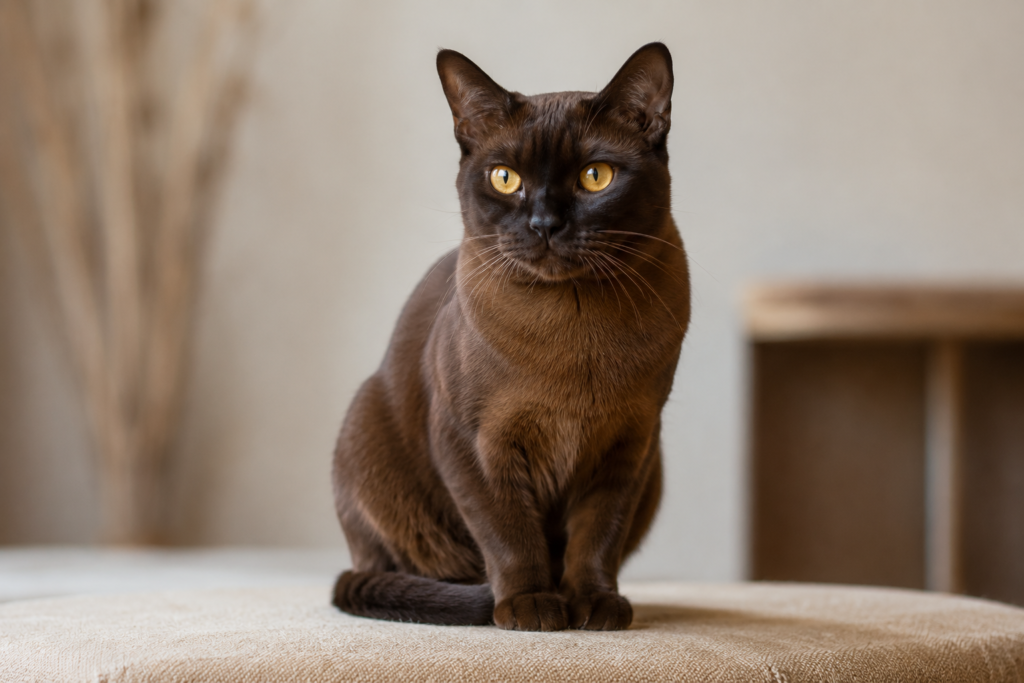
About the Burmese
History and Origins
The modern Burmese traces to a single remarkable cat: Wong Mau, a small brown female brought from Burma (now Myanmar) to San Francisco in 1930 by Dr. Joseph Thompson. Bred first to a Siamese and then back to her own offspring, Wong Mau became the foundation of the breed, and careful selection established the rich, solid-brown “sable” coat and rounded features the Burmese is known for.
Over time the breed split into two types: the American (contemporary) Burmese, which is rounder and cobbier, and the European (traditional) Burmese, which is slightly more moderate in build. Both share the same warm temperament. The Burmese also became the foundation for other breeds, including the Bombay and the Tonkinese.
Personality and Temperament
Burmese are among the most people-oriented of all cats — often called “Velcro cats” for their habit of following their humans everywhere and involving themselves in every activity. They are deeply affectionate, crave companionship, and bond intensely with their families, frequently choosing a favorite lap to occupy.
They stay playful and kitten-like well into adulthood, are highly intelligent, and readily learn tricks and fetch. Burmese are vocal, though their voices are softer and sweeter than the Siamese’s, and they’ll happily “chat” with you throughout the day. Because they are so social, they do not cope well with being left alone for long and often do best with a companion pet. Warm, engaging, and devoted, a Burmese is a wonderful choice for people who want a truly interactive cat.
Care and Grooming
Grooming a Burmese couldn’t be easier. Their short, satiny, close-lying coat needs only a weekly rub with a soft brush or grooming glove to keep its glossy shine, and they shed very little. An occasional wipe with a chamois brings out the coat’s sheen.
Their real needs are social and mental. Burmese are active, intelligent, and companionship-hungry, so provide daily interactive play, puzzle toys, and climbing space — and seriously consider a second pet if the household is out during the day. Because they’re food-motivated and can be prone to weight gain, measured meals and play help keep them trim. Round out care with routine nail trims, ear checks, and dental hygiene.
Health and Lifespan
Burmese are famously long-lived, often reaching 16–18 years or more, but the breed has several inherited conditions worth knowing. Hypertrophic cardiomyopathy (HCM) can occur and should be screened for. The breed is genetically predisposed to diabetes mellitus, so keeping them lean is especially important. Burmese hypokalaemic polymyopathy — an inherited low-potassium condition causing muscle weakness — has a DNA test that lets breeders screen it out. Some lines can carry the Burmese head defect, a severe craniofacial abnormality that responsible breeders avoid, and flat-chested kitten syndrome and eye issues (cherry eye, glaucoma) are occasionally seen.
Buy from a breeder who screens for HCM and DNA-tests for hypokalaemia, keep your Burmese at a healthy weight, watch for signs of diabetes, and maintain regular veterinary checkups.
Cost and Is the Burmese Right for You?
A Burmese kitten from a reputable breeder generally costs $600 to $1,500 in the United States, with rarer colors and show lines running higher. Health-tested lines are well worth the premium given the breed’s specific risks.
The Burmese is perfect for people who want an affectionate, interactive, almost dog-like companion and who are home often enough to give it the attention it craves. They suit families, couples, and multi-pet homes — ideally with a feline friend. They are a poor fit for anyone wanting an independent, low-attention cat, or for households where the cat would be left alone for long hours, since Burmese genuinely need companionship
Explore More
Love a devoted, people-oriented cat? Meet the Burmese-derived Bombay — the “mini black panther” created from Burmese lines. For more affectionate breeds, see the Tonkinese and Siamese, or read why your cat always sits on your lap. Or browse all cat breeds.
Frequently Asked Questions
Yes, quite — and for their fans, that's the appeal. Burmese are intensely people-oriented and want to be with their owners constantly, following them from room to room and joining in every activity. They're often called "Velcro cats." If you want an affectionate, interactive companion, this is ideal; if you want an independent, aloof cat, the Burmese is probably not the breed for you.
Yes, very well. The Burmese's friendly, confident, dog-like temperament makes it one of the better breeds for homes with dogs. They're sociable and rarely skittish, and many enjoy the company of a cat-friendly canine — especially since Burmese dislike being alone and appreciate a companion. As always, a slow, supervised introduction helps the two get along.
Burmese are vocal but not loud. They're talkative and will "converse" with their owners throughout the day, but their voices are noticeably softer and sweeter than the loud, persistent yowling of their Siamese relatives. For people who enjoy a communicative, interactive cat, the Burmese hits a pleasant middle ground — chatty and expressive without being overwhelming.
Burmese are one of the longer-lived breeds, commonly reaching 16–18 years and sometimes beyond with good care. Supporting their longevity means buying from health-tested lines, keeping them at a healthy weight (they're prone to diabetes), feeding a quality diet, and maintaining regular veterinary and dental checkups, including heart screening as they age.
The main concerns are diabetes mellitus (the breed is predisposed, so keep them lean), hypertrophic cardiomyopathy (HCM), and Burmese hypokalaemic polymyopathy, an inherited low-potassium condition with a DNA test. Some lines can carry the serious Burmese head defect, and flat-chested kittens and eye issues occur occasionally. A reputable breeder who health-tests greatly reduces these risks.