
Siamese
The Siamese is an elegant, vocal breed with striking blue almond-shaped eyes and distinctive color points. These intelligent, social cats form strong bonds with their owners and love to communicate.
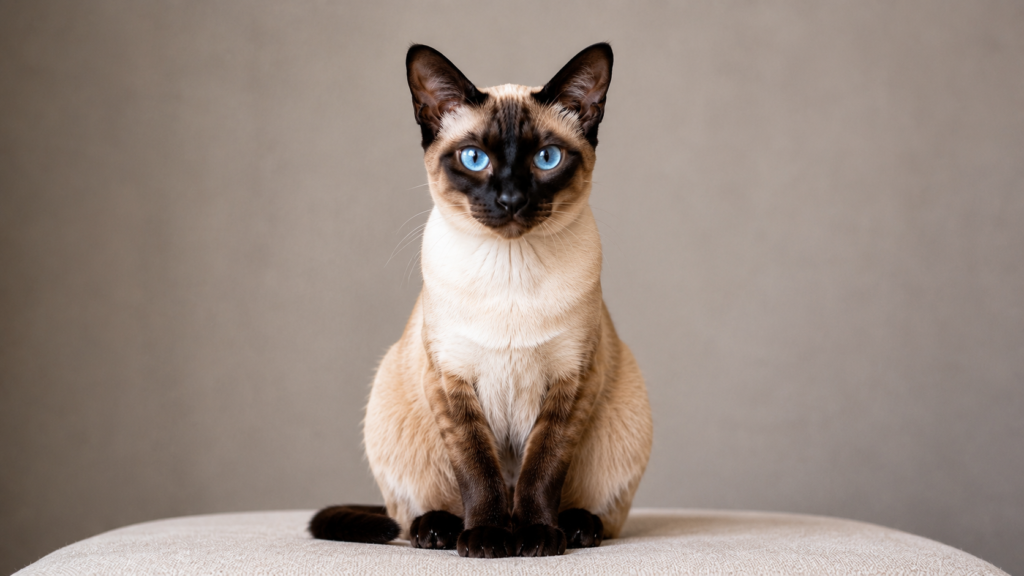
About the Siamese
History and Origins
The Siamese is among the oldest documented cat breeds, native to Siam — modern-day Thailand — where the pointed cats known as Wichienmaat appear in the illustrated Tamra Maew (Cat-Book Poems), a manuscript tradition dating back centuries. They were genuinely prized animals, kept in temples and noble households, and stories of them guarding monasteries or accompanying royalty are woven through Thai cat lore.
The breed reached the West in the late nineteenth century. A pair named Pho and Mia, given to the British Consul-General in Bangkok, were exhibited in London in 1885 and caused a sensation. American interest followed quickly. Over the twentieth century, show breeding pushed the Siamese toward an increasingly slender, long-headed extreme, and that divergence eventually split the breed in two: the modern show Siamese with its dramatic wedge, and the moderate original type now recognized separately as the Thai.
Personality and Temperament
Siamese cats are relentlessly, gloriously involved. They talk — a loud, low, insistent voice used to comment on your movements, demand explanations, and object to closed doors. If a silent cat is what you want, this is emphatically the wrong breed.
They are also exceptionally intelligent. Siamese learn routines fast, work out latches and cupboards, and take readily to clicker training, fetch, and leash walking. An under-stimulated Siamese redirects that intelligence into your belongings.
Siamese are also demanding of routine. They notice furniture moved, meals served late, and visitors arriving, and they will tell you about all three.
A further quirk of the breed is temperature-linked coloring. Siamese kittens are born white, and their points develop over the first weeks of life because the enzyme controlling pigment is heat-sensitive — color appears only on the cooler extremities. This is why Siamese living in cold homes often darken with age, and why a shaved patch can grow back noticeably darker before fading again.
The defining trait, though, is attachment. Siamese bond hard, often to one particular person, and they want to be physically present for everything — lap, shoulder, keyboard, bathroom. They genuinely struggle when left alone for long workdays, and prolonged isolation can produce anxious behavior, excessive vocalizing, and overgrooming. Many owners keep them in pairs for exactly this reason.
Care and Grooming
Coat care is close to effortless. The short, fine, single coat has almost no undercoat, so a weekly pass with a rubber brush or grooming mitt removes loose hair and keeps it glossy. Shedding is modest and seasonal.
The real work is mental. Plan on daily interactive play — wand toys, fetch, food puzzles — plus vertical territory in the form of tall cat trees and shelves. Rotate toys so novelty lasts. Because they are so people-dependent, consider a second cat if your household is empty for eight or nine hours a day.
Siamese are prone to dental disease, so brush their teeth and keep up with veterinary dental checks. Add routine nail trims and ear inspections. They also feel the cold more than heavy-coated breeds and will seek out sunny spots, radiators, and your bed.
Health and Lifespan
Siamese are long-lived, commonly reaching 12–20 years, but they carry several well-documented breed-linked conditions and you should know all of them.
Progressive retinal atrophy (PRA) causes gradual retinal degeneration ending in blindness, with no treatment available. A DNA test exists, and any reputable Siamese breeder will screen breeding cats — ask to see the results.
Amyloidosis is the breed’s most serious concern: abnormal amyloid protein deposits accumulate in the liver and kidneys and can lead to organ failure, often surfacing between one and five years of age. Siamese also show elevated rates of feline asthma, hypertrophic cardiomyopathy (HCM), and certain cancers, and the breed is over-represented for pica — compulsive eating of wool, plastic, and other non-food items, which can cause dangerous intestinal blockages.
Buy from a breeder who screens for PRA and HCM, keep annual veterinary exams, watch for wool-sucking behavior, and act quickly on any change in thirst, appetite, or breathing.
Cost and Is the Siamese Right for You?
A Siamese kitten from a reputable US breeder typically runs $600 to $1,500, with show-quality lines and rarer point colors reaching higher. Siamese also turn up in shelters and breed-specific rescues with some regularity, which is well worth checking.
The Siamese suits people who actively want a conversational, demanding, dog-like cat and are home often — remote workers, retirees, families who enjoy an animal in the middle of everything. They reward training and thrive on attention.
They are a poor match for anyone who wants a quiet, ornamental, independent cat, for households empty all day, for noise-sensitive apartment living, or for owners unwilling to invest in daily play. The Siamese does not adapt to being ignored; it escalates.
Explore More
If the Siamese appeals but the extreme modern look does not, meet the moderate original type, the Thai. For a softer version of the same temperament, compare the Tonkinese and the white-booted Snowshoe, or the long-coated Balinese. You can also browse all cat breeds.
Frequently Asked Questions
Yes. The Siamese voice is loud, low-pitched and used constantly — to greet you, demand food, protest a closed door, or simply narrate the day. It is one of the most distinctive traits of the breed and it does not fade with age. Prospective owners in thin-walled apartments should treat this as a genuine consideration, not an exaggeration.
Not comfortably. Siamese form intense attachments and are among the breeds most prone to separation-related stress, which shows up as excessive vocalizing, destructive behavior, or overgrooming. If your household is empty for eight or nine hours daily, keep two cats so they have company, and provide puzzle feeders and climbing space to occupy them.
Siamese are notably long-lived, commonly reaching 12 to 20 years. Longevity depends heavily on buying from a breeder who screens for progressive retinal atrophy and heart disease, keeping the cat at a healthy weight, maintaining dental care, and getting prompt veterinary attention for changes in thirst, appetite, or breathing.
This is pica, a compulsive eating of non-food items, and Siamese are over-represented for it. The cause is thought to combine genetics, early weaning, and boredom or stress. It matters because swallowed fabric or plastic can cause intestinal blockages requiring surgery. Keep tempting items out of reach, increase enrichment, and discuss persistent cases with your vet.
They share an origin but represent different types. The modern Siamese has been bred toward a long, slender body and a dramatic wedge-shaped head. The Thai preserves the older, moderate build with an apple-shaped rounded head, sturdier body and shorter tail. Both are pointed and vocal, but the Thai is generally a little less extreme in temperament.