
Thai
The Thai cat is the original Siamese type, also called the Old-Style or Traditional Siamese. These moderate cats combine classic beauty with affectionate personalities.
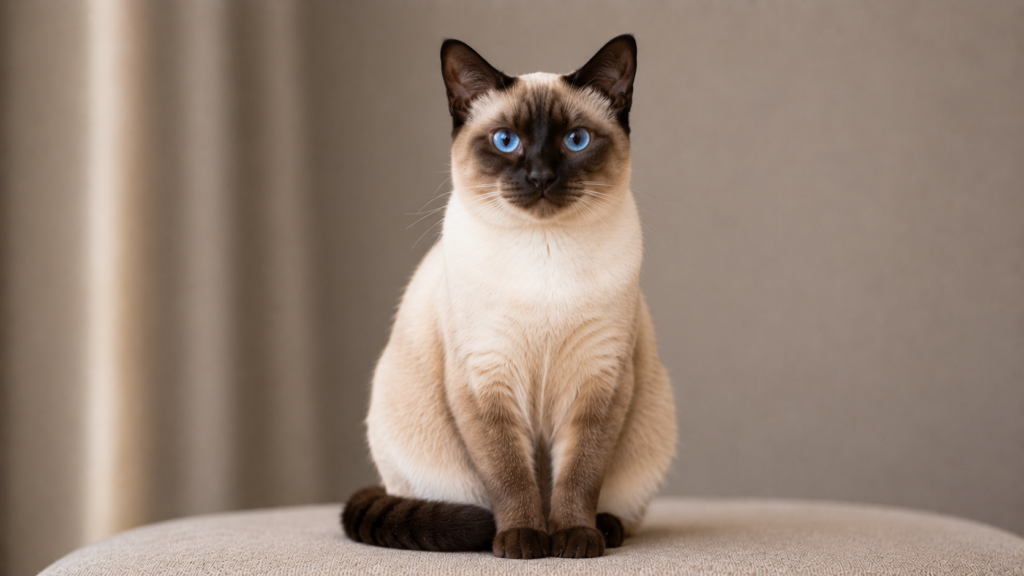
About the Thai
History and Origins
The Thai is not a new breed so much as a rescued old one. It preserves the original Siamese type — the moderate, sturdy pointed cat known in Thailand for centuries as the Wichienmaat, meaning “moon diamond,” and depicted in the illustrated Tamra Maew manuscripts alongside other traditional Thai cats.
When Siamese cats reached Britain and America in the late nineteenth century, they looked much like today’s Thai. Through the mid-twentieth century, show breeders progressively selected for a longer body, finer bone and an increasingly extreme wedge-shaped head. By the 1980s the show Siamese had changed so much that the older type had almost disappeared from pedigree registries.
Breeders who preferred the traditional look began preserving it deliberately, working with cats imported directly from Thailand as well as surviving old-style lines. To avoid endless argument over which cat deserved the name Siamese, registries recognised the moderate type separately: TICA accepted the Thai for championship competition in 2010, and the Thai is now an established breed in its own right rather than a variant.
Personality and Temperament
The Thai has the Siamese personality without the extremes. They are talkative, opinionated and deeply attached to their people, but most owners find them a little calmer and a little less piercing than the modern show Siamese.
They are highly intelligent and inquisitive, quick to learn routines, open cupboards and solve puzzle feeders. Many enjoy fetch and take readily to clicker training or leash walking.
Socially they are demanding in the best sense: a Thai wants to be in the room, on the desk, and involved in whatever is happening. They typically bond very strongly with their household and often favour one person, greeting them at the door and following them around.
They remain playful well into adulthood and are usually confident with children, dogs and other cats. The corollary is that they genuinely dislike solitude and are not a breed to leave alone through long working days without company.
Care and Grooming
Grooming demands are minimal. The short, fine, single coat lies close to the body and needs only a weekly brush with a rubber mitt or soft slicker to lift loose hair and maintain the sheen. Shedding is modest and baths are almost never necessary.
Everything else is enrichment. Provide daily interactive play, puzzle feeders, tall cat trees and window perches; a Thai denied stimulation will invent its own entertainment at your expense. Because they are so people-focused, a second cat is worth considering if the household is empty during working hours.
Dental disease is common in the pointed breeds, so brush the teeth regularly and keep up with veterinary dental checks. Add routine nail trims and ear inspections. Like all pointed cats, the Thai feels the cold and will colonise sunny windowsills, radiators and your bed.
Health and Lifespan
The Thai is a robust breed and commonly lives 12–20 years. Because it retains a moderate, functional body type rather than an exaggerated one, it avoids some of the structural sensitivities associated with extreme breeding, and many breeders consider it the sturdier of the two types.
It does, however, share ancestry with the Siamese and therefore some of the same inherited risks. Progressive retinal atrophy (PRA), a degenerative retinal disease ending in blindness, has a DNA test available; ask any breeder for results. Amyloidosis, in which amyloid protein deposits damage the liver and kidneys, appears in some Siamese-derived lines, typically surfacing in young adults. The breed also sees elevated rates of feline asthma, hypertrophic cardiomyopathy and dental disease.
Like the Siamese, some Thai cats show pica — compulsive chewing or eating of wool, plastic and similar materials — which risks intestinal blockage and warrants keeping tempting items out of reach.
Buy from a breeder who DNA tests for PRA and echocardiogram-screens for heart disease, maintain annual examinations and dental care, and investigate promptly any change in thirst, appetite or breathing.
Cost and Is the Thai Right for You?
A Thai kitten from a reputable breeder generally costs $600 to $1,200 in the United States. Breeders are relatively few, so expect a waiting list, and be careful of sellers marketing any moderate-looking pointed cat as “traditional” or “applehead” Siamese without pedigree documentation.
The Thai suits people who want the classic Siamese character — vocal, clever, devoted, endlessly involved — in a healthier, more moderate body, and who are home enough to give it the attention it expects. They work well in families and multi-pet homes.
They are wrong for anyone wanting a quiet or independent cat, for homes empty all day, and for owners unwilling to provide daily play and mental stimulation.
Explore More
The obvious comparison is the modern Siamese, and it is worth reading both before choosing. For related Thai natural breeds, meet the silver-blue Korat and the pure white Khao Manee. The mink-coated Tonkinese offers a similar moderate build, or browse all cat breeds.
Frequently Asked Questions
They share the same origin but represent different types. The modern show Siamese has been bred toward a long, tubular body, fine bone and a dramatic wedge-shaped head. The Thai preserves the older Thai Wichienmaat form: a rounder apple-shaped head, sturdier moderate body and shorter tail. Both are pointed, blue-eyed and talkative, though the Thai is usually slightly less extreme.
Broadly they describe the same moderate old-style cat, but Thai is the recognised pedigree breed name while applehead or traditional Siamese are informal marketing terms. TICA accepted the Thai for championship competition in 2010. If you want a documented pedigree, look for cats registered as Thai rather than relying on an informal label from a seller.
Yes, they are genuinely talkative and will comment on your activities throughout the day, though most owners describe the voice as a little softer and less piercing than the modern Siamese. This is not a quiet breed. If constant conversation would irritate you or your neighbours, neither the Thai nor the Siamese is a sensible choice.
Thai cats are long-lived, commonly reaching 12 to 20 years. Their moderate, functional body type avoids some structural sensitivities of more extreme breeding. Longevity still depends on buying from a breeder who DNA tests for progressive retinal atrophy and screens for heart disease, plus consistent dental care, a healthy weight and annual veterinary examinations.
Generally yes. Thai cats are confident, playful and sociable, and they usually adapt well to children, dogs and other cats, greeting visitors rather than hiding. They stay kitten-like well into adulthood, which suits active households. Because they hate being alone, a home with people or another cat around for much of the day suits them best.