
Balinese
The Balinese is a long-haired version of the Siamese, with a flowing silky coat and a plumed tail. These elegant, intelligent cats share the Siamese love of conversation and constant human companionship.
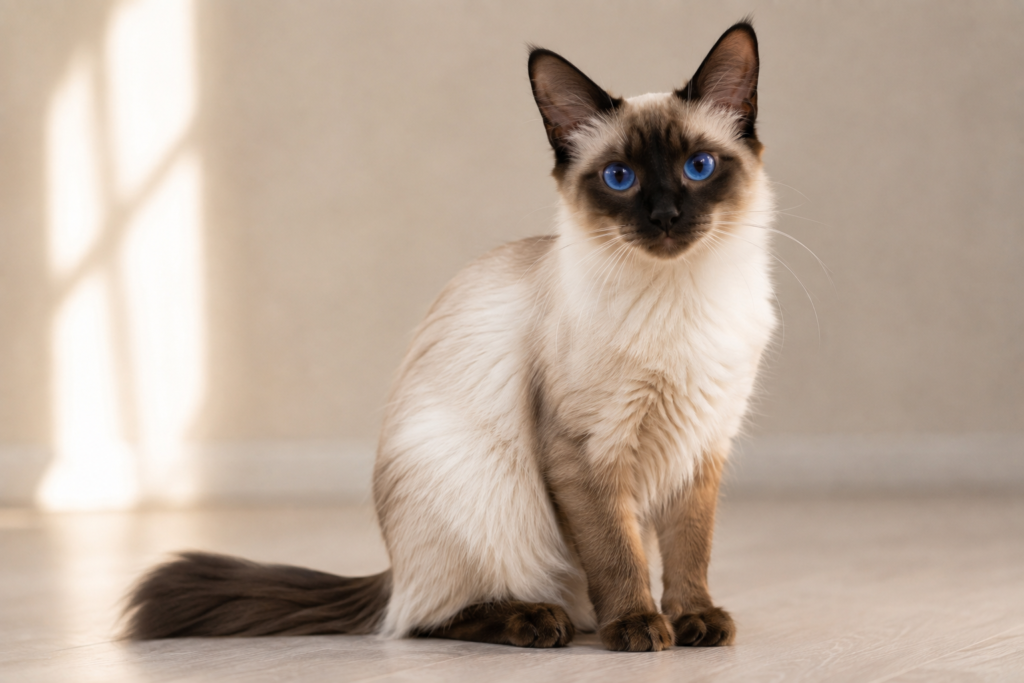
About the Balinese
History and Origins
The Balinese is, quite simply, a long-haired Siamese. Long-haired kittens appeared spontaneously in Siamese litters — most likely from a recessive gene carried quietly in the Siamese line — and for years they were treated as unshowable “flaws.” In the 1950s, American breeders in New York and California recognized their beauty and began developing them into a breed of their own.
The name “Balinese” was chosen not because the cat comes from Bali, but because its graceful, flowing movement reminded breeders of the elegant temple dancers of the island of Bali. The breed was recognized in the 1960s and 70s. Genetically it is a Siamese with a single, silky, medium-length coat — same body, same pointed coloring, same striking blue eyes, same big personality.
Personality and Temperament
If you love the Siamese temperament, the Balinese delivers it in a more glamorous package. These are highly intelligent, deeply people-oriented cats that bond intensely with their families and insist on being part of everything you do — supervising your work, following you room to room, and curling up in your lap or on your shoulder.
Like the Siamese, Balinese are famously vocal, “talking” to their humans in an expressive (though usually softer than Siamese) voice and expecting a reply. They are athletic, playful, and clever, learning tricks, playing fetch, and inventing games to entertain themselves. This is a “velcro cat” that craves interaction and does not do well left alone for long. In an attentive home, the Balinese is a devoted, entertaining, almost dog-like companion.
Care and Grooming
Despite the long coat, the Balinese is one of the easiest longhaired breeds to groom, because it has a fine, silky, single coat with no woolly undercoat. That means it rarely mats. A weekly brush keeps the coat sleek and the plumed tail beautiful, and they shed relatively little.
Where they need real investment is attention and stimulation. Balinese are active and intensely social, so provide climbing spaces, puzzle toys, and plenty of daily interactive play. Because they hate being alone, many do best with a companion pet — often another Balinese or Siamese — to keep them company while you’re out. Round out care with routine nail trims, ear checks, and dental hygiene, as the Siamese line can be prone to dental issues.
Health and Lifespan
Balinese are generally long-lived, often reaching 12–20 years, but because they share Siamese genetics they can inherit some of the same conditions. Hypertrophic cardiomyopathy (HCM) and progressive retinal atrophy (PRA) can occur, and the Siamese line carries a risk of amyloidosis, which affects the liver. Dental disease and gingivitis are relatively common, so regular dental care matters, and their fine build can make them a little sensitive to cold. Crossed eyes or a kinked tail occasionally appear but are largely cosmetic.
Choose a breeder who screens breeding cats for HCM and PRA, keep up with dental care, provide a warm environment, and maintain regular veterinary checkups to support a long, healthy life.
Cost and Is the Balinese Right for You?
A Balinese kitten from a reputable breeder generally costs $1,000 to $2,500 in the United States, with show-quality lines and rare point colors running higher. Health-tested lines are worth the premium given the breed’s Siamese-related risks.
The Balinese is ideal for people who want an affectionate, interactive, talkative companion and are home enough to give it the attention it craves — bonus points if allergies are a concern, since the breed produces less of the Fel d 1 allergen than most cats. They suit families, couples, and multi-pet homes, ideally with a feline friend. They are less suited to those wanting a calm, quiet, independent cat, or to households away for long hours.
Explore More
Love a talkative, people-oriented cat? Compare the Balinese with its Siamese-family relatives, the Oriental Shorthair and Havana Brown. Curious why your cat is so clingy or chatty? Read why your cat always sits on your lap, or browse all cat breeds.
Frequently Asked Questions
No cat is truly hypoallergenic, but the Balinese is often recommended for allergy sufferers because it produces lower levels of the Fel d 1 allergen than most breeds, and its single silky coat sheds relatively little. Many people with mild allergies tolerate a Balinese better than other cats, but reactions vary from person to person, so it's wise to spend time with one before committing.
Very. Like their Siamese ancestors, Balinese are talkative cats that "converse" with their owners throughout the day, though their voice is often a little softer and sweeter than the Siamese's. They will comment on everything and expect a response. For people who enjoy an interactive, communicative companion this is a joy — but anyone wanting a quiet cat should look elsewhere.
Surprisingly little for a longhaired cat. Because the Balinese has a fine, silky, single coat with no dense undercoat, it rarely mats and needs only a weekly brushing to stay sleek and keep the plumed tail looking its best. This makes it far lower-maintenance than breeds like the Persian, combining a glamorous look with easy upkeep.
The main difference is coat length. The Balinese is essentially a long-haired Siamese — same elegant body, pointed coloring, blue eyes, intelligence, and vocal, people-loving personality, but with a silky medium-length coat and a plumed tail instead of the Siamese's short, close coat. Genetically they're the same cat in different coats, and the two are often bred together.
Yes, very. Balinese are affectionate, playful, and social, and they generally do wonderfully with children and other pets, thriving on the activity and attention of a busy household. They're intelligent and interactive enough to keep kids entertained. The main requirement is companionship — Balinese don't like being left alone for long, so they suit families where someone is usually home.