
Oriental Shorthair
The Oriental Shorthair is a sleek, elegant breed that comes in over 300 color and pattern combinations. These intelligent, extremely vocal cats are closely related to the Siamese and share their love of attention and conversation.
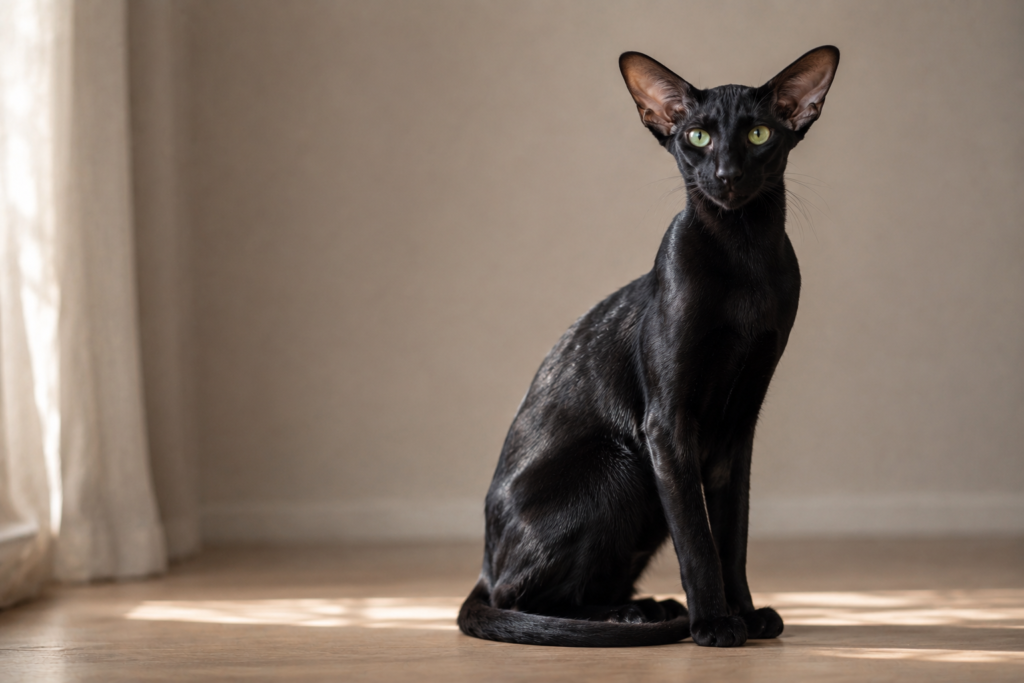
About the Oriental Shorthair
History and Origins
The Oriental Shorthair was developed in England in the 1950s, when breeders set out to expand the Siamese beyond its classic pointed coloring. By crossing Siamese with other breeds — including British Shorthairs, Russian Blues, and Abyssinians — they created a cat with the unmistakable Siamese body and personality, but in an astonishing rainbow of colors and patterns.
The result was recognized as its own breed, and today the Oriental Shorthair boasts over 300 color and pattern combinations — from solids and smokes to tabbies and bicolors — more than almost any other cat. Genetically, the Oriental is essentially a Siamese in different clothes, and the two are often bred together, which is why they share so much in body type and temperament.
Personality and Temperament
If you want a quiet, independent cat, look elsewhere — the Oriental Shorthair is one of the most people-oriented and talkative breeds in existence. Like their Siamese cousins, Orientals are extremely vocal, keeping up a running “conversation” with their humans in a loud, expressive voice, and they expect to be answered.
They bond intensely with their families and insist on being involved in everything — supervising your work, riding on your shoulder, and greeting you at the door. They are brilliantly intelligent, athletic, and playful, learning tricks, opening cupboards, and inventing games. This is a “velcro cat” that craves companionship and does not cope well with being left alone for long. In the right, attentive home, an Oriental is a devoted, endlessly entertaining, almost dog-like companion.
Care and Grooming
Grooming an Oriental Shorthair is about as easy as it gets. Their short, fine, close-lying coat needs only a weekly once-over with a soft brush or grooming glove to stay glossy, and they shed very little. (There is also a longhaired Oriental variety, which needs slightly more brushing.)
Where they demand investment is attention and stimulation. Orientals are highly active and highly social, so provide tall cat trees, climbing shelves, puzzle toys, and plenty of daily interactive play to satisfy their busy minds and bodies. Because they hate being alone, many do best with a companion pet — often another Oriental or Siamese — to keep them company. Round out care with routine nail trims, ear checks, and especially good dental hygiene, since the breed can be prone to dental issues.
Health and Lifespan
Oriental Shorthairs typically live 12–15 years, and often longer, but because they share Siamese ancestry they inherit some of the same conditions. Hypertrophic cardiomyopathy (HCM) and progressive retinal atrophy (PRA) can occur, and the Siamese line can carry a risk of amyloidosis, which affects the liver or kidneys. Dental disease and gingivitis are also relatively common, so regular dental care matters. Their fine build means they can be sensitive to cold, and some are prone to respiratory sensitivity.
Choose a breeder who screens breeding cats for HCM and PRA, keep up with dental care, provide a warm environment and a healthy diet, and maintain regular veterinary checkups to support a long, healthy life.
Cost and Is the Oriental Shorthair Right for You?
An Oriental Shorthair kitten from a reputable breeder generally costs $600 to $1,500 in the United States, with rare colors and show lines running higher. Health-tested lines are worth the premium given the breed’s Siamese-related risks.
The Oriental Shorthair is perfect for people who want an intensely affectionate, interactive, talkative companion and who are home often enough to give it the attention it craves. They suit active households, families, and multi-pet homes — ideally with a feline companion. They are a poor fit for anyone wanting a calm, quiet, or independent cat, for households away for long hours, or for those who won’t appreciate a cat that comments loudly on everything.
Explore More
Love a talkative, people-oriented cat? Compare the Oriental with its Siamese-family relatives, the Balinese and Havana Brown. Curious why your cat is so chatty or clingy? Read why your cat always sits on your lap, or browse all cat breeds.
Frequently Asked Questions
Yes — very closely. The Oriental Shorthair is essentially a Siamese in a huge range of non-pointed colors and patterns. They share the same long, tubular body, wedge-shaped head, large ears, intelligence, voice, and people-loving personality. The two breeds are often bred together, and the main difference is coloring: Siamese have the classic pointed pattern, while Orientals come in over 300 color and pattern combinations.
Extremely. Orientals are among the most talkative of all cat breeds, inheriting the Siamese love of "conversation." They will chat, comment, and demand responses in a loud, expressive voice throughout the day. For people who enjoy an interactive, communicative cat, this is a delight — but anyone seeking a quiet companion should know that silence is not the Oriental's strong suit.
Yes, a great deal. Orientals are intensely social "velcro cats" that bond deeply with their people and want to be involved in everything. They do not cope well with being left alone for long periods and can become bored, stressed, or destructive without enough interaction. Many do best with a companion pet, plenty of daily play, and a household where someone is around much of the time.
Yes, a great deal. Orientals are intensely social "velcro cats" that bond deeply with their people and want to be involved in everything. They do not cope well with being left alone for long periods and can become bored, stressed, or destructive without enough interaction. Many do best with a companion pet, plenty of daily play, and a household where someone is around much of the time.
Oriental Shorthairs typically live 12–15 years, and many reach the upper end or beyond with good care. Supporting their longevity means buying from health-tested lines, keeping up with dental care, providing a warm environment and quality diet, and scheduling regular veterinary checkups — including heart screening — to catch any Siamese-related conditions early.