
Snowshoe
The Snowshoe is a striking breed with Siamese coloring and distinctive white feet. These social, vocal cats are known for their affectionate personalities and unique markings.
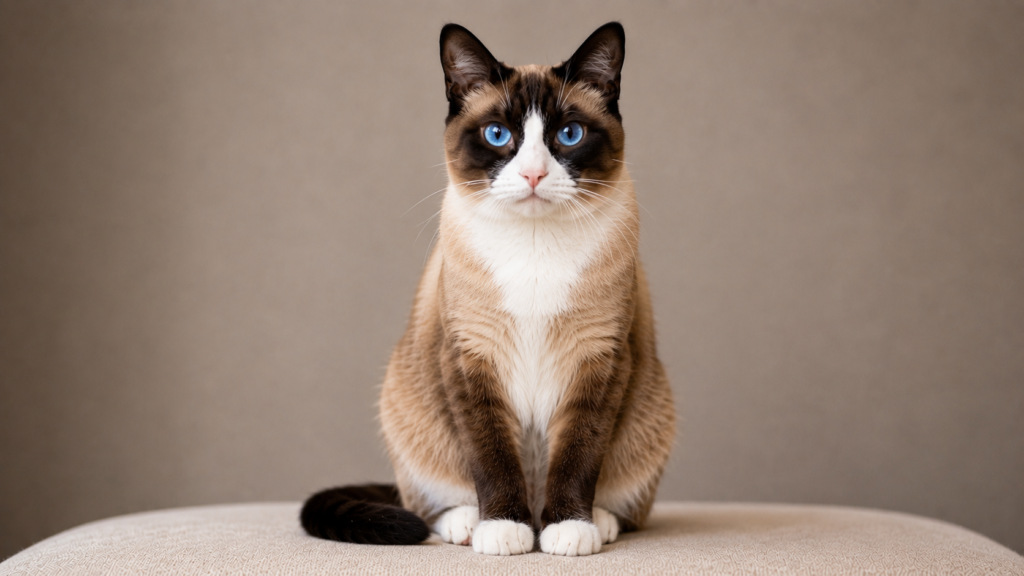
About the Snowshoe
History and Origins
The Snowshoe began by accident in Philadelphia in the 1960s, when Siamese breeder Dorothy Hinds-Daugherty found three kittens in a litter with white feet. Charmed rather than dismayed, she set out to fix the trait deliberately, crossing Siamese with bicolor American Shorthairs to produce a pointed cat with white boots and a sturdier build.
Progress was slow. Hinds-Daugherty eventually left the project, and breeder Vikki Olander took it up in the 1970s, keeping the breed alive through a period when only a handful of Snowshoes existed. Recognition came gradually, with TICA granting championship status in 1994.
The breed remains uncommon, and the reason is genetics. The white markings are produced by a piebald spotting gene whose expression is notoriously unpredictable, so even a carefully planned litter may yield few kittens with the desired symmetrical pattern. Show-quality Snowshoes are genuinely hard to breed, which keeps numbers low.
Personality and Temperament
The Snowshoe inherits the Siamese personality with the volume turned down. They are talkative, but their voice is softer and more melodic than the Siamese foghorn — chatty rather than insistent.
They are strongly people-oriented and typically attach hardest to one person, shadowing them around the house and expecting to be included. Many are notably lap-oriented and will settle on you for hours.
Intelligence is high. Snowshoes learn to open doors, work out puzzle feeders, and often enjoy fetch. A large number share the Siamese and Turkish fascination with water and will play in sinks, paw at running taps, or join you in the shower.
Like all pointed breeds, Snowshoe kittens are born entirely white. The enzyme controlling pigment is heat-sensitive, so colour develops only on the cooler extremities over the first weeks and months, and the final pattern is not settled until the kitten is several months old.
Socially they are easy — generally confident with children, dogs and other cats, and inclined to greet visitors rather than vanish. The trade-off is that they dislike solitude and do poorly in homes where nobody is around for long stretches.
Care and Grooming
Grooming is straightforward. The short, close-lying coat has minimal undercoat and needs only a weekly brush with a rubber mitt or soft slicker to remove loose hair and keep the shine. Shedding is moderate, with a mild seasonal increase, and baths are rarely required.
The more meaningful care is mental. Provide daily interactive play with wand toys, puzzle feeders, and climbing furniture — a bored Snowshoe becomes a destructive one. Because they hate being alone, seriously consider a second cat if the house is empty during working hours.
Watch the waistline: Snowshoes are enthusiastic eaters and prone to gaining weight indoors, which compounds their cardiac risk. Measure meals rather than free-feeding. Add weekly tooth brushing, regular nail trims and routine ear checks, and note that like other pointed breeds they feel the cold and will seek out warm spots.
Health and Lifespan
Snowshoes are generally healthy and usually live 12–15 years, often longer, but they inherit specific risks from their Siamese ancestry that you should screen for.
Hypertrophic cardiomyopathy (HCM) is the main concern — a thickening of the heart muscle that reduces pumping efficiency and can lead to heart failure or clot formation. No reliable DNA test covers the Snowshoe, so responsible breeders screen breeding cats by echocardiogram with a veterinary cardiologist. Ask for dated results.
Polycystic kidney disease (PKD), in which fluid-filled cysts progressively damage the kidneys, also appears in the breed. Here a DNA test does exist and is inexpensive, so there is no excuse for an untested breeding line — ask directly.
From the Siamese side, some lines show progressive retinal atrophy, crossed eyes or a kinked tail; the latter two are cosmetic and harmless. Watch for early signs of kidney trouble such as increased thirst and urination, and for laboured breathing or lethargy that could indicate heart disease. Keep the cat lean, maintain dental hygiene, and keep up annual veterinary exams.
Cost and Is the Snowshoe Right for You?
A Snowshoe kitten from a reputable US breeder typically costs $600 to $1,500, with well-marked show-quality cats reaching higher. Because the pattern is so unpredictable, waiting lists are common and good breeders are few — expect to travel or wait rather than buying from whoever has kittens now.
The Snowshoe suits people who love the Siamese temperament but want something gentler and less vocal: families, households with other pets, and owners who are home often and want a genuinely affectionate lap cat that stays engaged with them.
They are a poor fit for homes empty all day, for owners wanting a silent or independent cat, and for anyone unwilling to seek out a breeder who echocardiogram-screens for heart disease and DNA tests for PKD.
Explore More
If the pointed coat and chatty nature appeal, compare the Siamese itself, the moderate Thai, and the gentler mink-coated Tonkinese. For a larger pointed cat with white mitts, look at the Ragdoll, or browse all cat breeds.
Frequently Asked Questions
They are talkative but noticeably softer. Snowshoes inherited the Siamese tendency to comment on everything, yet their voice is more melodic and less piercing than the classic Siamese yowl. Most owners find them conversational rather than demanding, which makes the breed a reasonable choice for people who like a chatty cat but share thin apartment walls.
The white markings come from a piebald spotting gene that expresses unpredictably, so even a carefully planned pairing may produce few kittens with the desired symmetrical boots and facial V. Breeders cannot reliably reproduce show-quality markings, which keeps numbers low and waiting lists long. The breed also nearly died out in the 1970s before being revived.
Generally yes. They are confident, sociable cats that usually get along well with children, dogs and other cats, and they tend to greet visitors rather than hide. They are sturdy and playful enough for family life. The main caveat is that they dislike being alone, so they suit households where someone is home much of the day.
No. Like all pointed breeds, Snowshoe kittens are born pure white because the pigment-producing enzyme is heat-sensitive and colour develops only on the cooler extremities. Both the point colour and the contrast of the white markings emerge gradually over the first weeks and months, and the final pattern is not clear until the kitten is several months old.
Ask for dated echocardiogram results from a veterinary cardiologist screening breeding cats for hypertrophic cardiomyopathy, since no reliable DNA test covers this breed. Also ask for DNA test results for polycystic kidney disease, which is inexpensive and widely available. Some lines carry progressive retinal atrophy from the Siamese side, so enquire about eye screening too.