
Bombay
The Bombay is a sleek, black-panther lookalike with copper eyes and a loving personality. These outgoing, playful cats combine exotic looks with a sweet, adaptable temperament.
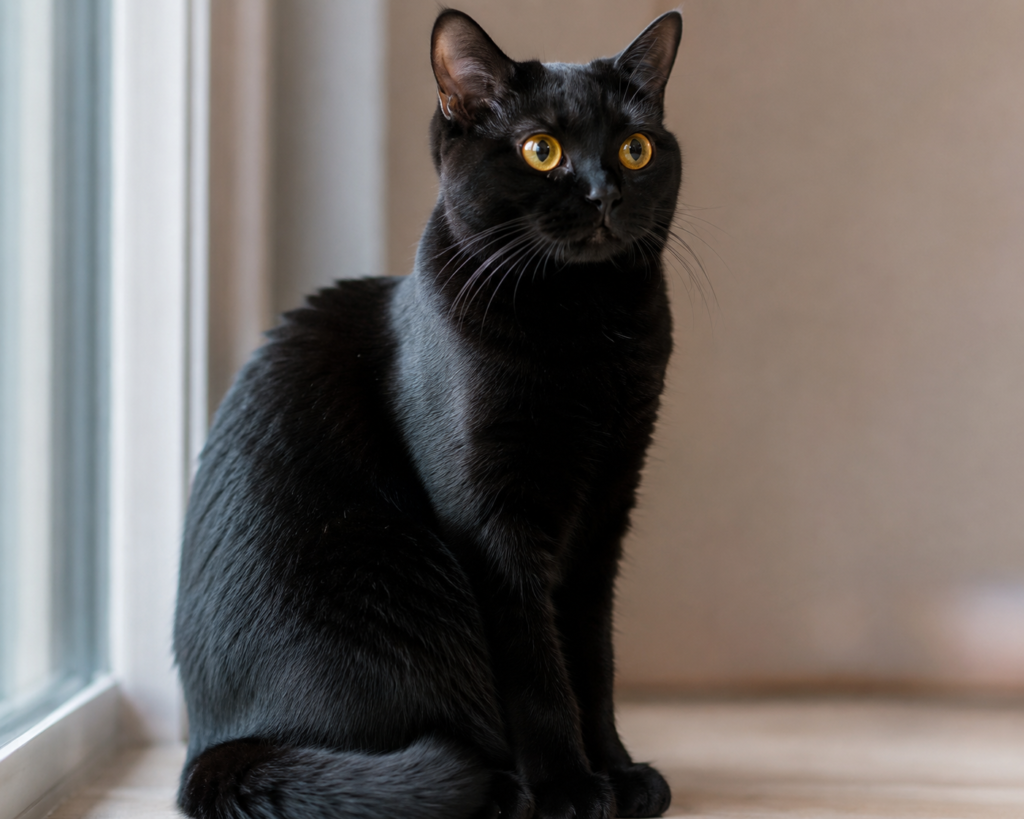
About the Bombay
History and Origins
The Bombay is a deliberately created breed with a clear goal: a miniature black panther for the living room. In 1953, Kentucky breeder Nikki Horner set out to produce a cat resembling the wild black leopards of India — which is where the name “Bombay” comes from, though the breed itself is entirely American.
She crossed sable Burmese with black American Shorthairs, and after years of careful breeding achieved the deep patent-leather coat and gleaming copper eyes she wanted. The Cat Fanciers’ Association (CFA) recognized the Bombay in 1976. The breed still carries Burmese in its makeup, which shapes both its rounded build and its affectionate, people-loving personality.
Personality and Temperament
Bombays are among the most sociable and outgoing of all cats. They love being the center of attention and greet visitors rather than hiding from them. They form strong bonds with their families and often follow their favorite person from room to room, “helping” with whatever is going on.
Many Bombays enjoy learning tricks, playing fetch, and even walking on a harness, showing a dog-like devotion to their humans. They are moderately active — playful and curious, but happy to settle into a warm lap afterward. Their easygoing, adaptable nature means they get along well with children, other cats, and even dogs, making them one of the friendliest breeds for a busy household.
Care and Grooming
Grooming a Bombay is refreshingly simple. Their short, tight, glossy coat needs only a weekly rub with a rubber brush or a chamois cloth to lift loose hair and bring up that signature shine. They shed moderately and rarely need bathing.
Because Bombays are so food-motivated and love to lounge, they can gain weight easily. Measured meals, portion control, and daily play are important to keep them trim. They enjoy warmth and will happily claim the sunniest windowsill or the spot nearest a heater. Regular nail trims, weekly ear checks, and routine dental care complete their low-effort grooming routine. Their sociable nature also means they need daily interaction to stay happy.
Health and Lifespan
Bombays typically live 12–16 years and are generally robust, but they inherit a few concerns from their Burmese ancestry. Hypertrophic cardiomyopathy (HCM), the most common feline heart disease, occurs in the breed and can be screened for. Some Bombays — particularly those with a rounder, flatter face — can have mild brachycephalic traits leading to tearing or breathing noise, and a small number carry the Burmese craniofacial defect, which responsible breeders avoid. They are also prone to obesity if overfed.
Choose a breeder who screens breeding cats for HCM, keep your Bombay at a healthy weight, and maintain regular veterinary checkups.
Cost and Is the Bombay Right for You?
A Bombay kitten from a reputable breeder typically costs $500 to $2,000 in the United States, depending on lineage and region. Well-bred, health-screened kittens sit at the higher end of that range.
The Bombay is an excellent choice for families and social households that want an affectionate, interactive companion with striking looks. They adapt well to apartments and homes with other pets, and their outgoing nature makes them great for people who want a cat that participates in family life. They are less ideal if you want an independent, low-attention cat, or if long work hours would leave this very social breed alone too often.
Explore More
If you love an affectionate, lap-loving cat, read why your cat always sits on your lap and why cats knead. To compare other friendly companions, see the Bombay’s Burmese-cousin looks beside the Devon Rex or browse all cat breeds.
Frequently Asked Questions
Bombays are moderately rare. They are far less common than breeds like the Maine Coon or Persian, and reputable breeders are limited, so finding a kitten can take time. However, they are not as rare as breeds like the Havana Brown. Their combination of exotic panther looks and easy temperament keeps demand steady.
Bombays are famous for their large, round eyes in shades ranging from gold to deep copper. The most prized Bombays have the richest copper eyes, which contrast dramatically against their jet-black coat. Some cats show more of a gold or yellow tone, especially when young, with the color often deepening as they mature.
No. Despite their short coat and modest shedding, Bombays are not hypoallergenic. They produce the Fel d 1 protein in their saliva and skin like all cats, which is the primary trigger for allergies. Their sleek coat does mean less loose hair around the home, but that does not eliminate allergens.
Absolutely. Bombays are one of the most affectionate breeds and genuinely seek out physical closeness. They love to curl up in laps, burrow under blankets, and sleep pressed against their favorite person. Their warmth-seeking, people-oriented nature makes them devoted cuddle companions who dislike being left alone for long.
Bombays are medium-sized, typically weighing 8–12 pounds, with males larger than females. Although they look compact, they are surprisingly muscular and heavy for their size — often described as feeling like a "brick wrapped in velvet." They reach full size and muscular maturity at around two years of age.