
Lykoi
The Lykoi is a unique breed with a werewolf-like appearance. These affectionate, playful cats are surprisingly sweet despite their spooky looks.
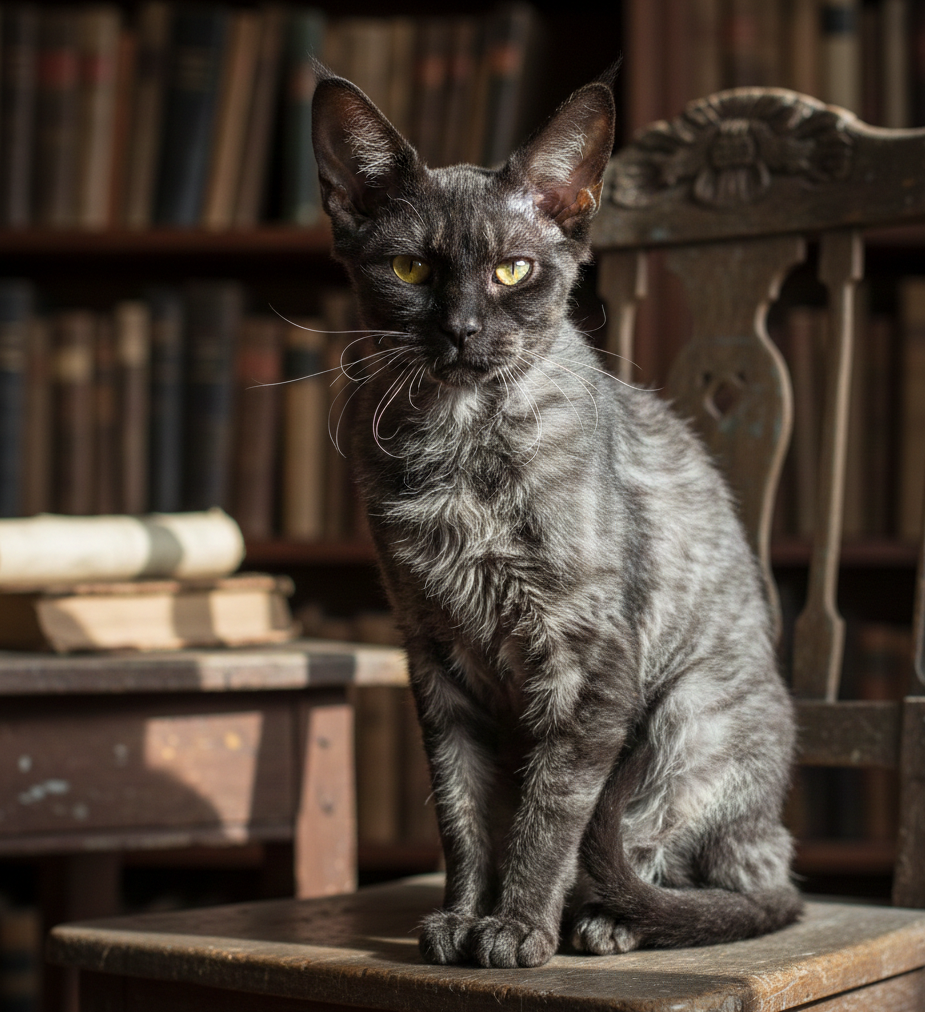
About the Lykoi
History and Origins
The Lykoi is a natural mutation that was noticed rather than engineered. In 2010, two litters of unusual partially haired kittens appeared independently in the United States — one found by Patti Thomas in Virginia, the other in Tennessee. Both sets of kittens came from ordinary domestic shorthair mothers, not from any pedigree programme.
Tennessee veterinarian Dr Johnny Gobble and his wife Brittney took on the second pair and did the work that turned a curiosity into a breed. Crucially, they started by ruling things out: veterinary testing confirmed the kittens had no disease causing the patchy coat — no fungal infection, no thyroid disorder, no immune deficiency. Skin biopsies showed the hair follicles were simply incomplete, lacking the components needed to produce a full coat, a condition called hypotrichosis.
Gobble then proved it was heritable and recessive by breeding two unrelated Lykoi and producing Lykoi kittens. The name comes from lykos, Greek for wolf. TICA granted championship status in 2017, and the breed remains rare.
Personality and Temperament
The werewolf appearance is entirely cosmetic. Lykoi are affectionate, playful and thoroughly friendly — one of the more sociable breeds, and nothing like their spooky styling suggests.
They are high-energy and busy, with a strong hunting drive that shows up as intense play. They stalk toys with real focus, and owners often note a doglike streak: many Lykoi fetch, follow their people around, and greet visitors at the door.
They tend to be somewhat cautious with complete strangers at first — a brief assessment rather than fear — then warm quickly and become enthusiastically involved. With their own household they are devoted and lap-friendly.
Intelligence is high and needs an outlet: puzzle feeders, wand toys and climbing furniture all pay off. They generally get on well with children, dogs and other cats, and are not especially vocal.
Care and Grooming
Lykoi care is unlike any other breed’s, because the coat is not static. The breed molts several times a year, and during these periods a Lykoi can go patchy, nearly bald, or entirely bald before regrowing its coat. This is normal, expected, and not a sign of illness — though it alarms owners who were not warned.
During bald phases, treat the cat as you would a hairless breed: it will need warmth, and exposed skin collects oil. A bath every few weeks with a gentle cat-safe shampoo keeps the skin clean, with wipe-downs in between. When the coat is fuller, grooming is minimal — a gentle weekly brush, avoiding harsh slicker brushes on sparse areas.
The bare face, ears and legs need attention year-round: clean the ears regularly, as they collect wax quickly, and keep the cat out of prolonged direct sun, since thinly covered skin burns.
Given the breed’s energy, provide climbing space and daily interactive play. Add routine tooth brushing and nail trims.
Health and Lifespan
The Lykoi is a genuinely healthy breed, typically living 12–15 years. This is in large part because it was established carefully: Dr Gobble’s first step was veterinary confirmation that the coat was a benign mutation rather than a disease, and outcrossing to domestic shorthairs has kept the gene pool comparatively broad for such a young breed.
A University of Missouri study examining Lykoi skin found lymphocytic mural folliculitis — inflammation around the hair follicles — as the only condition associated with the breed’s reduced follicle count. It is a feature of the mutation rather than an illness needing treatment, and it does not appear to affect the cats’ wellbeing.
There are no known breed-specific inherited diseases and consequently no breed-specific DNA test to demand. What matters instead is the gene pool: the breed descends from a small number of founding cats, so ask a breeder how they manage genetic diversity and whether they outcross.
Practical care needs are skin-related rather than genetic — sunburn protection, keeping the cat warm during bald phases, and routine skin and ear cleaning. Beyond that, standard care applies: annual examinations, vaccinations, parasite prevention, dental hygiene and a healthy weight.
Cost and Is the Lykoi Right for You?
A Lykoi kitten from a reputable US breeder generally costs $1,500 to $2,500, with strongly marked or unusually coloured cats reaching higher. The breed is rare, breeders are few, and waiting lists are normal.
The Lykoi suits people who want a striking, unusual, genuinely affectionate cat and who are prepared for a coat that comes and goes. It works well in families and multi-pet homes, and rewards owners who enjoy play and training.
It is wrong for anyone who wants a consistent appearance — if a suddenly bald cat would distress you, this is not your breed — for cold homes without provision for bald phases, for buyers unwilling to bathe a cat, and for those wanting a kitten quickly.
Explore More
For other cats with unusual coats, compare the fully hairless Sphynx and Donskoy, or the curly-coated Devon Rex and Cornish Rex. Or browse all cat breeds.
Frequently Asked Questions
Because of hypotrichosis, a natural recessive mutation affecting the hair follicles. Lykoi have fewer complete follicles than normal cats, and many lack the components needed to produce a full coat, leaving the face, ears and legs sparsely covered while the body carries a patchy roan mix of coloured and white hairs. The effect is genetic, not a disease.
Yes, and it is completely normal. The breed molts several times a year, and during these phases a Lykoi may become patchy, nearly bald or entirely bald before regrowing its coat. New owners often panic the first time. Treat bald phases like caring for a hairless cat: keep the cat warm and bathe it every few weeks.
Yes. Before the breed was established, veterinary testing confirmed the patchy coat was a benign mutation rather than a fungal, thyroid or immune disorder. There are no known breed-specific inherited diseases, and lifespans run 12 to 15 years. The main thing to ask a breeder about is genetic diversity, since the breed descends from few founding cats.
No. Allergies are caused by Fel d 1, a protein in saliva and skin secretions rather than by hair itself, and Lykoi produce it normally. Having less coat does not reduce the allergen, and exposed skin means oils contact everything the cat touches. Anyone with cat allergies should spend extended time with the breed before committing.
Typically $1,500 to $2,500 from a reputable US breeder, with strongly marked or unusually coloured cats commanding more. The price reflects genuine rarity: the breed only dates to 2010, few breeders exist, and waiting lists are standard. Be cautious of unusually cheap kittens, which may be domestic cats with coat problems rather than pedigree Lykoi.