
Sphynx
The Sphynx is a unique hairless breed known for its wrinkled skin, large ears, and affectionate personality. Despite their unusual appearance, these warm, cuddly cats are extroverted and love human attention.
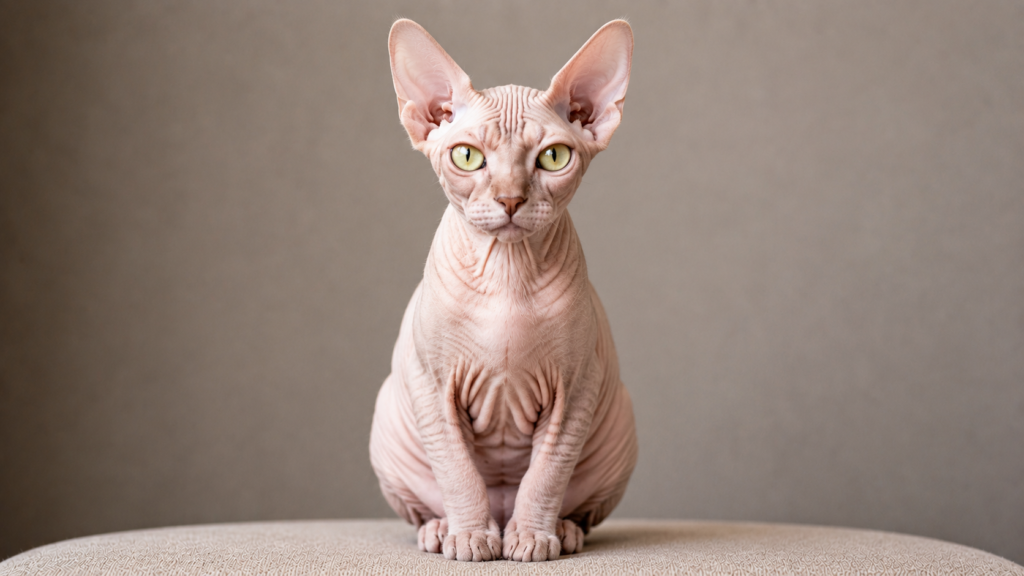
About the Sphynx
History and Origins
Hairless cats have appeared spontaneously in many places over the last century, but the modern breed traces to Toronto, Canada, in 1966, when a domestic shorthair produced a hairless kitten named Prune through a natural recessive mutation. Breeders worked with that line and with later hairless foundation cats found in Minnesota and Toronto in the 1970s, outcrossing to Devon Rex and domestic shorthairs to build a healthy gene pool.
That outcrossing matters: it is the reason the Sphynx today is a reasonably sturdy breed rather than a fragile curiosity. The name is something of a misnomer, borrowed from Egyptian statuary despite the breed having no Egyptian connection whatsoever. Major registries granted championship status through the 1990s and 2000s, and the Sphynx has since become one of the most recognizable — and most polarizing — cats in the world.
Personality and Temperament
The Sphynx is relentlessly social. These cats greet visitors at the door, insert themselves into conversations, and follow their people from room to room with an enthusiasm most breeds reserve for feeding time. Owners routinely describe them as dog-like, and it is not an exaggeration.
They are clownish and theatrical — acrobatic, attention-seeking, and entirely shameless about performing for a reaction. Intelligence runs high, and they take well to fetch, clicker training and leash walking.
They are also heat-seekers by necessity. Without a coat, a Sphynx will burrow under blankets, drape itself across laptops and radiators, and sleep pressed against you. This is a breed that genuinely does not tolerate being alone; they are prone to loneliness and do best in pairs or in households where someone is usually home. If you want an aloof, independent cat, look elsewhere entirely.
Care and Grooming
Hairless does not mean low-maintenance — the Sphynx is one of the higher-maintenance breeds you can own.
With no coat to absorb it, the oil from the skin’s sebaceous glands accumulates on the body and around the nail beds, where it turns waxy and can cause bacterial or yeast infections. Most Sphynx need a bath every one to four weeks with a gentle cat-safe shampoo. Do not overdo it: excessive bathing strips the skin and stimulates the glands to produce more oil. Between baths, wipe the cat down with a damp cloth, and clean the nail beds and the deep ear folds regularly, as both collect brown waxy buildup fast.
Temperature management is a daily reality. Sphynx get genuinely cold, need a warm home, sweaters in winter and heated beds, and they sunburn easily — keep them indoors and away from prolonged direct sun. Their high metabolism means they eat more than comparable cats. Add routine dental care, as the breed is prone to gum disease.
Health and Lifespan — an important note
Sphynx typically live 9–15 years, and prospective owners deserve a frank account of the risks, because this breed carries two serious inherited conditions.
Hypertrophic cardiomyopathy (HCM) occurs in the Sphynx at one of the highest rates of any cat breed. It thickens the heart wall and can cause heart failure or sudden death. A genetic test is available for a Sphynx-associated variant, but it does not catch every case, so responsible breeders combine DNA testing with annual echocardiograms by a veterinary cardiologist for breeding cats. Ask for dated cardiology reports — this is the single most important question to put to a Sphynx breeder.
Hereditary myopathy is an autosomal recessive muscle disease causing progressive weakness, difficulty swallowing and exercise intolerance. A DNA test exists, and because it is recessive, a responsible breeder simply never pairs two carriers, which prevents affected kittens entirely.
The breed is also prone to skin conditions, dental disease and digestive sensitivity. None of this makes the Sphynx a bad choice — it makes breeder selection non-negotiable. Buy only from someone who tests and screens, and budget for lifelong veterinary attention including periodic cardiac checks.
Cost and Is the Sphynx Right for You?
A Sphynx kitten from a reputable US breeder generally costs $1,500 to $3,500, and health-screened lines sit at the higher end. Ongoing costs are above average once you account for cardiology monitoring, bathing supplies, extra food and a warm home.
The Sphynx suits people who want an intensely affectionate, entertaining, interactive companion, who are home often, who do not mind a bathing routine, and who can afford proper veterinary care. Allergy sufferers should note they are not hypoallergenic — they still produce Fel d 1 in saliva and skin oils.
They are wrong for cold homes, for households empty all day, for owners wanting a low-effort cat, and for anyone unwilling to vet a breeder rigorously.
Explore More
If the hairless look appeals, compare the Russian Peterbald and the Donskoy, which get their hairlessness from a different, dominant mutation. For the same mischievous personality with a soft wavy coat, meet the Devon Rex — a breed used in the Sphynx’s own development — or browse all cat breeds.
Frequently Asked Questions
Yes. With no coat to absorb it, skin oil builds up on the body and around the nail beds, where it can cause bacterial or yeast infections. Most Sphynx need a bath every one to four weeks with a gentle cat-safe shampoo, plus damp-cloth wipe-downs in between. Avoid over-bathing, which strips the skin and triggers more oil production.
No. Cat allergies are caused mainly by Fel d 1, a protein in saliva and skin secretions, not by hair itself. Sphynx cats produce it normally, and because their skin oils are in direct contact with everything they touch, some allergic people react to them as much as to coated breeds. Never buy a Sphynx assuming allergy relief.
Yes, noticeably. Without insulating fur they lose body heat quickly, which is why they seek out blankets, laps, radiators and sunny spots constantly. Keep the home comfortably warm, provide heated beds and soft hideaways, and consider sweaters in winter. They also sunburn easily, so they should be kept indoors and out of prolonged direct sunlight.
Hypertrophic cardiomyopathy, a thickening of the heart wall that can cause heart failure or sudden death. Sphynx have one of the highest rates of any breed. A genetic test exists for one associated variant but does not catch every case, so insist on breeders who also provide annual echocardiogram results from a veterinary cardiologist.
Sphynx typically live 9 to 15 years, somewhat shorter than the average pedigree cat because of the breed's cardiac risk. Longevity depends heavily on buying from a breeder who DNA tests for hereditary myopathy and echocardiogram-screens for heart disease, plus consistent skin and dental care and periodic cardiac monitoring throughout the cat's life.