
Pixie-Bob
The Pixie-Bob is a muscular, wild-looking breed with a bobbed tail, tufted ears, and a heavy brow that gives it a bobcat-like appearance. Despite the rugged looks, these loyal, dog-like cats are gentle, intelligent family companions.
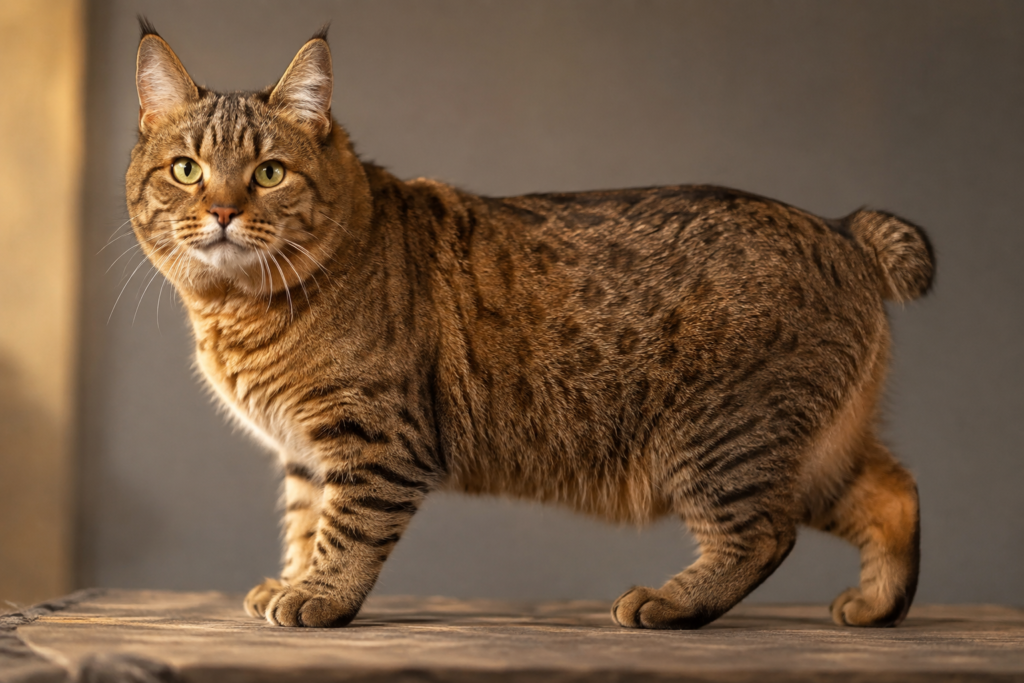
About the Pixie-Bob
History and Origins
The Pixie-Bob was developed in Washington state in the 1980s by breeder Carol Ann Brewer, who acquired large, bobtailed barn cats from the Pacific Northwest that had a distinctly wild, bobcat-like look. One female named Pixie became the foundation of the breed, giving it her name plus “bob” for the short tail.
Legend held that these cats were natural bobcat hybrids, but DNA testing has never confirmed any wild ancestry — the Pixie-Bob is considered a fully domestic breed whose wild appearance arose from ordinary domestic genetics. The breed was recognized by The International Cat Association in the 1990s. A distinctive feature accepted in the breed standard is polydactyly — many Pixie-Bobs have extra toes.
Personality and Temperament
Pixie-Bobs are famous for their dog-like devotion. They bond intensely with their families, follow their people from room to room, and many happily learn to play fetch, walk on a harness, and come when called. They are loyal, intelligent, and want to be involved in whatever their household is doing.
Despite their imposing looks, they are gentle, patient, and good-natured, which makes them excellent with children and other pets — including dogs, whom they often befriend. They tend to be quiet cats, “chatting” in chirps, chirrups, and trills rather than meowing. Confident but not hyperactive, the Pixie-Bob is a calm, affectionate, and engaging companion that combines a wild appearance with a thoroughly sweet temperament.
Care and Grooming
Grooming depends on coat length, as Pixie-Bobs come in both short- and long-haired varieties, both with a woolly, weather-resistant texture. Shorthairs need a weekly brush, while longhairs benefit from brushing two to three times a week to prevent tangles. They shed a moderate amount, more during seasonal changes.
If your Pixie-Bob is polydactyl, pay a little extra attention to nail care, since extra toes mean extra claws to keep trimmed. Beyond that, keep up with routine ear checks and dental hygiene. As large, intelligent, and playful cats, Pixie-Bobs also appreciate enrichment — sturdy climbing spaces, interactive toys, and daily play — and many enjoy the mental challenge of leash walks or fetch. Their bobbed tail needs no special care.
Health and Lifespan
Pixie-Bobs are generally a healthy, sturdy breed, typically living 13–15 years or more. As a natural-origin domestic breed they have relatively few inherited problems, and — importantly — their polydactyly and bobbed tail are cosmetic traits, not health concerns, unlike the tailless Manx gene. That said, as with most breeds, hypertrophic cardiomyopathy (HCM) can occur and is worth screening for, and cryptorchidism (undescended testicles) is occasionally seen in males.
Choose a reputable breeder who screens their lines, keep your Pixie-Bob at a healthy weight, provide plenty of activity, and maintain regular veterinary checkups to support a long, healthy life.
Cost and Is the Pixie-Bob Right for You?
A Pixie-Bob kitten from a reputable breeder generally costs $1,000 to $2,000 in the United States, with polydactyl kittens and show-quality lines running higher. The breed is relatively uncommon, so expect to find a specialist breeder and possibly a waitlist.
The Pixie-Bob suits families and individuals who want a large, loyal, dog-like companion with a striking wild look but a gentle, easygoing nature. Their devotion, trainability, and tolerance make them great with children, dogs, and other pets, and they enjoy interactive activities like fetch and leash walks. They are less ideal for those wanting a small, dainty lap cat, or anyone unable to give a social, intelligent cat enough attention and enrichment.
Explore More
Love a big, wild-looking cat with a bobbed tail? Compare the Pixie-Bob with the curled-eared, bobtailed Highlander and the leopard-spotted Bengal. For more on short-tailed genetics, see the tailless Manx, or browse all cat breeds.
Frequently Asked Questions
No. Despite the persistent legend and their strong bobcat-like appearance, DNA testing has never confirmed any wild bobcat ancestry in the Pixie-Bob. They are considered a fully domestic breed whose wild look comes from ordinary domestic genetics. This means they behave like affectionate house cats and carry none of the legal restrictions or special needs of true wild hybrids.
Polydactyly — having extra toes — is a natural genetic trait that's actually accepted in the Pixie-Bob breed standard, unlike in most breeds. Some Pixie-Bobs have up to seven toes on a paw, giving them large, "mitten-like" feet. It's a harmless cosmetic feature, not a health problem, though owners should keep the extra claws trimmed as part of routine nail care.
Pixie-Bobs are large, substantial cats. Males typically weigh 12–18 pounds and females somewhat less, with a muscular, heavy-boned build that makes them feel even bigger. Combined with their tufted ears, heavy brow, and bobbed tail, their size adds to their imposing, bobcat-like presence. They're slow to mature, often taking two to three years to reach full size.
Not in the usual way. Pixie-Bobs are generally quiet cats that rarely meow. Instead, they communicate through a charming repertoire of chirps, chirrups, chatters, and trills. Many owners describe holding little "conversations" with them in these sounds. This soft, expressive communication style, combined with their calm temperament, makes them peaceful yet engaging household companions.
Yes, very well. The Pixie-Bob's confident, easygoing, dog-like temperament makes it one of the better breeds for homes with dogs. They're rarely skittish, often enjoy canine company, and their loyal, sociable nature helps them bond with other pets. As with any introduction, a slow, supervised meeting helps, but Pixie-Bobs typically take dogs and other animals in stride.