
Highlander
The Highlander is a distinctive, newer breed with curled ears and a naturally short, bobbed tail. Powerfully built with a wild look but a gentle, playful nature, these big-hearted cats are affectionate, dog-like companions.
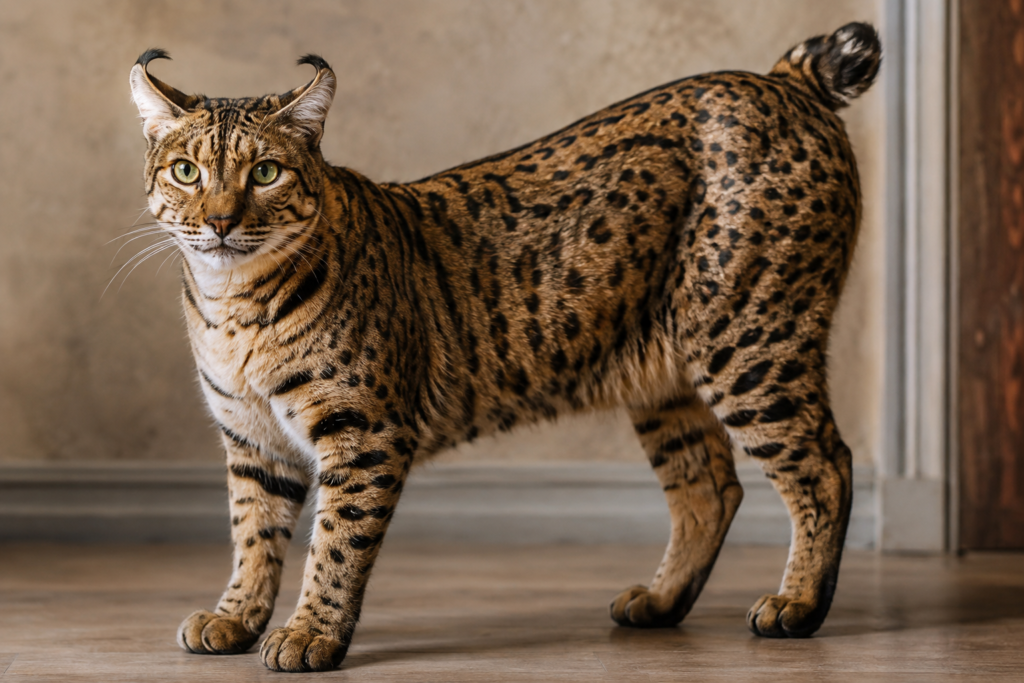
About the Highlander
History and Origins
The Highlander (originally called the Highland Lynx) is a young breed, first developed in 2004 in the United States. It was created by crossing two other domestic breeds — the Desert Lynx and the Jungle Curl — to combine a striking, wild “big cat” appearance with a purely domestic temperament.
Despite the wild-looking name and appearance, the Highlander has no wild cat ancestry — it’s entirely domestic, so it doesn’t have the special legal or care requirements of true hybrids like the Savannah or Bengal. Its two signature features are its ears, which curl backward, and its naturally short, bobbed tail, both the result of dominant genetic traits. The breed is still developing and is recognized on a preliminary or experimental basis by some registries.
Personality and Temperament
Highlanders are known for pairing an imposing, wild appearance with a wonderfully sweet, playful personality. They are affectionate, social, and people-oriented, bonding closely with their families and loving to be part of the action. Many are described as dog-like — following their owners around, playing fetch, and greeting visitors with confidence.
They are active, athletic, and playful, keeping a kitten-like enthusiasm for games and climbing well into adulthood, yet they’re also gentle and good-natured. Highlanders tend to get along well with children, other cats, and dogs, making them a good fit for lively family homes. Big, bold, and friendly, they’re engaging, interactive companions that enjoy attention and mischief in equal measure.
Care and Grooming
Grooming depends on coat length, as Highlanders come in both short- and long-haired varieties. The short coat needs only a weekly brush, while the long coat benefits from brushing two to three times a week to prevent tangles. They shed a moderate amount.
Their curled ears need gentle, regular attention: the curl can allow wax and debris to accumulate, so check and clean them carefully, and never force or bend the ears. As large, athletic, playful cats, Highlanders also need plenty of enrichment — sturdy cat trees, climbing shelves, and interactive toys — to satisfy their energy and curiosity. Round out care with routine nail trims and dental hygiene. Note that some Highlanders are polydactyl (extra toes), which is a normal breed trait requiring standard nail care.
Health and Lifespan
Because the Highlander is such a new breed, long-term health data is still limited, but it is generally considered a healthy, robust cat, with a typical lifespan of around 10–15 years. Being fully domestic, it doesn’t carry the dietary sensitivities of wild hybrids. As with any breed built on specific traits, the main ongoing care point is the curled ears, which simply need regular gentle cleaning.
As the breed is still developing, responsible breeders work to maintain genetic diversity and screen for general feline health concerns such as hypertrophic cardiomyopathy. Buy from a reputable breeder, keep your Highlander at a healthy weight, provide plenty of activity, and maintain regular veterinary checkups to support a long, healthy life.
Cost and Is the Highlander Right for You?
A Highlander kitten from a reputable breeder generally costs $600 to $2,500 in the United States, depending on lineage, markings, and features like ear curl and tail. As a rare, developing breed, expect to find a specialist breeder and possibly a waitlist.
The Highlander suits active families and individuals who want a large, striking, affectionate, and playful companion that’s good with children and other pets. Their dog-like devotion and love of interaction reward engaged owners who can provide space and enrichment. They are less ideal for those wanting a calm, low-energy lap cat, or for anyone unable to provide the activity and attention this big, sociable breed enjoys.
Explore More
Love the Highlander’s curled ears and bobbed tail? Compare its ears with the American Curl and its bobbed tail with the Japanese Bobtail and Kurilian Bobtail. For another big, wild-looking cat, see the Bengal, or browse all cat breeds.
Frequently Asked Questions
No — despite its wild "big cat" appearance and its original name (Highland Lynx), the Highlander is entirely domestic, developed by crossing the Desert Lynx and Jungle Curl, both domestic breeds. This means it has none of the legal restrictions or special dietary needs of true wild hybrids like the Savannah, Bengal, or Chausie. Its wild look is purely cosmetic, wrapped around a friendly house-cat temperament.
The Highlander's ears curl backward due to a dominant genetic trait inherited from its Jungle Curl ancestry — similar in effect to the American Curl. The curl gives the breed its distinctive, alert, wild expression. The ears should be handled gently and never forced straight, and because the curl can trap debris, they benefit from regular, careful cleaning to prevent wax buildup or irritation.
The Highlander's naturally short, bobbed tail comes from a dominant genetic trait, present in its Desert Lynx background. Tail length can vary from quite short to a moderate bob between individual cats. The bobbed tail contributes to the breed's wild, lynx-like look. Unlike the tailless Manx gene, this trait is part of the Highlander's developing breed standard and its distinctive appearance.
Highlanders are famous for combining a bold, wild appearance with a sweet, gentle, playful personality. They're affectionate, social, and dog-like — following their owners around, playing fetch, and enjoying being part of family life. Active and athletic yet good-natured, they typically get along well with children, other cats, and dogs, making them engaging, interactive companions for lively households.
Some are. Extra toes (polydactyly) appear in some Highlanders and is considered an accepted trait within the developing breed rather than a health problem. Polydactyl cats simply have more toes than usual, often giving them large, "mitten-like" paws. They need standard nail care, with attention to any extra claws, but polydactyly itself doesn't affect the cat's health or quality of life.