
Siberian
The Siberian is a powerful, athletic breed from Russia with a luxurious triple coat. Despite their wild appearance, these cats are affectionate, playful, and often tolerated better by allergy sufferers.
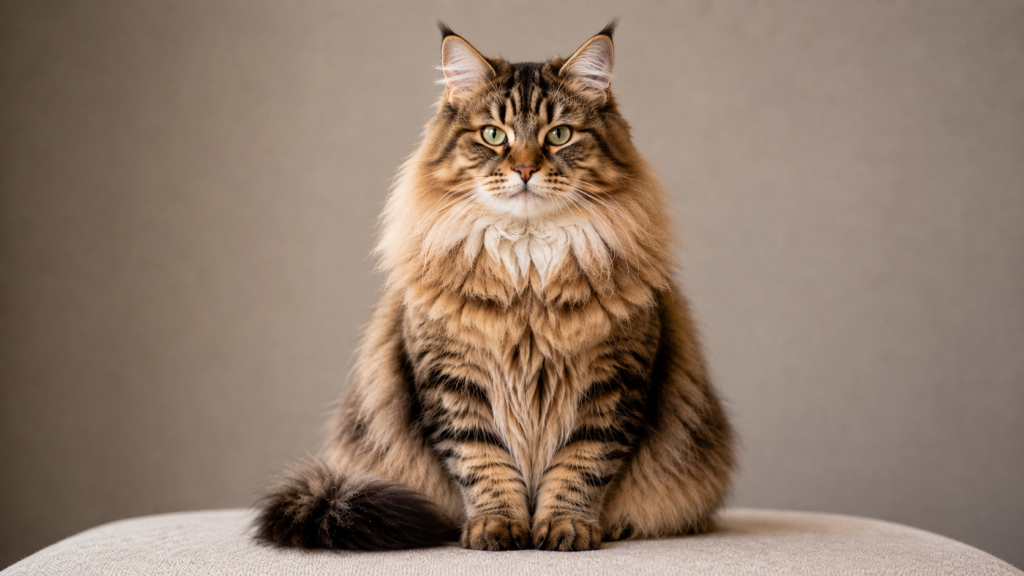
About the Siberian
History and Origins
The Siberian is Russia’s national cat, a landrace that developed without human design across centuries of brutal Siberian winters. Cats resembling the breed appear in Russian written records going back roughly a thousand years and turn up throughout Russian folk tales, where the big forest cat is a stock character. They earned their keep as working mousers in barns, monasteries and markets rather than as ornamental pets.
Formal breeding began only in the 1980s, when Soviet cat fanciers started recording pedigrees in Leningrad and Moscow. The first Siberians reached the United States in 1990, immediately after the Cold War ended, and the breed gained full championship recognition in North America over the following decade. Because it is a natural breed shaped by climate rather than by a breeder’s aesthetic goal, the Siberian retains a sturdy, functional build with no exaggerated features.
Personality and Temperament
Siberians are confident, easygoing cats with a notably level temperament. They are affectionate without being clingy — they will follow you room to room and settle nearby, but they are far less prone to the anxious dependence of the oriental breeds and generally cope well with a normal working day.
They are exceptional athletes. Powerful hindquarters make them impressive jumpers, and they will find the highest point in any room and occupy it. Many retain a strong fascination with water, batting at taps and joining showers.
Despite their bulk, Siberians move with surprising lightness and are famously agile jumpers, clearing counters and bookcases from a standstill. Owners often describe them as dog-like in their willingness to greet visitors at the door rather than hide from them.
Problem-solving is a defining trait: Siberians routinely learn to open doors, drawers and cabinets, and owners often resort to childproof latches. They are playful well into adulthood, take to fetch readily, and are typically calm and tolerant with children, dogs and other cats. Their voice is soft — chirps, trills and quiet mews rather than demands.
Care and Grooming
The Siberian’s triple coat — dense undercoat, longer middle layer, water-resistant guard hairs — needs consistent attention. Brush two to three times a week with a slicker brush and a steel comb, working right down to the skin around the ruff, armpits and britches where mats form first.
Expect two heavy seasonal moults, in spring and autumn, when daily brushing for a few weeks prevents a difficult mess. The coat is fairly self-maintaining and resists matting better than a Persian’s, so bathing is rarely needed.
Given their size and athleticism, provide sturdy tall cat trees, wide shelves and solid scratching posts. Keep them lean — this is a slow-maturing breed that takes up to five years to reach full size, and owners often overfeed adolescents. Round out care with nail trims, ear checks and regular tooth brushing.
Health and Lifespan
Siberians are a robust natural breed and typically live 12–15 years, often longer. The principal breed concern is hypertrophic cardiomyopathy (HCM), the most common feline heart disease, which thickens the heart wall and reduces pumping efficiency. There is no reliable DNA test for HCM in this breed, so responsible breeders screen breeding cats by echocardiogram with a veterinary cardiologist and can show you dated results. Ask for them specifically.
The breed also sees occasional polycystic kidney disease (PKD), for which a DNA test does exist, and some lines report gum disease and pyruvate kinase deficiency, also DNA-testable.
On allergies, be precise. Siberians produce lower average levels of Fel d 1, the main cat allergen — but they are not hypoallergenic. Levels vary widely between individuals, even within one litter, and only a minority of Siberians are genuinely tolerable for severely allergic people. If allergies are your reason for choosing the breed, arrange to spend extended time with the specific kitten and its parents before committing, and ask whether the breeder can supply Fel d 1 testing.
Cost and Is the Siberian Right for You?
A Siberian kitten from a reputable US breeder generally costs $1,200 to $2,500, with allergy-tested lines and imported bloodlines at the upper end. The premium reflects genuine screening costs; treat unusually cheap kittens with suspicion.
The Siberian suits active households wanting a large, hardy, good-natured cat that gets along with children and dogs, tolerates a working day reasonably well, and offers a realistic — if not guaranteed — option for mild allergy sufferers. They are excellent family cats.
They are less suited to anyone unwilling to brush several times weekly or to face two heavy shedding seasons, to homes with no vertical space for a large climber, or to severely allergic buyers hoping for a guarantee the breed cannot give.
Explore More
If the big semi-longhaired forest cat appeals, compare the Maine Coon and the Norwegian Forest Cat, both natural climate-shaped breeds. For a Russian alternative in a shorter coat, meet the Russian Blue, or browse all cat breeds.
Frequently Asked Questions
No breed is truly hypoallergenic, but Siberians produce lower average levels of Fel d 1, the protein responsible for most cat allergies. Levels vary considerably between individual cats, even littermates, and only some Siberians are tolerable for severely allergic people. Spend extended time with the specific kitten and its parents before buying rather than relying on the breed label.
Brush two to three times a week with a slicker brush and steel comb, reaching through the triple coat to the skin around the ruff, armpits and hind legs where mats start. During the heavy spring and autumn moults, daily brushing for a few weeks keeps things manageable. Baths are rarely necessary since the coat largely maintains itself.
Siberians are a large breed, with males typically reaching 12 to 20 pounds and females noticeably smaller. They are also slow to mature, often taking up to five years to reach full adult size and muscle. Because owners tend to overfeed growing adolescents, monitor body condition and keep the cat lean rather than encouraging bulk.
Generally yes. Siberians have an even, confident temperament and are known for tolerance and patience, which makes them one of the better choices for families with children or resident dogs. They are sturdy enough to handle household activity and playful enough to enjoy it, though children should still be taught to handle any cat gently.
Ask for dated echocardiogram results from a veterinary cardiologist screening the breeding cats for hypertrophic cardiomyopathy, since no reliable DNA test exists for HCM in this breed. Reputable breeders may also DNA test for polycystic kidney disease and pyruvate kinase deficiency. If allergies motivated your choice, ask whether Fel d 1 testing is available.