
Donskoy (Don Sphynx)
The Donskoy, also called Don Sphynx, is a Russian hairless breed known for its wrinkled skin and affectionate nature.
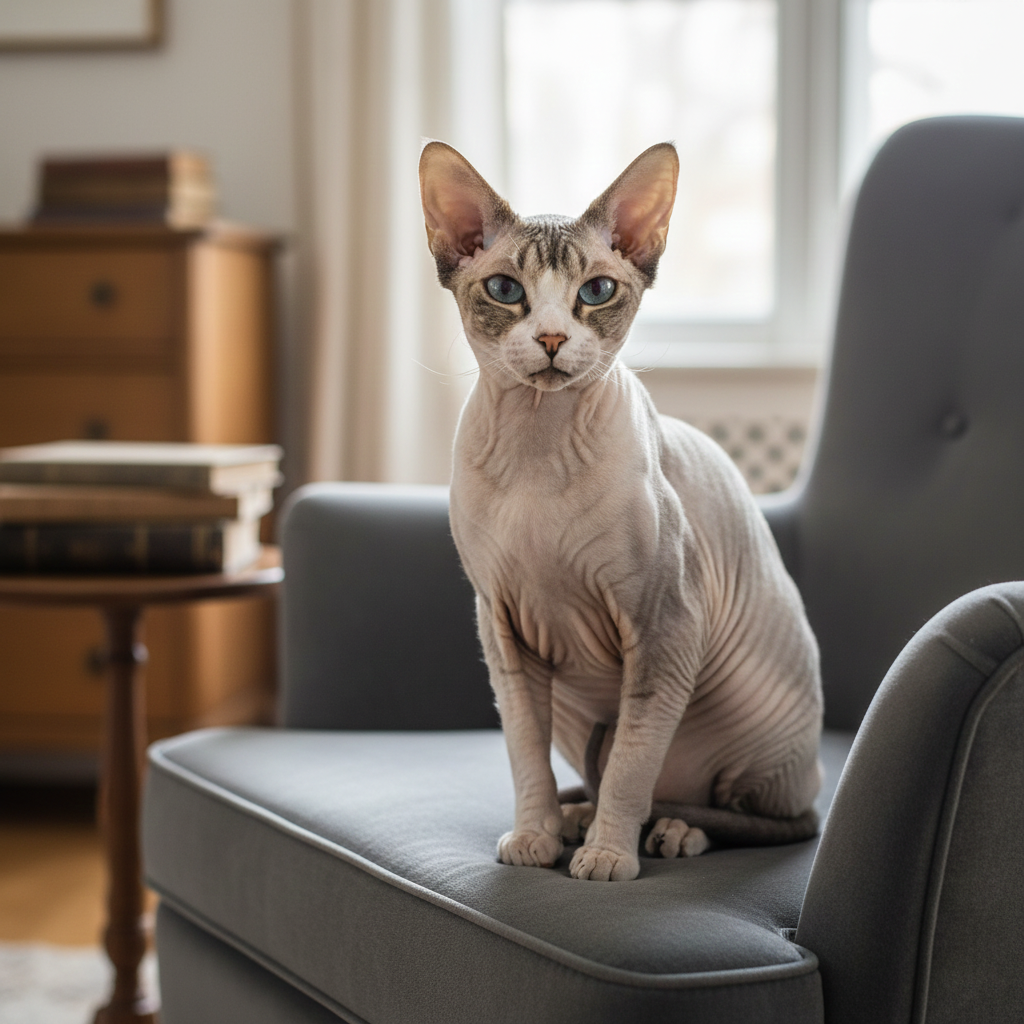
About the Donskoy (Don Sphynx)
History and Origins
The Donskoy began with a rescue. In 1987, in the Russian city of Rostov-on-Don, a teacher named Elena Kovaleva took in a kitten she saw being mistreated by local boys. The cat, named Varvara, gradually lost her coat over the following months. Assuming it was illness, Kovaleva sought veterinary help; treatments made no difference, because the hairlessness was genetic rather than pathological.
Varvara later produced kittens, some hairless like her, and breeder Irina Nemykina developed the line into a breed she named Don Sphynx after the Don River. The World Cat Federation granted recognition in 1997, and TICA followed in 2005.
The crucial fact for any prospective owner is genetic, not historical. The Donskoy’s hairlessness comes from a dominant gene, while the Canadian Sphynx — an entirely separate breed — carries a recessive one. The two breeds look superficially similar but are unrelated in origin, and that difference in inheritance has real consequences discussed below.
Personality and Temperament
Donskoys are affectionate, sociable and thoroughly involved in household life. They greet people at the door, follow their owners from room to room, and are generally unbothered by visitors, children or other animals.
They are intelligent and playful, keeping a kittenish streak well into adulthood and taking readily to fetch, puzzle feeders and simple training. Many owners describe them as dog-like in their attachment.
Like other bare-skinned cats, they are dedicated heat-seekers. Expect a cat that burrows under duvets, sits on radiators and laptops, and sleeps pressed against you for warmth. This is a practical need rather than a preference.
They do not cope well with solitude. Donskoys are people-dependent and can become withdrawn or destructive when left alone through long working days, so they suit homes where someone is usually present or where a second cat provides company.
Care and Grooming
A hairless cat is not a low-maintenance cat. With no coat to absorb it, the oil from the skin’s sebaceous glands accumulates on the body and in the deep skin folds, where it turns waxy and can cause bacterial or yeast infections. Most Donskoys need a bath every one to three weeks with a gentle cat-safe shampoo, plus a damp-cloth wipe-down in between. Avoid over-bathing, which strips the skin and prompts the glands to produce more oil.
Pay particular attention to the folds around the neck, armpits and groin, and to the nail beds and ears, which collect brown waxy buildup quickly.
Temperature is a daily consideration. Donskoys lose heat fast and need a warm home, soft hideaways, heated beds and often sweaters in winter. They sunburn easily, so they should be kept indoors and away from prolonged direct sun. Their metabolism runs high and they eat more than a comparable coated cat.
Dental care is essential — see below — so brush the teeth regularly from kittenhood.
Health and Lifespan — an important note
Donskoys typically live 12–15 years, and prospective owners deserve a straight account of the breed’s central problem.
The dominant hairless gene is not simply a cosmetic trait. It is associated with feline ectodermal dysplasia, a condition affecting structures that develop from the same embryonic tissue as hair: teeth, sweat glands and mammary glands. In practice this can mean abnormal or missing teeth and significant dental disease, often with tooth loss in middle age; an impaired ability to regulate temperature; and in queens, difficulty nursing kittens.
Because the gene is dominant, a kitten needs only one copy to be hairless — but a kitten inheriting two copies, one from each hairless parent, can be severely affected. This is why the World Cat Federation and TICA prohibit crossing Donskoys with Peterbalds, which carry the same dominant mutation, and why responsible breeders pair a hairless cat with a coated one rather than two hairless cats.
This is a genuine welfare debate within the cat fancy, and some registries decline to recognise the breed on these grounds. It is also manageable: a well-bred Donskoy from a breeder who never doubles the gene, and an owner committed to lifelong dental care, can live a full and comfortable life. What matters is choosing the breeder carefully and going in informed. Ask directly how they pair their cats and what dental history their lines have.
Cost and Is the Donskoy Right for You?
A Donskoy kitten generally costs $1,000 to $2,500 in the United States, where the breed is uncommon and breeders are few. Budget beyond the purchase price for dental work, which is likely rather than possible, along with bathing supplies, higher food intake and a warm home.
The Donskoy suits people who want an intensely affectionate, interactive, unusual companion, who are home often, who accept a bathing routine, and who can fund ongoing dental care. Allergy sufferers should note the breed is not hypoallergenic — Fel d 1 is produced in saliva and skin secretions regardless of coat.
It is wrong for cold homes, for households empty all day, for owners wanting low-effort pets, and for anyone unwilling to interrogate a breeder about how they pair the hairless gene.
Explore More
The obvious comparison is the Sphynx, which reaches a similar look through a recessive gene and a different history. The Russian Peterbald shares the Donskoy’s dominant mutation, and the Lykoi offers a partially coated alternative. Or browse all cat breeds.
Frequently Asked Questions
They are separate breeds that arrived at a similar look independently. The Donskoy comes from Rostov-on-Don in Russia in 1987 and its hairlessness is caused by a dominant gene. The Canadian Sphynx originated in Toronto in 1966 from a recessive mutation. The inheritance difference matters: the Donskoy's dominant gene carries health implications the Sphynx's does not.
Frequently, yes, and buyers should expect it. The dominant hairless gene is linked to feline ectodermal dysplasia, which affects teeth as well as hair because both develop from the same embryonic tissue. Missing or abnormal teeth and significant dental disease are common, often with tooth loss in middle age. Brush from kittenhood and budget for veterinary dental care.
Both breeds carry the same dominant hairless mutation, so crossing them risks kittens inheriting two copies of the gene, which can cause severe ectodermal dysplasia. The World Cat Federation and TICA prohibit the pairing for this reason. Responsible breeders also avoid mating two hairless Donskoys, pairing a hairless cat with a coated one instead.
Usually every one to three weeks. Without a coat to absorb it, skin oil builds up on the body and in the deep folds around the neck, armpits and groin, where it can cause bacterial or yeast infections. Use a gentle cat-safe shampoo and wipe down with a damp cloth between baths. Over-bathing strips the skin and increases oil production.
No. Cat allergies are caused mainly by Fel d 1, a protein in saliva and skin secretions, not by hair itself. Donskoys produce it normally, and because their skin oils contact everything they touch, some allergic people react to them as strongly as to coated breeds. Never choose a hairless cat expecting allergy relief.