
Egyptian Mau
The Egyptian Mau is a naturally spotted breed with ancient origins and incredible speed. These athletic, loyal cats are known for their striking spotted coat and musical voice.
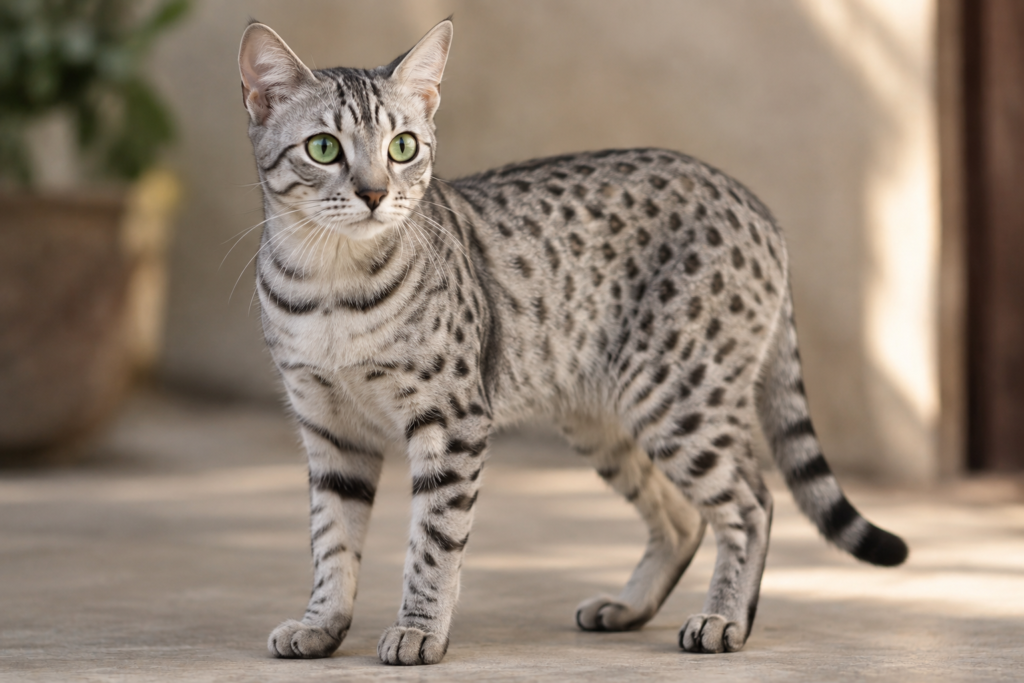
About the Egyptian Mau
History and Origins
The Egyptian Mau is one of the oldest and most storied cat breeds — and one of the very few that is naturally spotted, meaning its markings occur without any wild hybridization or selective invention. Cats strikingly similar to the modern Mau appear in Egyptian art dating back thousands of years, and the word “Mau” is simply the ancient Egyptian for “cat.”
The modern breed was established in the 1950s largely through the work of Princess Nathalie Troubetskoy, a Russian exile who brought several Maus from Egypt to the United States. The breed nearly died out and was rebuilt from a small foundation, later strengthened with additional imports. Today the Egyptian Mau is recognized worldwide but remains relatively rare, prized as a living link to the cats of the ancient world.
Personality and Temperament
Egyptian Maus are intensely loyal, forming deep bonds with their chosen people while often remaining reserved or shy with strangers. With their families they are affectionate, interactive, and playful, frequently choosing a favorite person to shadow and “help” throughout the day.
They are athletic, alert, and highly intelligent, with strong hunting instincts and a need for activity — expect climbing, leaping, and lively play. Maus are also famously expressive: they “chortle” and chirp in a musical voice and often do a happy little tail-wiggle and knead when excited. This combination of devotion, athleticism, and personality makes them engaging companions, though their sensitivity means they do best in calmer, stable homes where they feel secure.
Care and Grooming
Grooming is easy. The Egyptian Mau’s short, silky, spotted coat needs only a weekly brush to remove loose hair and keep its shine, and they shed modestly. The distinctive spots and “mascara” facial markings need no special care beyond a healthy coat.
Their real needs are physical and emotional. Maus are fast, athletic, and clever, so provide tall cat trees, climbing shelves, interactive toys, and daily play — they’re the fastest domestic cat and love to run. Because they can be sensitive and reserved, a calm, predictable environment helps them thrive, and they appreciate warm resting spots. Round out care with routine nail trims, ear checks, dental hygiene, and a quality diet to fuel their active build.
Health and Lifespan
Egyptian Maus are generally healthy, athletic cats with a typical lifespan of 12–15 years. As a natural breed they avoid many manufactured health problems, but a few points are worth knowing. Because of their rebuilt-from-a-small-foundation history, the gene pool is somewhat limited. Some Maus can be sensitive to certain anesthetics and medications, so an experienced vet is valuable. The breed can occasionally be prone to urinary issues and, rarely, a hereditary neurological condition (leukodystrophy).
Choose a reputable breeder who health-tests their lines, keep your Mau at a healthy weight, provide plenty of exercise, and maintain regular veterinary checkups to support a long, healthy life.
Cost and Is the Egyptian Mau Right for You?
An Egyptian Mau kitten from a reputable breeder generally costs $800 to $1,800 in the United States, with show-quality silver and bronze cats running higher. The breed is uncommon, so expect to find a specialist breeder and possibly a waitlist.
The Egyptian Mau suits people who want an athletic, loyal, and strikingly beautiful companion and can provide plenty of activity plus a calm, stable home. Their devotion and playfulness reward engaged owners, and they do well with respectful children and gradual introductions to other pets. They are less ideal for chaotic, high-stress households, for those wanting an outgoing cat that greets every visitor, or for owners unable to meet their high activity needs.
Explore More
Love naturally spotted cats? Compare the Egyptian Mau with the Bengal, the fully domestic Ocicat, and the desert-native Arabian Mau. For another athletic breed, see the Abyssinian-cousin Somali, or browse all cat breeds.
Frequently Asked Questions
Yes — they're the fastest domestic cat breed, capable of running up to around 30 mph. Their speed comes from a long, athletic body, longer hind legs, and a distinctive loose flap of skin on the belly that extends their stride. Combined with their agility and jumping ability, this makes them remarkable little athletes who genuinely need space and outlets to run and play.
Yes, quite rare. The breed nearly went extinct and was rebuilt from a small number of foundation cats, so numbers remain limited and reputable breeders are relatively few. Genuine, well-bred Egyptian Maus can be hard to find and often come with a waitlist. This rarity, along with their ancient heritage and natural spots, makes them a special and sought-after breed.
Very much so. The Egyptian Mau is one of the only naturally spotted domestic breeds, with random spots on the body, "mascara" lines running from the eyes, banded legs and tail, and a characteristic "M" and scarab-like marking on the forehead. Their gooseberry-green eyes and slightly "worried" expression complete a look that's been admired since ancient Egypt.
They can be, in the right home. Egyptian Maus are affectionate and playful with their families and can do well with children who are calm and respectful. However, they are sensitive cats that prefer a stable, predictable environment, so they're better suited to gentle households than to very loud, chaotic ones. Teaching children to interact calmly helps a Mau feel secure and thrive.
Egyptian Maus are expressive but not loud in the demanding way of a Siamese. They communicate with a distinctive musical repertoire of chirps, chortles, and quiet melodic sounds, and often express happiness with a little tail-wiggle and kneading. Owners find them charmingly "talkative" in a soft, pleasant way, using their voice and body language to stay connected with their favorite people.