
Himalayan
The Himalayan combines the luxurious looks of the Persian with the striking pointed coloring and vivid blue eyes of the Siamese. These calm, sweet, devoted cats are the ultimate glamorous lap companions.
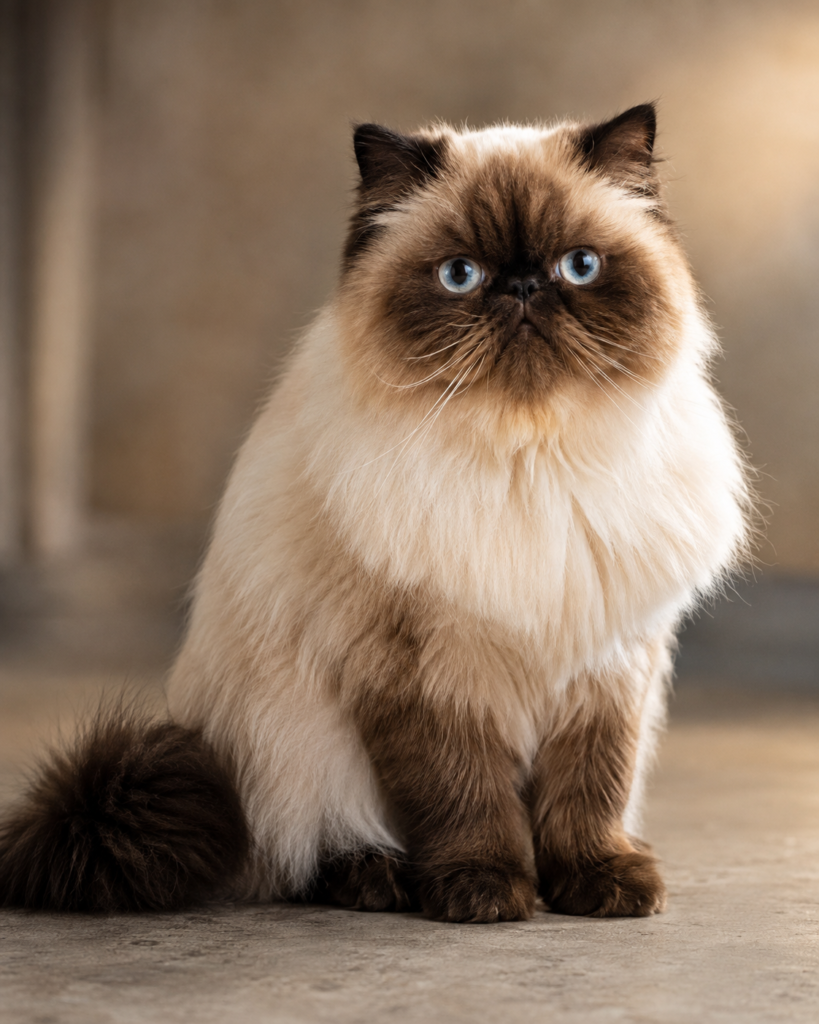
About the Himalayan
History and Origins
The Himalayan — also called the Colorpoint Persian — was deliberately created to marry two beloved breeds. Beginning in the 1930s and continuing through mid-century, breeders in the United States and Britain crossed Persians with Siamese, aiming to produce a cat with the Persian’s stocky body, flat face, and flowing coat, but wearing the Siamese’s pointed pattern and sapphire-blue eyes.
After years of careful breeding to “fix” the look, the Himalayan was recognized as a breed in the 1950s. Because it is essentially a Persian in Siamese coloring, some registries classify it as a color variety of the Persian rather than a separate breed. Either way, it inherits the Persian’s gentle temperament and grooming needs along with its distinctive coloring.
Personality and Temperament
Himalayans have the classic Persian personality: calm, gentle, and quietly affectionate. They are the epitome of a lap cat, happiest lounging in a peaceful spot or curled up beside their favorite person. They form devoted bonds with their families and love gentle attention, but they are undemanding and rarely cause a fuss.
They thrive on routine and a serene environment. Loud, chaotic households or boisterous activity can stress them, so they do best in quieter homes. Himalayans are affectionate with trusted family members but can be reserved around strangers. A touch more playful than some Persians thanks to their Siamese heritage, they’ll enjoy a gentle game before returning to their favorite lounging spot — but they remain, at heart, sweet and mellow companions.
Care and Grooming
The Himalayan is a high-maintenance breed, and prospective owners should be honest with themselves about the commitment. That long, fine coat mats and tangles easily, so daily brushing with a wide-toothed comb is essential, and many owners bathe them every few weeks to keep the coat clean.
Their flat faces also need daily attention: Himalayans are prone to tear staining and require gentle wiping around the eyes, plus regular cleaning of facial skin folds to prevent infection. Because grooming is so involved, some owners keep their Himalayan in a shorter “lion cut.” Their low activity level means portion control matters to prevent weight gain. Round out care with routine nail trims, ear checks, and dental hygiene.
Health and Lifespan
Himalayans typically live 9–15 years, but because they’re essentially Persians, they share the same significant health considerations. Their flat, brachycephalic faces can cause breathing difficulty, dental crowding, and chronic tear overflow. Polycystic kidney disease (PKD) has historically been common in the Persian line, though a DNA test now allows breeders to screen it out. Progressive retinal atrophy (PRA) and hypertrophic cardiomyopathy (HCM) also occur, and their long coat and skin folds make them prone to skin issues.
Buy from a breeder who DNA-tests for PKD and screens for HCM, and favor more moderate “doll-face” lines, which tend to have fewer breathing and eye problems than extreme flat-faced cats.
Cost and Is the Himalayan Right for You?
A Himalayan kitten from a reputable breeder generally costs $500 to $1,500 in the United States, with show-quality and rare point colors running higher. Health-tested, doll-face lines are often worth the premium for their better long-term health.
The Himalayan suits calm households and people who genuinely enjoy grooming and want a gentle, affectionate lap cat with glamorous looks. They’re perfect for quieter homes, retirees, and those who are home often. They are less ideal for busy, noisy families, for anyone unable to commit to daily coat and face care, or for people wanting an active, playful, independent cat.
Explore More
The Himalayan is a Persian in Siamese colors — so compare it with the Persian, the low-maintenance Exotic Shorthair, and the pointed Balinese and Siamese. Or browse all cat breeds.
Frequently Asked Questions
Yes, they're one of the higher-maintenance breeds. Their long, fine coat needs daily brushing to prevent painful mats, and many require regular baths. Their flat faces also need daily eye and skin-fold cleaning. Beyond grooming, though, their calm temperament makes them easy in every other way. If you enjoy grooming and want a gentle companion, the effort is rewarding.
They can. Like Persians, Himalayans are brachycephalic, meaning their flat faces and shortened nasal passages can cause noisy breathing, reduced airflow, and heat sensitivity — most pronounced in extreme flat-faced cats. Choosing a more moderate "doll-face" Himalayan, which retains a slightly longer nose, generally means much easier breathing and fewer related problems.
No, not really. Despite their Siamese ancestry, Himalayans inherit the Persian's quiet, gentle temperament far more than the Siamese voice. They're soft-spoken cats that communicate occasionally in a sweet, quiet voice rather than the loud, persistent "conversation" of a true Siamese. This makes them peaceful, undemanding housemates well suited to calm homes.
Himalayans come in the Siamese-style pointed pattern — a pale body with darker "points" on the face, ears, legs, and tail — in a range of colors including seal, blue, chocolate, lilac, flame (red), and cream, as well as lynx (tabby) and tortie point variations. All have the breed's signature vivid blue eyes, and the contrast between the pale coat and darker points is a defining feature.
Himalayans typically live 9–15 years. Their lifespan is best supported by buying from health-tested lines, choosing moderate doll-face breeding to reduce facial problems, keeping up with grooming and dental care, maintaining a healthy weight, and scheduling regular veterinary checkups — including kidney screening for PKD, which is common in the Persian line they descend from.