Why Does My Cat Knock Things Off Tables? 5 Reasons Behind This Quirky Behavior
You’re working peacefully at your desk when it happens again. Your cat locks eyes with you, stretches one elegant paw toward your…
Read articleCats do strange things — kneading your lap, knocking mugs off tables, hiding from the bathtub, purring when they are anything but happy. This section explains the reasons behind everyday feline behaviour, from body language and tail signals to instincts your cat inherited from its wild ancestors. Each guide is written in plain language and tells you when a habit is perfectly normal and when it is worth a closer look.
11 articles
Almost everything a cat does has a reason behind it, even when the behaviour looks random to us. Kneading, head-butting, sudden bursts of energy at midnight and the famous habit of pushing objects off a table are all rooted in instincts that kept cats alive long before they moved indoors. Once you can read those signals, a lot of everyday friction between cats and their owners simply disappears.
The guides in this section break each behaviour down into what your cat is doing, why the instinct exists, and what — if anything — you should do about it. Body language is a good place to start: tail position, ear angle and pupil size tell you more about your cat's mood than any sound they make. Purring, contrary to popular belief, is not always a sign of contentment.
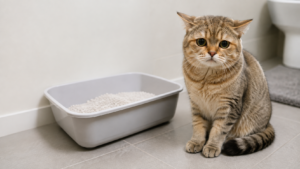
Most feline quirks are completely normal. A few, however, are worth attention: a sudden change in litter box habits, new aggression, hiding, or compulsive grooming can point to pain or stress rather than personality. When a behaviour changes suddenly rather than gradually, treat it as a health question first and a training question second.
It is a mix of hunting instinct, curiosity about how objects move, and a very effective way of getting your attention. Cats test objects with their paws the same way they would test prey, and if the behaviour reliably makes you react, it gets repeated.
No. Cats also purr when they are frightened, in pain, or being examined at the vet. Purring is best understood as a self-soothing mechanism, so read it together with body language rather than on its own.
When it appears suddenly and has no obvious trigger. Abrupt changes in appetite, litter box use, grooming or sociability are common early signs of illness or pain, and are worth a veterinary check rather than a training fix.