
Nebelung
The Nebelung is a rare, elegant breed with a shimmering long blue-gray coat and luminous green eyes — essentially a long-haired Russian Blue. These shy, gentle, deeply devoted cats form intense bonds with their chosen families.
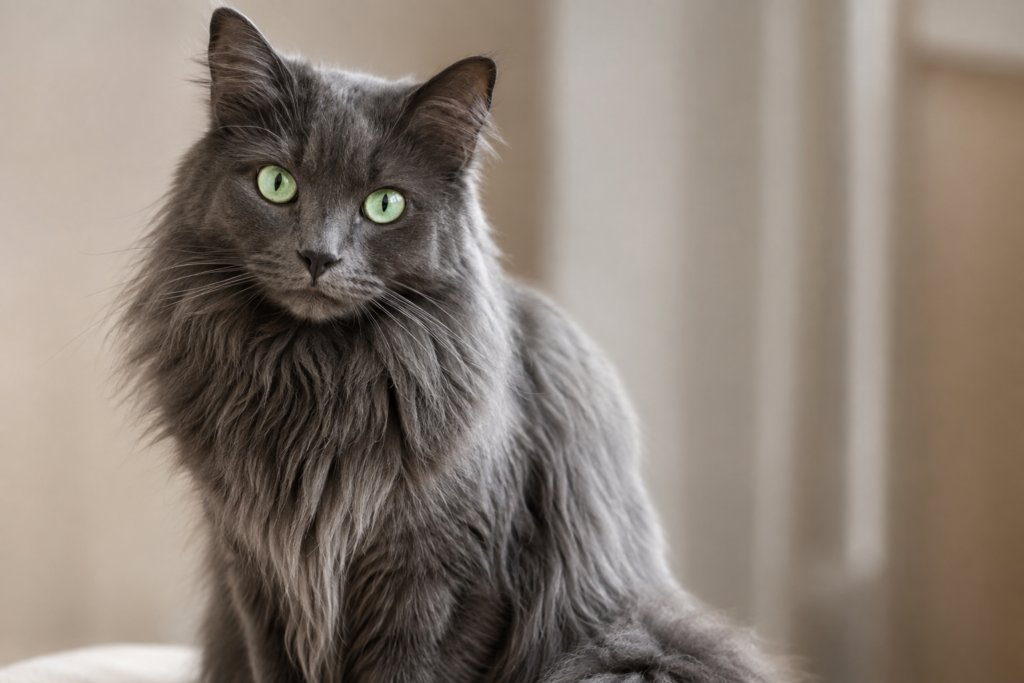
About the Nebelung
History and Origins
The Nebelung is a relatively new breed, developed in the 1980s in the United States by Cora Cobb. It began with two long-haired blue kittens — named Siegfried and Brunhilde after characters in Wagner’s operas — born to a black domestic cat and a Russian Blue–type father. Their beautiful silky coats inspired Cobb to establish a breed, working with Russian Blue lines to create a longhaired version of that elegant cat.
The name “Nebelung” comes from the German for “creature of the mist” (a nod both to the misty appearance of the silver-tipped coat and to the Wagnerian theme). The breed was recognized by The International Cat Association in the 1980s. Genetically, the Nebelung is very close to the Russian Blue, sharing its color, build, and temperament — simply wrapped in a longer coat.
Personality and Temperament
Nebelungs have the classic Russian Blue temperament: gentle, quiet, and profoundly loyal — but on their own terms. With strangers they are famously shy and reserved, often disappearing when guests arrive, and they need time to warm up to new people. With their trusted family, however, they are affectionate, devoted, and often “dog-like,” frequently choosing a favorite person to shadow.
They are intelligent and playful with those they trust, enjoying interactive games and a good vantage point to observe the household. Above all, Nebelungs are sensitive creatures of habit: they love routine and calm, and can be genuinely stressed by loud noises, chaos, or frequent change. They thrive in quiet, stable homes where they can bond deeply and feel secure, rewarding patient owners with steadfast, gentle companionship.
Care and Grooming
The Nebelung’s long, silky double coat is beautiful but does need regular attention. Brushing two to three times a week keeps it free of tangles and mats, increasing during the heavier seasonal sheds. The fine, silver-tipped fur is less prone to matting than some longhaired breeds, but consistency matters, especially around the ruff, belly, and tail.
Like the Russian Blue, Nebelungs are food-motivated and can gain weight easily, so measured meals and daily play help keep them trim. Provide climbing spaces, interactive toys, and — importantly — a calm environment with predictable routines, since these sensitive cats are happiest when life is stable. Respect their need for a quiet retreat when the house gets busy, and round out care with routine nail trims, ear checks, and dental hygiene.
Health and Lifespan
Nebelungs are generally a healthy, long-lived breed, typically reaching 12–16 years or more. Thanks to their Russian Blue foundation and natural build, they have few inherited problems. The most common health issue is actually obesity, driven by their hearty appetite — and since excess weight can lead to diabetes and joint strain, keeping them lean is important. Bladder and urinary issues can occasionally occur, as can the usual feline concerns.
Choose a reputable breeder, keep your Nebelung at a healthy weight, encourage water intake, provide a calm environment, and maintain regular veterinary checkups to support this breed’s excellent longevity.
Cost and Is the Nebelung Right for You?
A Nebelung kitten from a reputable breeder generally costs $600 to $1,200 in the United States, sometimes more given the breed’s rarity and small number of breeders. Expect a waitlist, and be cautious of any “Nebelung” sold cheaply, as long-haired grey cats are sometimes misrepresented as the breed.
The Nebelung suits calm, routine-loving households and people who want an affectionate but undemanding, sensitive companion. They’re ideal for quieter homes, singles, and patient owners willing to earn their deep loyalty. They are less ideal for chaotic, constantly changing environments, homes with very boisterous young children, or anyone wanting an outgoing cat that greets every visitor — the Nebelung saves its warmth for the people it trusts.
Explore More
The Nebelung is a long-haired Russian Blue — so compare it with the Russian Blue and other elegant blue-gray breeds, the French Chartreux and the Thai Korat. Curious about your shy cat’s devotion? Read why your cat always sits on your lap, or browse all cat breeds.
Frequently Asked Questions
Yes — very closely. The Nebelung is essentially a long-haired Russian Blue, developed from Russian Blue lines and sharing the same silver-blue coloring, elegant build, green eyes, and gentle, shy temperament. The main difference is coat length: the Nebelung has a long, silky coat while the Russian Blue's is short and plush. The two breeds are so similar that Russian Blues are sometimes used in Nebelung breeding.
Yes, they tend to be quite reserved, especially with strangers. Nebelungs are naturally cautious and may hide when visitors arrive or in noisy, unfamiliar situations, and they need time to warm up to new people. With their trusted family, however, they're affectionate, loyal, and playful. Their shyness is simply selectivity — once they bond with you, they're devoted, gentle companions.
Yes, quite rare. As a relatively new breed with a small number of dedicated breeders, genuine Nebelungs can be hard to find and often come with a waitlist. Their rarity means it's important to buy from a reputable breeder, since long-haired grey cats are sometimes sold as "Nebelungs" without genuine lineage. Patience is usually required to acquire one.
Very much. Nebelungs are sensitive, routine-loving cats that thrive on stability and can be genuinely stressed by loud noises, chaos, or frequent change. They much prefer a peaceful, predictable home where they feel secure. Providing a calm environment, consistent routines, and a quiet retreat helps a Nebelung feel comfortable and allows its affectionate, playful side to flourish.
"Nebelung" is German for "creature of the mist," a name that beautifully captures the breed's soft, silvery, silver-tipped coat that seems to shimmer like fog. The name also nods to the breed's Wagnerian origins — the two foundation kittens were named Siegfried and Brunhilde after characters in the composer's operas, which reference the medieval "Nibelung" legends.