
Turkish Angora
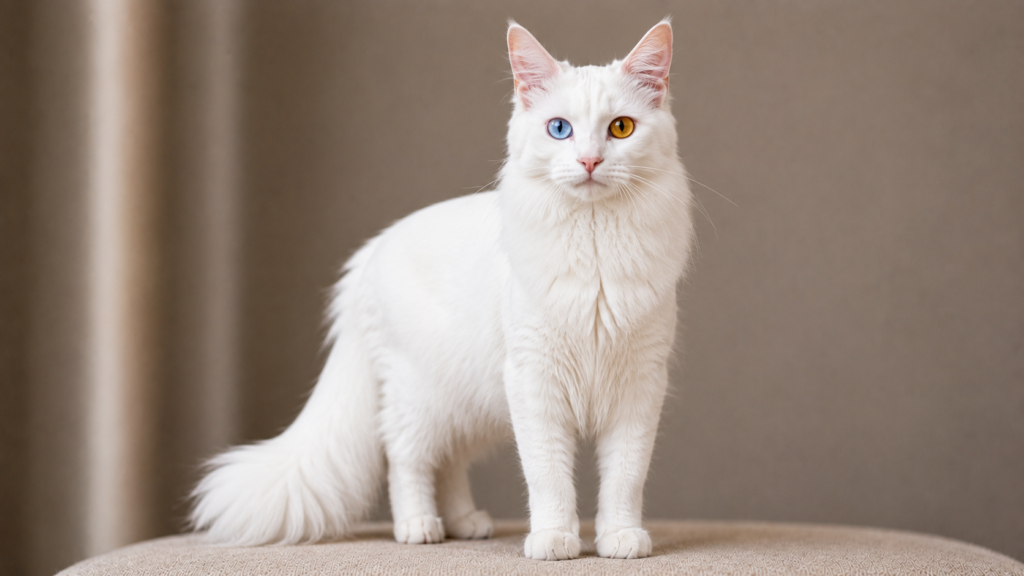
The Turkish Angora is an ancient, elegant breed with a silky coat and graceful movements. These intelligent, playful cats are known for their swimming ability and strong bonds with their families.
About the Turkish Angora
History and Origins
The Turkish Angora is one of the oldest natural cat breeds, native to the Ankara region of Turkey — Ankara was historically called Angora, which is where the name comes from. Long-haired cats have been documented there for centuries, and they were genuinely treasured, kept by Turkish nobility and later prized in European courts after being carried west in the 1500s and 1600s.
The breed then almost vanished. European and American breeders used Angoras heavily to develop the Persian, and by the early twentieth century the Angora had been largely absorbed into that programme and was nearly extinct as a distinct breed.
It survived because of Turkey itself. The Ankara Zoo ran a deliberate preservation programme, maintaining a breeding colony of pure Angoras — with a particular focus on white, odd-eyed cats regarded as a national treasure. American breeders imported cats from that colony in the 1960s, and the Cat Fanciers’ Association granted recognition, initially for whites in 1973 and for other colours in 1978. Turkey still regards the breed as a national heritage animal.
Personality and Temperament
Turkish Angoras are lively, clever and forceful personalities in an elegant frame. They are not decorative cats: they are busy, athletic and thoroughly involved in whatever the household is doing.
Climbing is a defining habit. Angoras seek the highest available surface — bookcases, fridges, door frames — and survey the room from there. They are strong, agile jumpers who stay playful well into old age.
Many are fascinated by water, batting at running taps, playing in sinks and occasionally joining a bath or shower, a trait they share with the related Turkish Van.
Socially they bond intensely with their families and often single out one favourite person, following them constantly and behaving protectively toward them. They are confident with visitors and typically fine with children, dogs and other cats — though they tend to assume they are in charge. They are moderately talkative with a soft, pleasant voice, and they dislike being left alone for long stretches.
Care and Grooming
Grooming is easier than the long coat suggests. The Angora has a fine, silky, single coat with almost no undercoat, so it resists matting far better than a Persian’s and needs only a weekly or twice-weekly comb through the ruff, britches and tail plume. Shedding increases seasonally, when a few weeks of more frequent combing helps.
Baths are rarely needed. Nail trims, ear checks and regular tooth brushing round out routine care.
Exercise and vertical space matter far more than coat care. Provide tall, sturdy cat trees, wall shelves and high perches — an Angora denied legitimate climbing will use your furniture — plus daily interactive play and puzzle feeders for a mind that needs occupying.
If your cat is white and deaf, keep it strictly indoors, approach it within its line of sight and use floor vibration or light rather than voice to get its attention; deaf cats live entirely normal lives with these small adjustments.
Health and Lifespan
Turkish Angoras are a hardy natural breed and commonly live 12–18 years. Two specific concerns deserve attention.
Congenital deafness is strongly linked to the dominant white W gene, which suppresses the pigment cells needed for normal inner-ear function. Roughly 65–85% of white Angoras with two blue eyes are deaf, odd-eyed cats are frequently deaf only on the blue-eyed side, and non-white Angoras are not affected. This is not a disease and does not shorten life or reduce quality of life — deaf cats adapt completely — but it does mean a deaf cat must never be allowed outdoors unsupervised. Reputable breeders BAER-test white kittens and tell you the result honestly; a breeder who dismisses the question is one to avoid.
Hypertrophic cardiomyopathy (HCM) also occurs in the breed. No breed-specific DNA test is reliable here, so ask for echocardiogram screening of breeding cats by a veterinary cardiologist.
Historically the breed also carried hereditary ataxia, a fatal neurological condition of kittens, though careful breeding has made it rare. Otherwise, maintain annual examinations, dental care and a healthy weight.
Cost and Is the Turkish Angora Right for You?
A Turkish Angora kitten from a reputable US breeder generally costs $800 to $2,000, with cats imported from Turkish lines or odd-eyed whites at the upper end. True pedigree Angoras are less common than the name suggests — many long-haired white cats sold as Angoras are simply domestic longhairs, so insist on registration papers.
The Angora suits active households wanting an intelligent, athletic, engaged companion, with the vertical space to satisfy a determined climber and enough time at home to satisfy a sociable cat. Grooming demands are genuinely modest for a long-haired breed.
They are wrong for anyone wanting a placid ornamental lap cat, for homes with no climbing space, and for buyers set on a white cat who are unwilling to accept a meaningful chance of deafness.
Explore More
Compare the Angora with its Turkish cousin the water-loving Turkish Van, and with the Persian it helped create. For similar elegant, athletic longhairs, see the Balinese and the Norwegian Forest Cat, or browse all cat breeds.
Frequently Asked Questions
No, and this is a common misconception. White became iconic because the Ankara Zoo preservation programme focused on white, odd-eyed cats and because early Western recognition covered only whites. Turkish Angoras actually come in many colours and patterns including black, blue, cream, red, tabby, tortoiseshell and bicolour, all of which are fully recognised by major registries today.
Not always, but the risk is substantial. Deafness is linked to the dominant white gene, which affects the inner ear. Roughly 65 to 85 percent of white Angoras with two blue eyes are deaf, odd-eyed cats are often deaf only on the blue-eyed side, and non-white cats are unaffected. Reputable breeders BAER-test white kittens.
Yes. Deaf cats adapt completely and their lifespan and quality of life are unaffected. The practical adjustments are simple: keep the cat strictly indoors or in a secure enclosure since it cannot hear traffic or predators, approach it within its line of sight to avoid startling it, and use floor vibration or flicked lights rather than your voice.
Less than you would expect from the long coat. The Angora has a fine silky single coat with almost no undercoat, so it resists matting far better than a Persian's. A weekly or twice-weekly comb through the ruff, britches and tail plume is usually enough, with more frequent combing during seasonal shedding. Baths are rarely necessary.
Many do, sharing this trait with the related Turkish Van. It is common for Angoras to bat at running taps, play in sinks, drop toys into water bowls and occasionally join their owners in the bath or shower. Not every individual is enthusiastic, but the breed as a whole is far less water-averse than most cats.