
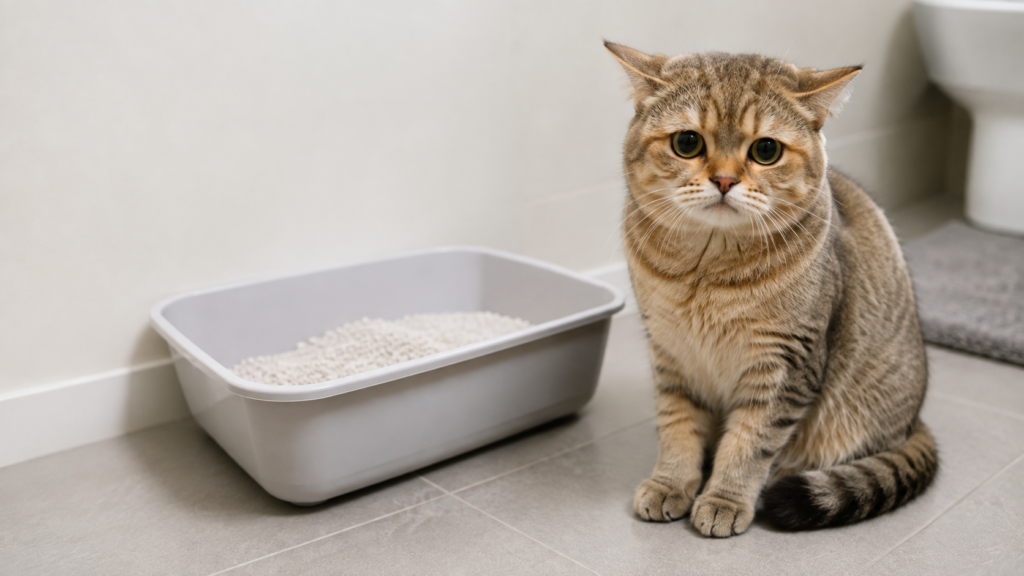
First: your cat is not doing this out of spite
Let’s clear up the most common myth right away. When a cat starts peeing on the bed, the laundry, or the corner of the living room, it’s easy to feel personally attacked. But cats don’t urinate outside the box for revenge, jealousy, or spite. They do it because something is wrong — physically, environmentally, or emotionally — and this is the only way they can tell you.
That reframing matters, because the fix depends entirely on the cause. Peeing outside the box (vets call it “periuria”) almost always comes down to one of three things: a medical problem, a litter box problem, or stress. Let’s walk through all three — starting with the one you must rule out first.
Step 1: Rule out a medical cause — always
Before you change anything else, a vet visit should be your first move, because a surprising number of “behavior” problems are actually medical. Common culprits include:
- Urinary tract infection (UTI). Infection causes pain and urgency. Because it hurts to pee, the cat starts associating the litter box with pain and goes elsewhere hoping for relief. (AVMA)
- Feline Lower Urinary Tract Disease (FLUTD). An umbrella term for several bladder and urethra problems, including inflammation, stones, and blockages.
- Feline Idiopathic Cystitis (FIC). A painful, recurring bladder inflammation strongly linked to stress and low water intake — and the single most common cause of urinary trouble in cats under 10. (Royal Canin)
- Bladder stones or crystals, which irritate the bladder and can cause a life-threatening blockage.
- Kidney disease, diabetes, or hyperthyroidism, which make cats produce more urine and can lead to accidents.
- Arthritis in older cats, which can make climbing into a high-sided box painful.
Your vet will typically run a physical exam, a urinalysis, and sometimes blood work or imaging to pinpoint the cause. Never assume it’s “just behavioral” until a vet has ruled out these possibilities.
When it’s an emergency
Call a vet right now if your cat is:
- Straining or crying while trying to pee
- Making frequent trips to the box with little or nothing coming out
- Producing bloody urine
- Licking the genital area excessively, restless, hiding, or vomiting
In male cats especially, these are signs of a urinary blockage — a true emergency that can be fatal within 24–48 hours. Don’t wait to “see if it passes.”
Step 2: Fix the litter box
If your cat gets a clean bill of health, the next suspect is the litter box itself. Cats are famously particular, and many “accidents” are simply protests about the bathroom. Work through this checklist:
- Cleanliness. Scoop at least once or twice a day and do a full litter change regularly. Many cats will boycott a box that we’d consider only slightly dirty.
- Number of boxes. The golden rule is one box per cat, plus one extra (two cats = three boxes). Place them in different locations, not side by side.
- Location. Quiet, low-traffic, easy to reach — not next to a noisy washing machine or in a spot where another pet can ambush them. Older cats need boxes on every floor.
- The box itself. Many cats dislike covered boxes (they trap odor and reduce escape routes) and prefer a large, open tray they can turn around in comfortably.
- The litter. Most cats prefer unscented, fine-grained clumping litter. If you recently switched brands or types, switch back and see if the problem stops.
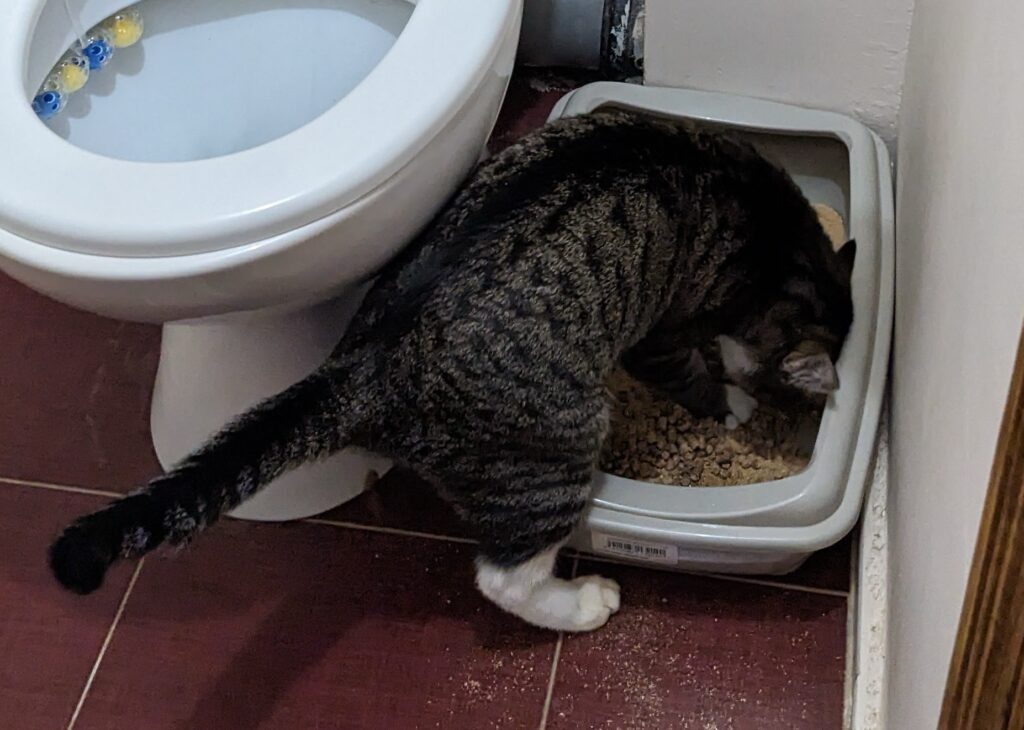
Small changes here solve a remarkable number of cases.
Step 3: Address stress and marking
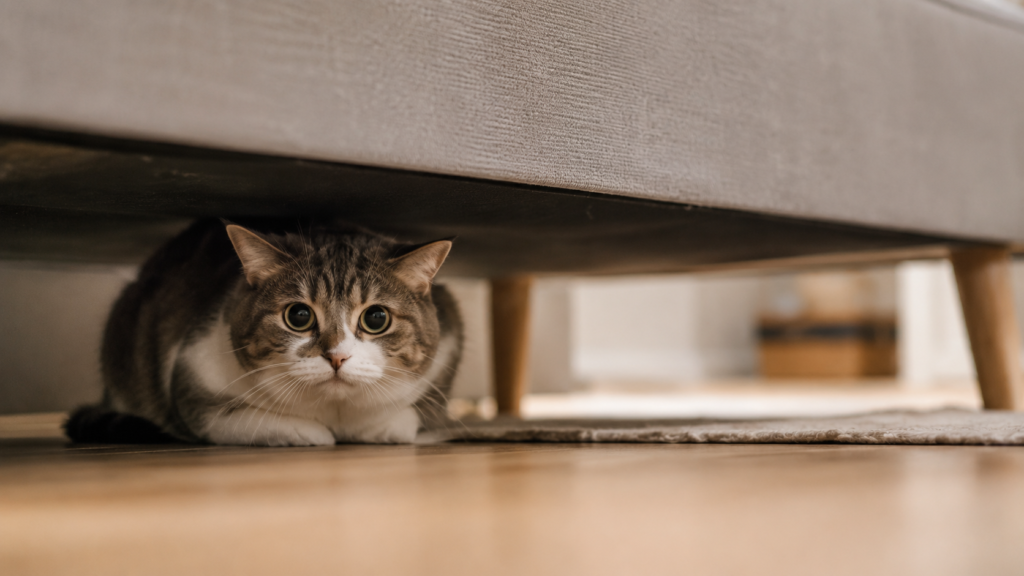
If the box is perfect and the vet found nothing, stress is the likely driver — and stress and FIC are closely linked, so this overlaps with the medical picture.
First, distinguish spraying from urinating. A cat that backs up to a vertical surface (a wall or furniture), quivers its tail, and leaves a small amount of urine is marking territory — often triggered by a new pet, a new person, an outdoor cat seen through a window, or conflict between cats in the home. A cat that squats and empties its bladder on a horizontal surface is urinating, usually due to a medical or litter box issue.
Common stress triggers include moving house, new furniture, schedule changes, a new baby or pet, or tension between household cats. To reduce it:
- Keep routines predictable and provide plenty of resources (food, water, boxes, perches) so cats don’t have to compete.
- Give each cat their own space and vertical territory.
- Consider a synthetic pheromone diffuser, which many owners find helps anxious or marking cats settle.
- Neutering greatly reduces spraying in intact cats.
What to do at home (and what not to do)
- Clean accidents with an enzymatic cleaner — never an ammonia-based product. Ammonia smells like urine to a cat and invites a repeat. Enzyme cleaners break down the odor so the spot stops “calling” them back.
- Never punish your cat. Scolding, rubbing their nose in it, or spraying water only increases stress — which often makes the problem worse, especially with FIC.
- Encourage water intake with a fountain, wet food, or extra water bowls, since good hydration protects the urinary tract.
- Make the box irresistible with a litter attractant if your cat has fallen out of the habit.
- Keep a log of when and where accidents happen — it helps your vet spot patterns.
A cat peeing everywhere isn’t being bad — it’s asking for help. Start with the vet to rule out a UTI, FLUTD, or something more serious (and act immediately if your cat is straining or a male can’t pass urine). Then optimize the litter box and reduce stress. Work through those three steps in order and, in the vast majority of cases, you’ll find the cause — and your cat will happily go back to using the box.
FAQ
A sudden change is a red flag for a medical problem, most often a UTI, cystitis, or bladder stones, so a vet visit should come first. If your cat is healthy, the cause is usually a litter box issue (dirty, wrong type, or wrong location) or a new stressor like a move, a new pet, or household conflict. Sudden straining with little urine is an emergency.
No — cats don’t urinate out of spite, jealousy, or revenge. That’s a myth. Peeing outside the box is a sign that something is wrong: pain, illness, an unacceptable litter box, or stress. Treating it as “bad behavior” and punishing the cat only adds stress and usually makes the problem worse. Look for the underlying cause instead.
The rule of thumb is one litter box per cat, plus one extra — so two cats need three boxes. Place them in different, quiet, easy-to-reach locations rather than side by side, and put boxes on every floor for older cats. Too few boxes, or boxes that are dirty or poorly placed, is one of the most common reasons cats go elsewhere.
Spraying is territorial marking: the cat stands, backs up to a vertical surface, quivers its tail, and leaves a small amount of urine. Regular urinating is done squatting on a horizontal surface and empties the bladder. Spraying is usually triggered by stress or territory (new pets, outdoor cats, conflict), while squatting outside the box more often points to a medical or litter box problem.
Clean it thoroughly with an enzymatic cleaner (never ammonia-based), which removes the scent that draws them back — ordinary cleaners leave a smell cats can still detect. Then address the root cause: rule out illness with a vet, improve the litter box, and reduce stress. You can also make the spot less appealing or place a food bowl there, since cats avoid eliminating where they eat.
Sources
- AVMA — Feline Lower Urinary Tract Disease (FLUTD) — https://www.avma.org/resources-tools/pet-owners/petcare/feline-lower-urinary-tract-disease
- Royal Canin — Why Is My Cat Peeing Everywhere? — https://www.royalcanin.com/us/cats/health-and-wellbeing/why-is-my-cat-peeing-everywhere
- Cats Protection — Urinary Problems in Cats — https://www.cats.org.uk/help-and-advice/health/urinary-problems
- Great Pet Care — Cat Peeing Everywhere: 10 Tips to Address the Mess — https://www.greatpetcare.com/cat-behavior/cat-peeing-everywhere-10-tips-to-address-the-mess/
- Cornell Feline Health Center — Feline Lower Urinary Tract Disease — https://www.vet.cornell.edu/departments-centers-and-institutes/cornell-feline-health-center
Keep reading:
- Why Is My Cat Drinking So Much Water?
- Why Is My Cat Always Hungry?
- What Does Your Cat’s Tail Position Really Mean?
Was this article helpful?