
Cornish Rex
The Cornish Rex is a distinctive breed with a curly, velvet-like coat and slender, athletic build. These playful, acrobatic cats are known for their dog-like personalities and love of attention.
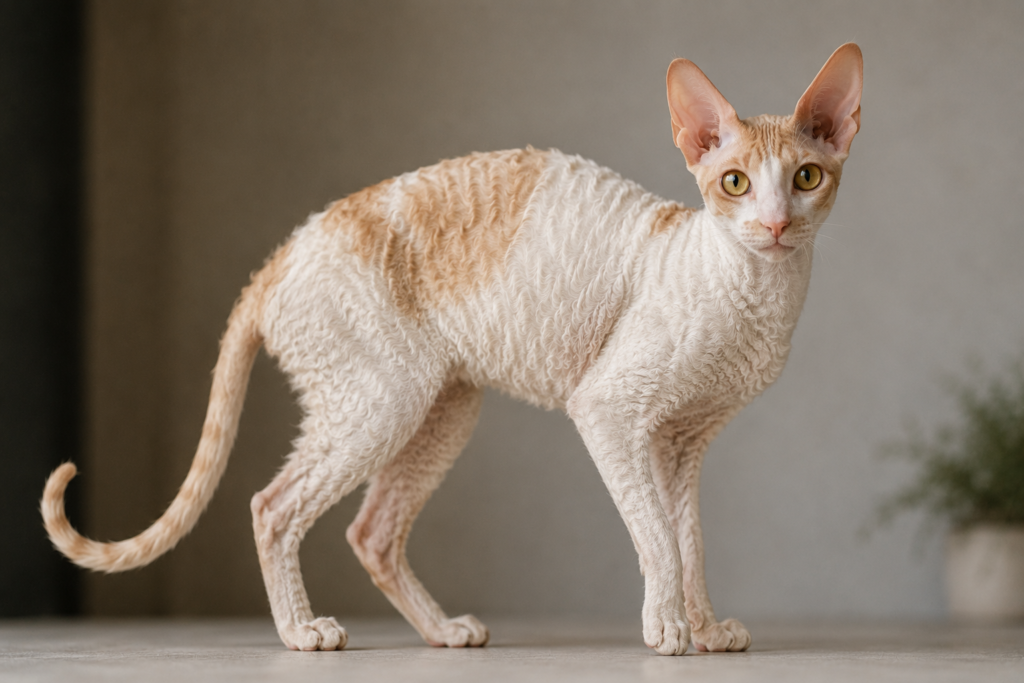
About the Cornish Rex
History and Origins
The Cornish Rex began with a single kitten. In 1950, on a farm in Cornwall, England, a barn cat gave birth to a litter that included one unusual kitten with a soft, curly coat, named Kallibunker. His owner recognized the coat as something special, and with guidance from geneticists, Kallibunker became the foundation of the breed.
The Cornish Rex’s curls come from a recessive genetic mutation — a different gene from the similar-looking Devon Rex, which appeared a decade later in nearby Devon. Uniquely, the Cornish Rex’s coat consists only of the soft, downy undercoat (the awn and guard hairs most cats have are absent), which is why it feels like crushed velvet and lies in tight waves. The breed was later refined with outcrosses to give it its elegant, arched, athletic body.
Personality and Temperament
Cornish Rex cats are often described as the “Peter Pan” of cats — they keep their playful, mischievous kitten energy for life. They are highly active, acrobatic, and intelligent, capable of remarkable leaps and happy to perform, fetch, and invent games. Bored is not a word in their vocabulary if you keep them entertained.
They are also intensely social and affectionate, thriving on being part of everything their family does. Many follow their owners from room to room, ride on shoulders, and greet visitors like a dog would. Because of their thin coats, they are enthusiastic warmth-seekers and cuddlers, burrowing under blankets and curling up on laps for both affection and heat. This combination of athleticism and affection makes them engaging, “look at me” companions who don’t like being left alone for long.
Care and Grooming
The Cornish Rex’s coat is remarkably low-maintenance to brush — in fact, over-grooming can damage the delicate, fine hairs, so a gentle stroke with a soft cloth or your hand is usually all it needs. They shed very little, which some allergy sufferers find easier to tolerate.
The bigger care considerations come from that sparse coat. Cornish Rex get cold easily and actively seek warmth, so provide cozy beds, heated pads, and warm spots, and consider a cat sweater in winter. With little fur to absorb skin oils, they can get greasy skin and ears and may need occasional gentle bathing and regular ear cleaning. Their thin coat also means they can sunburn, so limit direct sun exposure. Being highly active, they need daily play and plenty of climbing space.
Health and Lifespan
Cornish Rex are generally healthy and typically live 12–16 years, but there are a few conditions to be aware of. Hypertrophic cardiomyopathy (HCM) can occur in the breed and should be screened for, and patellar luxation (slipping kneecaps) is occasionally seen. Some Cornish Rex are sensitive to anesthesia, so an experienced vet is valuable. Their thin coats also make them prone to getting cold and to sunburn, and some can develop greasy skin requiring occasional bathing.
Choose a breeder who screens breeding cats for HCM, keep your Cornish Rex warm and at a healthy weight, and maintain regular veterinary checkups to support a long, healthy life.
Cost and Is the Cornish Rex Right for You?
A Cornish Rex kitten from a reputable breeder generally costs $800 to $1,500 in the United States, with show-quality lines running higher. The breed is relatively uncommon, so expect to find a specialist breeder and possibly a waitlist.
The Cornish Rex is perfect for people who want an active, affectionate, interactive companion and are home often enough to give it attention. Their playful, cuddly, dog-like nature suits families, singles who work from home, and multi-pet households. They are less ideal for those wanting a calm, independent cat, for cold homes where a thin-coated cat would be uncomfortable, or for anyone away for long hours, since Cornish Rex genuinely dislike being alone.
Explore More
Love a curly, affectionate cat? Compare the Cornish Rex with its cousin the Devon Rex and the plush Selkirk Rex. For another warmth-loving, people-oriented breed, see the Sphynx, or read why cats knead. Or browse all cat breeds.
Frequently Asked Questions
No cat is truly hypoallergenic, but Cornish Rex are often tolerated better by allergy sufferers. Because their coat is only the fine, downy undercoat and they shed very little, they spread fewer allergens around the home. However, they still produce the Fel d 1 protein in their saliva and skin, so sensitive individuals should spend time with one before committing.
Yes. With only a thin layer of soft down and no protective outer coat, Cornish Rex lose body heat quickly and are genuine warmth-seekers. They gravitate to sunny spots, heated beds, laps, and under-blanket hideaways, and many appreciate a cat sweater in cold weather. Keeping your home comfortably warm and providing cozy resting spots is an important part of their care.
Both are curly-coated "rex" breeds but from different genes. The Cornish Rex has only soft down hair, giving a tight, even, marcel-wave coat, plus a Roman nose and an arched, greyhound-like body. The Devon Rex has a looser, sparser coat of all three hair types, a pixie face with huge low-set ears, and a stockier build. Their curl mutations are separate and recessive.
Very. Cornish Rex are among the most affectionate breeds and love physical closeness — partly for love and partly for warmth, since their thin coat makes them heat-seekers. They're notorious lap cats and shoulder-riders who burrow under blankets and press against their people to stay cozy. Their velcro-like, people-oriented nature makes them devoted, cuddly companions.
A lot. Cornish Rex are highly active, acrobatic cats that stay playful and energetic throughout their lives, so they need daily interactive play plus plenty of climbing structures, shelves, and toys for independent activity. Without enough physical and mental stimulation they can get bored and mischievous. Their athleticism is part of their charm, but it does require an engaged owner.