
Serengeti
The Serengeti is a spotted breed developed to resemble the wild African serval — long-legged, big-eared, and elegant — but with no wild genetics at all. Confident, active, and vocal, these athletic cats are affectionate, dog-like companions.
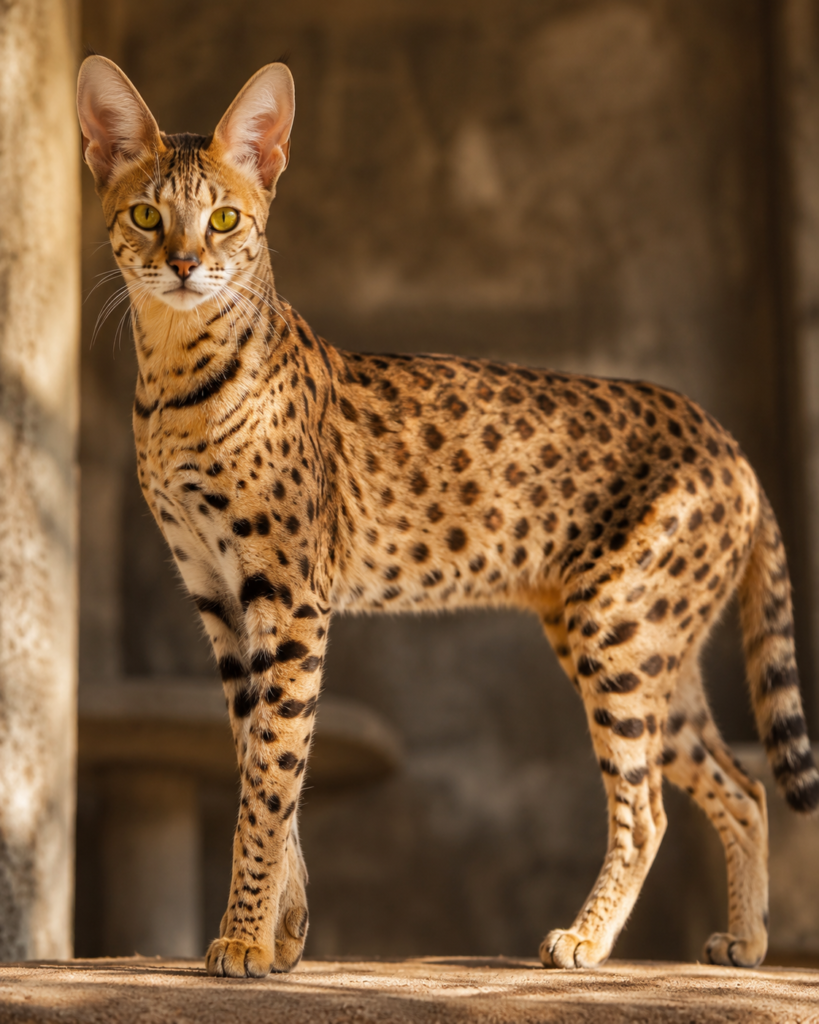
About the Serengeti
History and Origins
The Serengeti is a young breed, created in the 1990s in California by conservation biologist Karen Sausman. Her goal was to produce a cat with the tall, leggy, big-eared, spotted look of the wild serval — but using only domestic cats, to offer the serval aesthetic without wild hybridization.
She achieved it by crossing the Bengal with the Oriental Shorthair, combining the Bengal’s spotted coat with the Oriental’s long legs, large ears, and slender build. The result is a striking, serval-like cat that is entirely domestic, carrying none of the legal restrictions or special needs of true hybrids. The Serengeti is still developing and remains rare, recognized on a preliminary basis by some registries.
Personality and Temperament
Serengetis are confident, curious, and highly active. They are bold and outgoing — rarely shy — and they love to be in the middle of everything, greeting visitors and investigating every corner of the home. Many are described as dog-like, forming strong bonds with their families and following their favorite people around.
They are athletic and energetic, with a love of climbing, jumping, and interactive play, and they stay lively well into adulthood. Thanks to their Oriental heritage, they’re also intelligent and quite vocal, “talking” to their owners and expecting engagement. Serengetis are generally social and get along well with children and other pets, but their high energy and need for stimulation mean they do best with attentive owners who can keep them active and entertained.
Care and Grooming
Grooming a Serengeti is easy. Their short, fine, spotted coat needs only a weekly brush or a rub with a grooming glove to remove loose hair and keep its sleek shine, and they shed modestly. The distinctive spots need no special care beyond a healthy coat.
Where they need investment is exercise and enrichment. Serengetis are athletic, clever, and energetic, so provide tall cat trees, climbing shelves, puzzle toys, and plenty of daily interactive play to satisfy their busy bodies and minds. Because they’re social and can dislike being alone, many do best with a companion pet. Round out care with routine nail trims, ear checks, and dental hygiene, plus a quality diet to fuel their active build.
Health and Lifespan
Because the Serengeti is such a new breed, long-term health data is still limited, but it’s generally considered healthy, with a typical lifespan of 10–15 years. Being fully domestic, it doesn’t carry the dietary sensitivities of wild hybrids. However, since it descends from Bengals and Oriental Shorthairs, it can potentially inherit conditions from those breeds — including hypertrophic cardiomyopathy (HCM), and, from the Bengal side, progressive retinal atrophy (PRA) and pyruvate kinase (PK) deficiency, both of which have DNA tests. Dental issues from the Oriental line are also possible.
Choose a breeder who screens their breeding cats for HCM and DNA-tests the Bengal-related conditions, keep your Serengeti active and at a healthy weight, and maintain regular veterinary checkups.
Cost and Is the Serengeti Right for You?
A Serengeti kitten from a reputable breeder generally costs $600 to $2,000 in the United States, depending on lineage and quality, with the most serval-like, well-spotted cats at the higher end. As a rare, developing breed, expect to find a specialist breeder and possibly a waitlist.
The Serengeti suits active owners who want a striking, serval-like cat without the challenges of a true hybrid, in a confident, affectionate, interactive package. They fit lively households, families, and multi-pet homes with plenty of space and enrichment. They are less ideal for those wanting a calm, quiet lap cat, for very sedentary homes, or for owners who can’t provide the activity, stimulation, and attention this energetic, social breed needs.
Explore More
Love the wild serval look without the wild genetics? Compare the Serengeti with the true serval-hybrid Savannah, its parent breeds the Bengal and Oriental Shorthair, and the spotted Ocicat. Or browse all cat breeds.
Frequently Asked Questions
No — despite being designed to look like a wild serval, the Serengeti is completely domestic, with no wild ancestry. It was created by crossing Bengals with Oriental Shorthairs, both domestic breeds. This means it carries none of the legal restrictions or special dietary requirements of true wild hybrids like the Savannah or Chausie. Its serval-like look is achieved entirely through domestic genetics.
Serengetis are medium to large cats that look bigger than they are because of their long legs and tall, elegant build. They typically weigh around 8–15 pounds, with males larger than females. Their long legs, big ears, and lean, athletic body give them a striking, serval-like silhouette. They're substantial, agile cats built for jumping and climbing rather than heavy bulk.
Yes, everywhere that ordinary domestic cats are allowed. Because the Serengeti has no wild ancestry — it's built entirely from domestic Bengal and Oriental Shorthair lines — it isn't subject to the exotic-pet laws that restrict early-generation hybrids like the Savannah or Chausie. This is one of the breed's key advantages: the wild serval look with none of the legal complications.
Serengetis are confident, active, and outgoing. They're bold rather than shy, love to be involved in everything, and form strong, dog-like bonds with their families. Intelligent and playful, they enjoy climbing, games, and interaction, and they're quite vocal thanks to their Oriental heritage. They're generally social with children and other pets, but their high energy means they need an engaged, active home.
Yes, quite. Thanks to their Oriental Shorthair ancestry, Serengetis are talkative and expressive, "chatting" with their owners to get attention or comment on their surroundings. They're not as relentlessly loud as a pure Siamese, but they're far from silent. For people who enjoy an interactive, communicative cat, this chattiness is part of the breed's engaging, confident personality.