
The predator’s energy budget
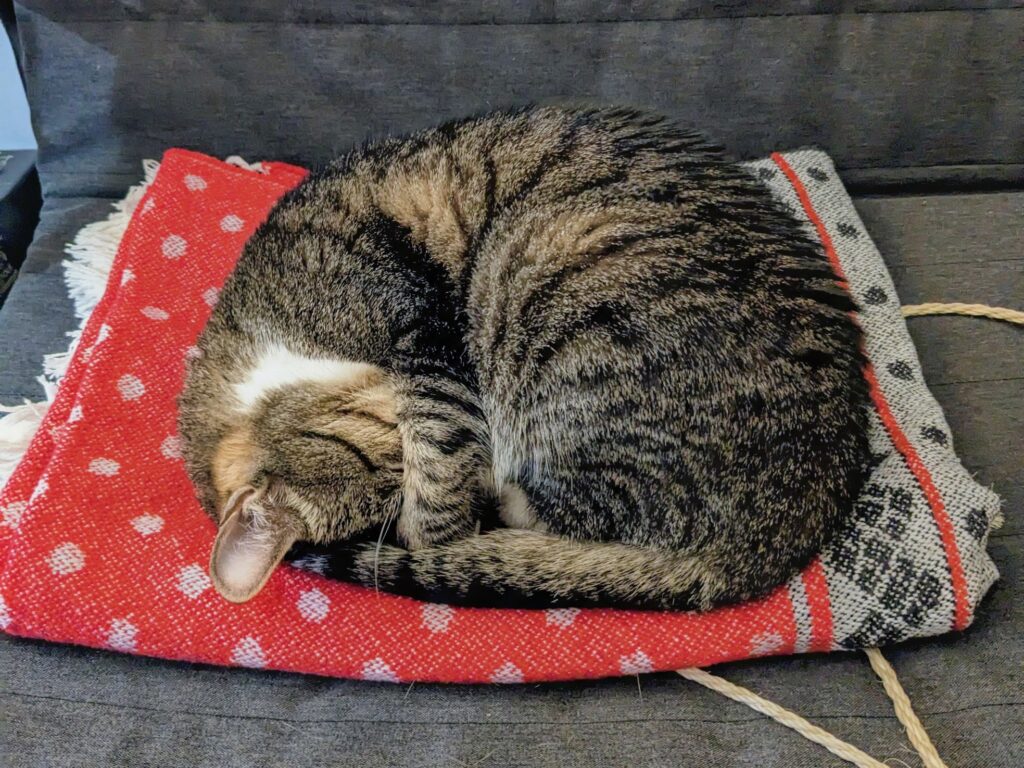
A hunting cat is an anaerobic athlete. A stalk-and-pounce sequence lasts seconds and burns through stored energy fast, so a wild cat that misses a few times has spent a great deal for nothing. Sleep is how that budget balances.
Domestic cats kept the metabolism and lost the job. Your cat still runs the ancient program: conserve energy, wait for opportunity, explode, recover. The food bowl removed the hunting, not the wiring behind it. That is why a well-fed indoor cat can look lazy and still be behaving exactly as designed.
Size and diet matter here too. Large predators sleep more than grazing animals, because grazers must eat for hours to pull enough calories out of plants while a carnivore gets a dense meal in one go. A cat that catches a mouse has eaten well in thirty seconds. Meat buys sleep.
There is a social element as well. Cats did not evolve in packs with sentries taking shifts, so a solitary hunter has to bank its own rest whenever the surroundings feel safe. A cat that sleeps deeply in the middle of your living room is paying you a compliment, in its way.
Cats are crepuscular, not nocturnal
Part of the answer to why do cats sleep so much is that they are awake when you are not. Most owners assume cats are night animals. They are not. Cats are crepuscular, most active around dawn and dusk, because that is when their prey moves.
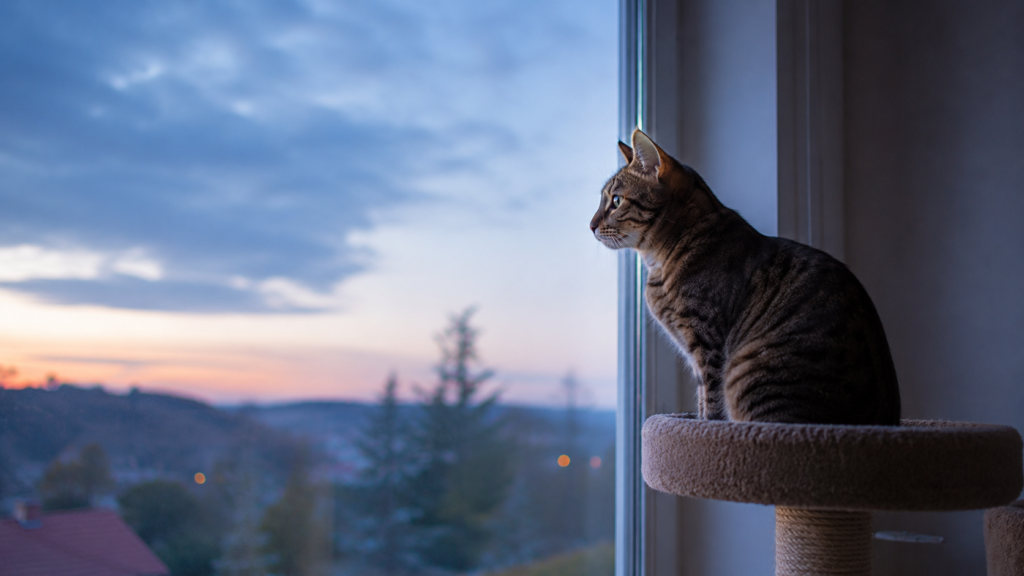
This explains the 5 a.m. zoomies better than any theory about spite. Your cat is not choosing an inconvenient hour. It is running a schedule tuned to when small rodents are active, and your alarm clock has no say in it.
It also explains the shape of feline sleep. Rather than one long block, cats take many short naps spread across the day, staying loosely available in between. The pattern looks lazy from a chair at noon and makes complete sense at first light.
Cats do bend to a household routine. A cat living with people who leave at eight and return at six will drift toward those hours, sleeping through the empty middle of the day and waking for the door. But the dawn and dusk pull never fully goes away, which is why even a well-adjusted cat tends to get a second wind in the evening.
Most of that sleep is light sleep
Roughly three quarters of feline sleep is light dozing, not deep sleep. This is the state people call the catnap: eyes closed, ears still swivelling toward the hallway, body ready to move.
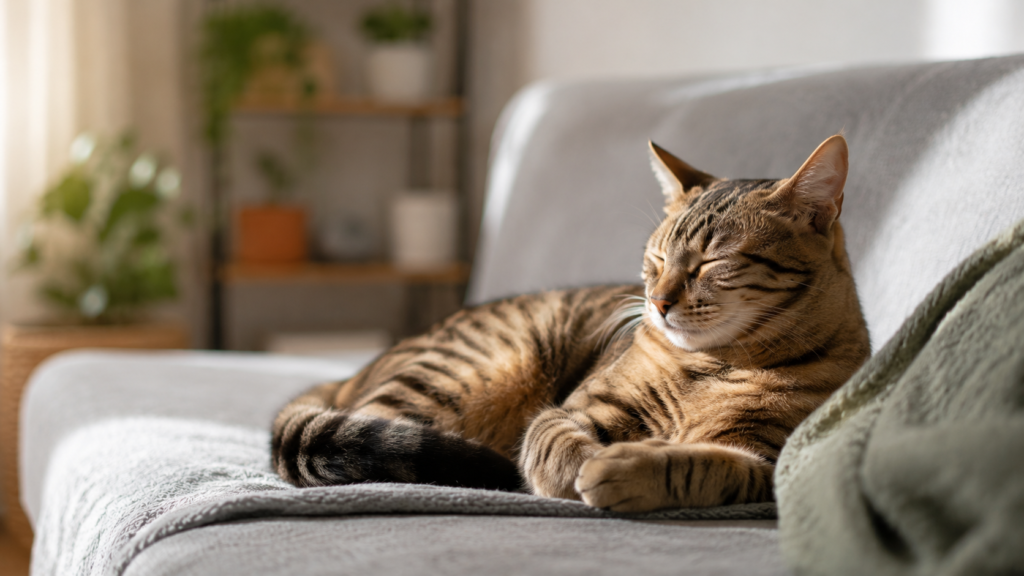
Watch the ears. A dozing cat tracks sound continuously, and the difference between a cat that is resting and a cat that is truly out is visible from across the room. Light sleep is why your cat can be unconscious on the sofa and at the food cupboard before the tin is open.
The remaining quarter is deep sleep, where the body does its repair work. In deep sleep you will see the twitching paws, flicking whiskers and occasional muffled sounds. Cats have REM sleep, and the fair conclusion is that they dream, though nobody can say about what.
Kittens spend far more time in deep sleep than adults, which is when growth hormone is released. A kitten sleeping 20 hours a day is not unwell. It is growing.
The proportions shift at the other end of life too. Older cats often sleep more total hours but less deeply, waking more often and settling less easily, much like elderly people. If a senior cat starts pacing or calling at night, that broken sleep is worth mentioning to your vet rather than filing under old age.
What changes how much cats sleep
Several ordinary things shift how much a healthy cat sleeps, and none of them are a problem:
- Age. Kittens and cats over about 11 sleep the most; young adults sleep least.
- Weather. Cold and grey days produce more sleeping, same as they do in people.
- Boredom. An under-stimulated indoor cat sleeps to pass time it has nothing else to fill.
- Food. A large meal is followed by a long nap, reliably.
Boredom is the one worth acting on. A cat sleeping through a featureless day is not content, just unoccupied, and the fix is ordinary enrichment: a tall perch, a window with something happening outside, two short play sessions a day, and food that takes some work to get. Puzzle feeders help here, and so does play that ends in a catch rather than trailing off — an unfinished hunt is frustrating. If your cat spends its waking hours demanding food, more activity often does more than more calories.
Where your cat sleeps is worth reading as well. Cats pick warm, defensible spots with a view of the approach, which is why the top of the bookshelf and the sunlit windowsill win over the expensive bed on the floor. It is the same instinct that makes them choose a cardboard box over almost anything you could buy. A cat that suddenly abandons its usual high perch for somewhere dark and out of the way has changed something more than its taste in furniture.
When too much sleep is a signal
Sleep itself is rarely the first sign of illness. The change around it is. Owners usually ask why do cats sleep so much long before they ask whether a particular cat is sleeping differently — and it is the second question that finds problems early.
What matters is a shift from your cat’s own baseline, held for more than a day or two: a cat that always greeted you at the door now stays put, a cat that ate with enthusiasm now leaves food, a cat that groomed neatly now looks unkempt. Lethargy is different from sleepiness. A lethargic cat is hard to rouse, uninterested when awake, and slow to respond to things that normally get a reaction.
Hiding deserves particular attention. Cats conceal illness well, and a cat that has moved under the bed and stopped coming out is often telling you something that its sleeping hours alone would not.
Call your vet if increased sleeping comes with any of the following, rather than waiting to see:
- Appetite or thirst that has clearly changed, in either direction
- Weight loss, or a coat that has gone rough or greasy
- Hiding, or a sudden unwillingness to jump and climb
- Vomiting, diarrhoea, or litter box changes lasting beyond a day
- Laboured breathing, open-mouth breathing, or pale gums — same day, not tomorrow
Older cats are worth extra attention, because arthritis, kidney disease and hyperthyroidism all surface partly as changes in activity, and all are far more manageable when caught early. A cat that has quietly stopped jumping onto the counter may be sore rather than lazy.
The bottom line
So why do cats sleep so much? Because you are living with a predator that evolved to spend energy in short bursts and bank the rest, on a schedule built around dawn and dusk. A cat that sleeps 12 to 16 hours a day, wakes hungry and curious, plays, and greets you is a normal cat, not a lazy one.
Learn your own cat’s baseline. The hours matter far less than the pattern, and the day that pattern shifts you will notice quickly — which is the part that actually matters.
FAQ
Most adult cats sleep between 12 and 16 hours a day, spread across many short naps rather than one long block. Kittens and cats over roughly 11 years old often sleep 18 to 20 hours. The exact figure matters less than consistency: what you want is a stable pattern for your individual cat, so that any real change stands out to you.
No. Cats are crepuscular, meaning they are most active around dawn and dusk, when the small prey they evolved to hunt is moving. That is why the early morning zoomies arrive at 5 a.m. rather than at midnight. Cats adapt somewhat to a household routine, but the underlying rhythm stays tuned to those two windows.
Judge it against your own cat’s baseline rather than an hour count. Sleeping more is worth investigating when it lasts beyond a day or two and comes with other changes: appetite or thirst shifting, weight loss, hiding, a rough coat, or reluctance to jump. Lethargy differs from sleepiness. A lethargic cat is hard to rouse and dull when awake.
Cold, dark days reliably produce more sleeping, much as they do in people. Less daylight and lower temperatures both encourage energy conservation, and there is less going on outside the window to hold a cat’s interest. A seasonal increase in napping is normal on its own. It is only worth a closer look if appetite, weight or behaviour change alongside it.
Almost certainly. Cats have REM sleep, the stage associated with dreaming, and during deep sleep you can watch paws twitch, whiskers flick and ears move. Roughly a quarter of feline sleep is this deep stage; the rest is light dozing. What cats dream about is unknowable, though hunting sequences are the reasonable guess given what they twitch.
Sources
- Why Do Cats Sleep So Much? — PetMD — https://www.petmd.com/cat/behavior/why-do-cats-sleep-so-much
- Cat Behavior: Sleeping — Cornell Feline Health Center — https://www.vet.cornell.edu/departments-centers-and-institutes/cornell-feline-health-center
- Cats: Sleep and behaviour — PDSA — https://www.pdsa.org.uk/pet-help-and-advice/looking-after-your-pet/cats
- Feline behaviour and the human-cat relationship — International Cat Care — https://icatcare.org/advice/
Keep reading
Was this article helpful?